


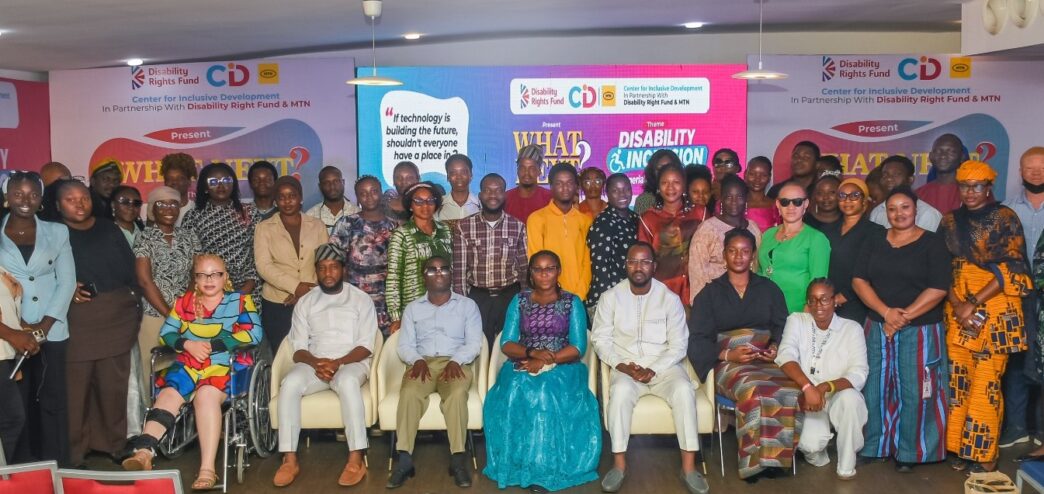
The Centre for Inclusive Development (CID) has urged technology companies to ensure their digital platforms are accessible to persons with disabilities (PWDs), warning that inaccessible websites, applications and online services are excluding millions of Nigerians from opportunities in the digital economy.
Gatekeepers News reports that Yauri Aduak, co-founder of CID, made the call in Abuja during an event organised under the theme, “What Next Learning Series”.
The programme was designed to move discussions on disability inclusion beyond awareness campaigns and policy commitments towards practical solutions.
Aduak questioned whether the rapid digital transformation across sectors such as banking, education, commerce, employment and public service delivery was providing equal opportunities for persons with disabilities.
“At CID, we believe that inclusion is not simply about creating opportunities for persons with disabilities to participate,” she said.
“It is also about deliberately removing the barriers that prevent their full and meaningful participation in society.
“However, we must ask ourselves an important question: Are these opportunities equally accessible to persons with disabilities?”
She said the centre had documented significant accessibility challenges through engagements with organisations, technology developers and public institutions.
According to her, assessments of selected government websites had further highlighted the need for stronger institutional commitment, improved technical capacity and sustained collaboration to address digital exclusion.
Aduak said the programme was aimed at promoting the inclusion of persons with disabilities in the digital economy by creating opportunities for diverse voices to be heard.
She added that the impact of the initiative would depend on concrete actions taken after the discussions rather than the number of participants or commitments made.
“The success of today’s event will not be measured only by the quality of our discussions, or the number of people that are present here, or the commitments that we make. It will ultimately be measured by what we do differently after today,” she said.
Also speaking, Theophilus Odaudu, programme officer for Sub-Saharan Africa at the Disability Rights Fund, urged technology developers to consider the different accessibility requirements of various disability groups when designing digital platforms.
Odaudu said many digital services remained inaccessible to persons with disabilities, although the challenges differed depending on the nature of their disabilities.
“For persons with disabilities, a lot of the time the digital platforms are not very accessible. And different disability categories experience this differently,” he said.
He explained that blind users often encountered websites with unlabeled buttons, images without descriptions and visually dependent functions that screen readers could not interpret.
He added that persons with intellectual disabilities required simple, easy-to-read content and clear language without excessive technical terminology.
“For persons with intellectual disability, they also require easy-to-read plain text, language that does not involve a lot of jargons because they may not have the mental capacity to want to process very technical information,” he said.
Odaudu warned that failure to account for the diverse accessibility needs of persons with disabilities would continue to exclude millions of people from digital services.
He identified the absence of specific digital accessibility standards and weak enforcement of existing policies as major obstacles to achieving inclusive technology.
“There are laws, there are policies, but the policies are not very specific on disability inclusion,” he said.
“We do not have a standard that mandates developers and technology companies to ensure disability inclusion and accessibility in their products from inception.
“It is the absence of those standards, and also the inability to enforce even the little that we have, that is the major gap that we face.”