


Central Bank of Nigeria (CBN) has revealed that Nigerians spent $609.5m on foreign education between January and August 2022.
Gatekeepers News reports that the figure was contained in the data obtained from the apex bank, calculated based on the information provided on the amount spent on educational services under the sectoral utilisation for transactions valid for foreign exchange.
In January 2022, CBN noted that a total of $60,202,730.84 was spent on foreign education, adding that $69.9m was spent in February 2022.
In March 2022, the apex bank recorded $87.26m, $78.62m in April, and $82.70m in May.
Further analysis disclosed that in June 2022, CBN released $84.90m, while a total of $61.99m was released in July 2022.
A slight increase was recorded in August 2022 when a total of $84.01 million was released.
Recent data released by the home office of the United Kingdom revealed that the number of study visas released to Nigerians increased by 222.8 per cent, with 65,929 issued as at June 2022 as against 20,427 in the same period in 2021.
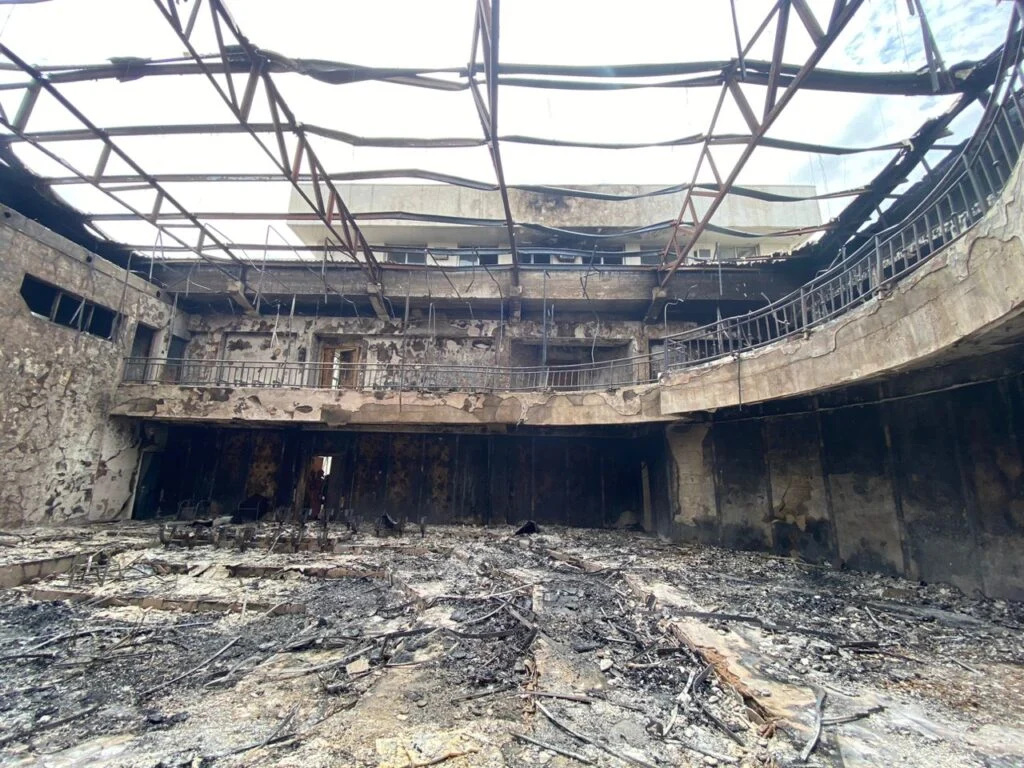
Education in Nigeria, especially in the tertiary educational sector, has been marred by strike by tertiary institution-based unions such as the Academic Staff Union of Universities, the Academic Staff Union of Polytechnics and the Colleges of Education Academic Staff Union.
Currently, academic activities in Nigerian universities and colleges of education are grounded due to issues bordering on lecturers’ welfare amongst others.
The data from the apex bank revealed that Nigerians remitted more than $609.5m to foreign academic institutions in eight months without significant reciprocity in form of inflows from foreign sources to the local educational sector.
The United Nations Educational Scientific and Cultural Organisation stated that about 76,338 Nigerians were studying abroad as of 2018, the highest from an African country.
In reaction to the development, Programme Director of Reform Education Nigeria, Ayodamola Oluwatoyin, stated, “The truth is that most people see ‘japa’ as a means of survival. People just want to leave the country and that is fine. The ASUU strike is close to eight months now.
“Most of the policies by the government itself are anti-youth; the government has made the economy difficult for youths to thrive. Most people are still going to leave before the end of the year and to be honest, it is very sad; this is brain drain and the country has not even realised it yet.”