


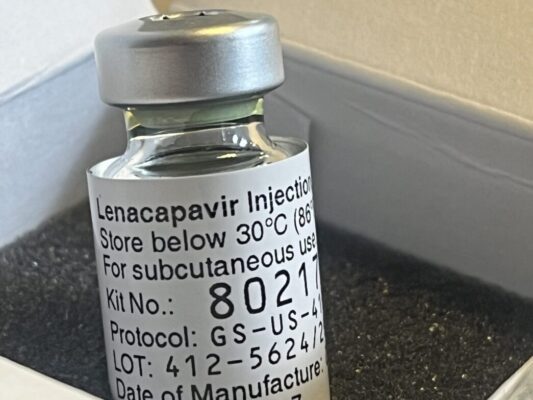
South Africa has commenced the administration of lenacapavir — a groundbreaking long-acting HIV prevention drug — to selected individuals as part of a new real-world implementation study led by Wits RHI at the University of the Witwatersrand, with funding from Unitaid.
Gatekeepers News reports that the move comes just five months after the US Food and Drug Administration approved lenacapavir for HIV prevention, marking another milestone in global efforts to curb new infections.
Lenacapavir, an injectable drug taken only twice a year, has delivered near-complete protection in clinical trials, outperforming existing pre-exposure prophylaxis (PrEP) options.
Although initially projected to cost about $28,000 per person annually, a pricing deal negotiated by the Clinton Health Access Initiative (CHAI) — in collaboration with Dr. Reddy’s Laboratories, Unitaid, the Gates Foundation, and Wits RHI — has slashed the price to roughly $40, making it accessible for low- and middle-income countries.
In a statement on Monday, Unitaid said the South African study will equip the health department with evidence to quickly integrate lenacapavir into existing HIV prevention programs.
“These early learnings on real-world use will also be applicable to other countries adopting lenacapavir,” the organisation said, noting that new medicines typically take a decade or longer to reach widespread availability in developing countries.
Global uptake of lenacapavir is accelerating: South Africa approved the drug in late October, followed by Zambia in November, and first doses have already been delivered in Zambia and Eswatini through The Global Fund and PEPFAR. Broader rollout in early-adopter nations is expected in early 2026.
South Africa’s Minister of Health, Aaron Motsoaledi, said efforts are underway to ensure the drug reaches populations most vulnerable to HIV risk.
“These early efforts from Unitaid and Wits RHI will help us fine-tune how lenacapavir is delivered so we can reach as many people as possible, especially adolescent girls, young women, and pregnant and breastfeeding women,” he said.
A parallel study led by Fiocruz is underway in Brazil, with findings expected to guide rollout strategies both within Brazil and across Latin America.