

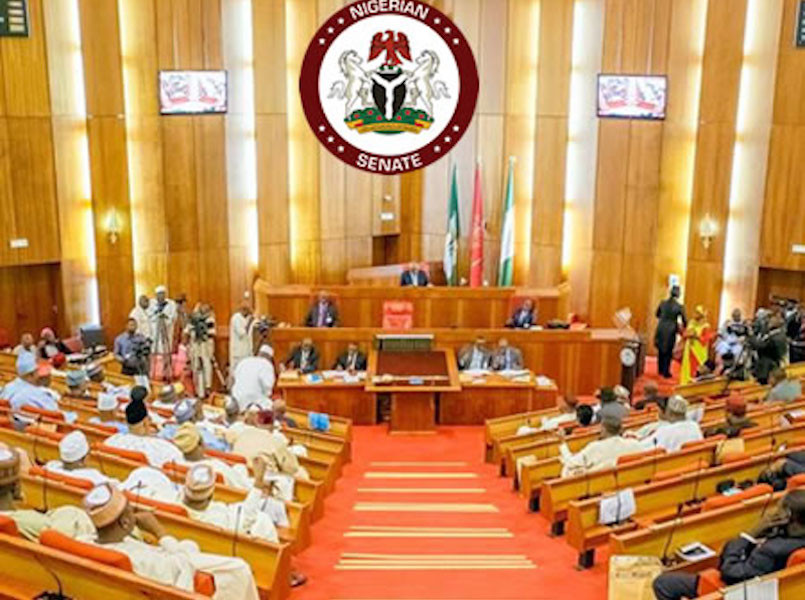
Senate has approved President Bola Ahmed Tinubu’s ₦58.47 trillion 2026 Appropriation Bill for second reading following extensive debate on the floor on Tuesday.
Gatekeepers News reports that the bill, sponsored by Senate Leader Opeyemi Bamidele, was presented as the legal framework for implementing the president’s fiscal and policy agenda for the 2026 financial year.
Bamidele explained that the proposal translates the priorities outlined in Tinubu’s budget address into enforceable government spending.
He said, “This bill is the legal instrument through which the policy direction outlined by the president in his 2026 budget address is translated into enforceable public expenditure”, he said, adding that it remains central to governance, economic management, and national development.
He noted that the proposal had already passed first reading after being laid before a joint sitting of the National Assembly on December 19.
According to him, the 2026 budget is designed as a consolidation framework that builds on economic reforms aimed at stabilising the economy and strengthening public finance.
Bamidele said, “The 2026 Budget is therefore not an experimental document. It is a budget of consolidation”, Bamidele said, pointing to ongoing adjustments following reforms introduced by the administration.
The proposed expenditure of ₦58.47 trillion includes allocations for statutory transfers, debt servicing, recurrent expenditure, and capital projects.
Capital spending, estimated at over ₦23 trillion, forms the largest share and is targeted at infrastructure, power, agriculture, housing, industrial growth, and the digital economy.
Bamidele said, “As the President emphasised, sustainable growth cannot be achieved without addressing infrastructure deficits and expanding the productive capacity of the economy.”
He added that recurrent spending provisions were structured to support efficient governance while enforcing cost controls, while debt service allocations reflect existing obligations alongside efforts to improve revenue generation and expand the tax base.
The senator said, “This senate will continue to exercise its oversight responsibility to ensure that borrowing remains prudent and that debt is deployed strictly for development purposes.”
On the revenue side, the federal government projects ₦34.33 trillion in earnings, leaving a fiscal deficit estimated at about 4.28 percent of GDP, which lawmakers said aligns with the medium-term fiscal framework.
Several senators contributed to the debate, expressing support for the bill while calling for strict scrutiny and faithful implementation.
Former Senate President Ahmad Lawan described the proposal as very bold and courageous, especially in its focus on security and welfare.
Senate Minority Leader Abba Moro cautioned that effective execution would determine its success, while Adams Oshiomhole praised the emphasis on infrastructure, jobs, and security.
After the deliberations, the Senate approved the bill for second reading and referred it to the Committee on Appropriations for further legislative work.