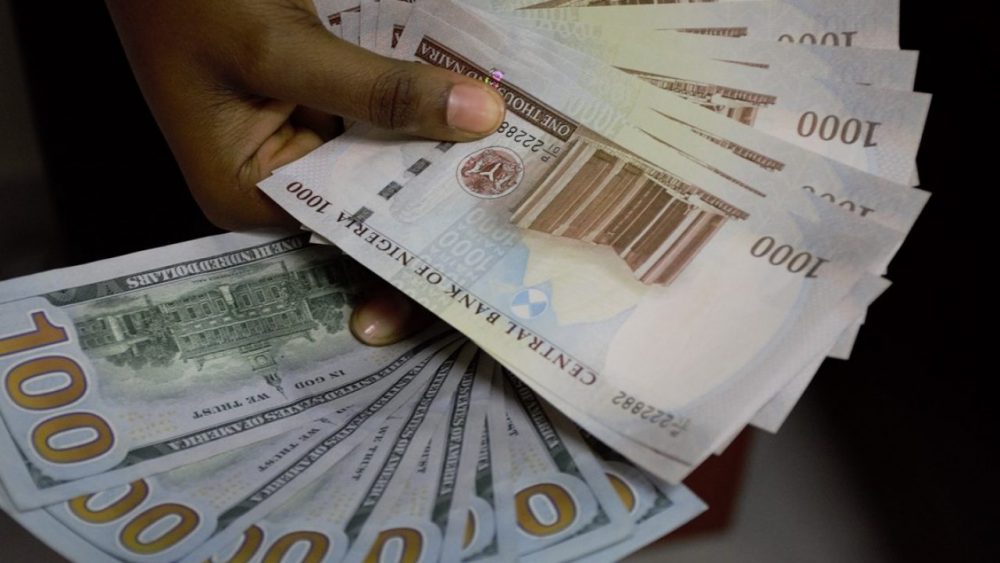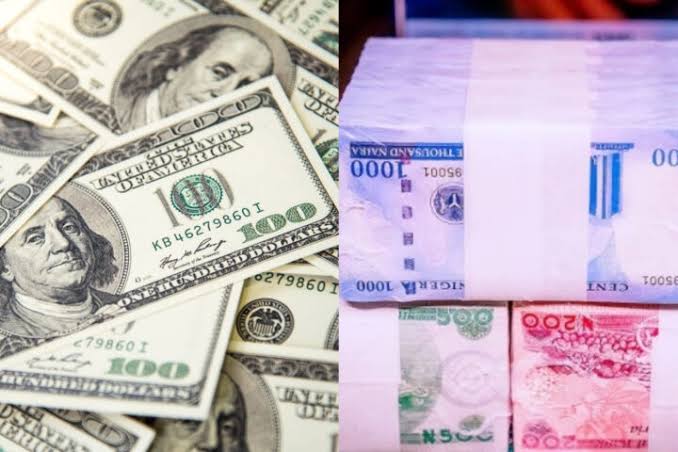


Central Bank of Nigeria has projected that the country’s external reserves will increase to about $51 billion by 2026, driven by ongoing foreign exchange reforms and improved inflows.
Gatekeepers News reports that the projection was contained in the apex bank’s latest macroeconomic outlook report, which noted that reforms in the FX market are expected to support exchange rate stability and boost confidence among investors.
The report stated, “Reforms in the foreign exchange market are expected to sustain exchange rate stability, while external reserves are projected to increase to US$51.04 billion.”
CBN also forecast that Nigeria’s international investment position will remain in a net borrowing position, estimated at $69.58 billion in 2026. According to the bank, attractive yields are expected to encourage more capital inflows into the economy.
The reports stated, “The IIP is projected to record a net borrowing position of US$69.58 billion in 2026, as attractive yields are anticipated to further boost capital inflows.”
The bank explained that the outlook builds on improvements recorded in 2025, when Nigeria posted a balance of payments surplus of $5.8 billion, supported by higher external reserves estimated at $45.01 billion, up from $40.19 billion in 2024.
It added that relative stability in the FX market was supported by domestic reforms, stronger capital inflows, export earnings and increased local refining capacity.
On growth, CBN projected Nigeria’s economy to expand by 4.49 percent in 2026, citing structural reforms, a more relaxed monetary policy environment and increased investment in the oil sector.
Inflation is also expected to ease further, with headline inflation projected to average 12.94 percent, helped by lower food and petrol prices.
The report said the fiscal outlook for 2026 remains positive, with retained revenue and expenditure estimated at N35.51 trillion and N47.64 trillion, respectively. This is expected to result in a deficit of N12.14 trillion, representing about 3.01 percent of GDP.
Public debt is projected to rise slightly to 34.68 percent of GDP by the end of 2026, compared with 33.98 percent as of June 2025, largely due to anticipated new borrowings.
CBN said Nigeria’s external position is expected to remain strong in 2026, supported by exports, steady remittances, higher oil and gas output, improved domestic refining and rising global demand.
The current account surplus is projected at $18.81 billion, while portfolio investment inflows and external borrowing are expected to keep the financial account in a net borrowing position.
However, the bank warned that the outlook faces risks from inflationary pressures linked to high government spending, global financial shocks, geopolitical tensions and possible disruptions to crude oil production.
It said it would continue to deploy appropriate policy tools to maintain price stability, support growth, attract foreign investment and strengthen financial stability.
On the global economy, the CBN noted that world growth slowed slightly in 2025 due to weaker demand and lingering trade tensions, although global inflation eased as energy costs declined and supply chains improved.
Despite global challenges, the bank said Nigeria’s economy performed strongly in 2025, with growth estimated at 3.89 percent, supported by gains in both oil and non-oil sectors.