

A seismic development in Venezuela has shaken the international system—and it carries a sobering strategic message for Nigeria’s policymakers and citizens alike. On January 3, 2026, the United States executed a dramatic military and law-enforcement operation that resulted in the capture of Venezuelan President Nicolás Maduro and his wife, Cilia Flores, who were subsequently flown to the United States to face federal criminal charges in Manhattan.
Unthinkable only months ago, the operation laid bare the global reach, intelligence penetration, and operational sophistication of the U.S. armed forces and intelligence community. Executed with overwhelming precision—and reportedly without U.S. casualties—it succeeded despite Venezuela’s reasonable military capabilities, the presence of Cuban presidential security elements, and logistical complexities that could easily have made such an action prohibitively costly.
Whether viewed as law enforcement, regime change, or a violation of sovereignty, the message was unmistakable: a superpower with supreme strategic will can act decisively—and shape the narrative afterward.
For Nigeria, an influential African democracy with regional responsibilities, this moment demanded judgment, restraint, and strategic clarity. And Nigeria has had its own moment of testing.
In the charged atmosphere that followed Washington’s muscular posture—under an administration led by Donald Trump—voices emerged urging Nigeria into loud, reactive debates over sovereignty and international law. That path would have been tempting—and perilous. Public confrontation with a hard-power administration is not an academic exercise; it is a strategic risk. Great powers rarely pause for legal argument when they perceive overriding national interest. They act first and justify later.
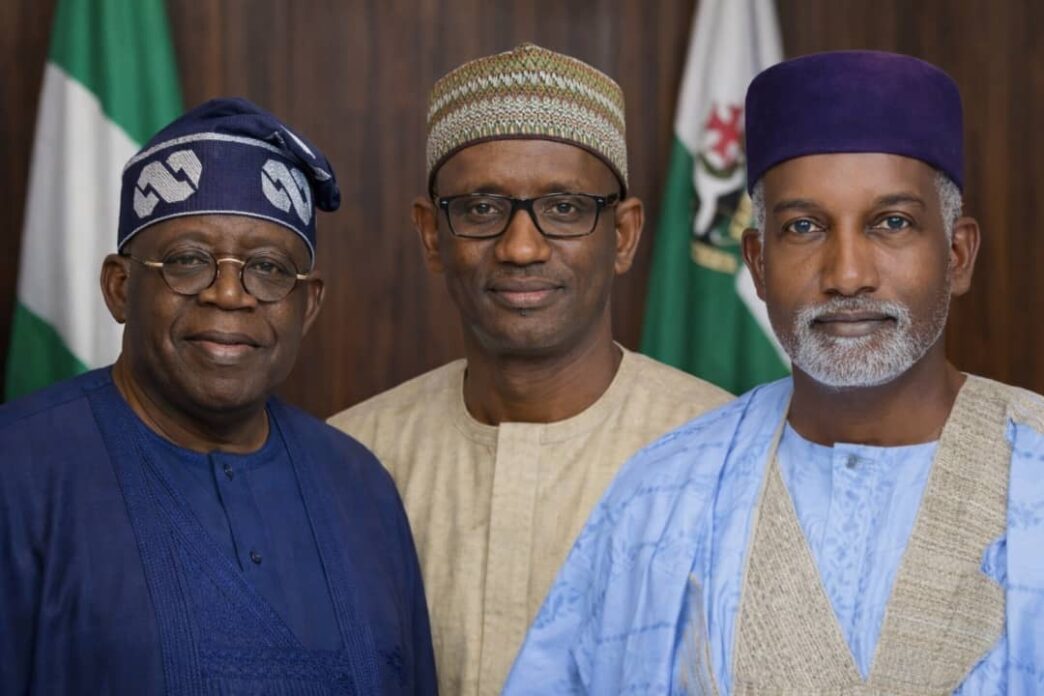
Instead, the administration of Bola Ahmed Tinubu chose a wiser course: quiet diplomacy, calibrated engagement, and firm protection of national interests without megaphone politics. That decision deserves commendation.
Core in this measured response is Nigeria’s National Security Adviser, Nuhu Ribadu whose deep institutional memory and operational experience helped steer interactions away from confrontation and toward cooperation. The result was not capitulation, but clarity—ensuring that Nigeria remained a sovereign partner, not a rhetorical battleground.
Equally pivotal has been the role of the Minister of Foreign Affairs, Yusuf Tuggar whose expertise, diplomatic experience and mild temperament where handy. In an era when diplomacy is often reduced to soundbites, Tuggar reaffirmed the enduring value of professional statecraft. Channels were kept open, messages were disciplined, and Nigeria’s red lines were communicated without drama. This is how serious nations behave when the stakes are high.
The outcome speaks for itself. What could have spiraled into an escalatory dispute was instead contained within a framework of coordinated and collaborative action—focused narrowly on suspected terrorist targets of mutual concern to Nigeria and the United States. Nigeria neither surrendered control nor indulged in chest-thumping. It protected its interests, safeguarded its sovereignty, and avoided unnecessary friction.
This episode underscores a fundamental truth of international relations: strength respects prudence, not bravado. International law formally enshrines sovereign equality, but its application is shaped by power realities. Norms are persuasive when interests align; they become flexible—or disposable—when they do not. We have seen this in Ukraine with Russia, in Gaza with Israel, and now in Venezuela with the United States.
Nigeria must listen—and act wisely.
Sovereignty is not defended by shouting matches. It is preserved through competence, confidence, credible partnerships, and strategic realism. In this regard, Nigeria’s leadership understood the moment and acted accordingly.
That realism stands in sharp contrast to the rhetorical bravado of figures such as Femi Fani-Kayode and Asari Dokubo, whose posturing too often illustrates the emptiness of noise in the face of complex and consequential diplomatic realities.
President Tinubu, supported by Ribadu and Tuggar, demonstrated that restraint is not weakness. It is a form of strength—one that keeps a nation secure, respected, and focused on its primary duty: the safety and prosperity of its people. In navigating a volatile moment with prudence and purpose, Nigeria showed that it knows when to speak softly, when to act firmly, and when to let results speak louder than rhetoric. That is leadership worthy of commendation.
Capt. Bishop C. Johnson, US Army (rtd), is a national defense and military strategist, and a political commentator.
Gatekeepers News is not liable for opinions expressed in this article; they’re strictly the writer’s