

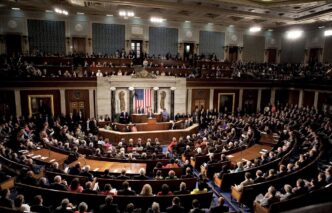

The United States House of Representatives has approved a bill extending a key trade programme that grants selected African countries preferential access to the US market.
Gatekeepers News reports that the lawmakers voted overwhelmingly to renew the African Growth and Opportunity Act, widely known as AGOA, with 340 votes in support and 54 against.
The programme, which was first introduced in 2000, allows eligible sub-Saharan African countries to export specific goods to the US without paying duties.
The approved bill seeks to revive AGOA after it expired on September 30, 2025. The extension, sponsored by Jason Smith, provides a three-year renewal and will keep the programme in force until December 31, 2028.
It also allows retroactive duty-free treatment, meaning importers can request refunds for duties already paid on qualifying African goods since the programme lapsed.
Before reaching the full House, the bill received strong bipartisan backing at the House Committee on Ways and Means, where it was passed by a 37-3 vote.
A statement from the committee described AGOA as the cornerstone of economic relations between the U.S. and Sub-Saharan African nations.
AGOA has long been viewed as a major tool for boosting trade, investment, and industrial growth across Africa, particularly in sectors such as agriculture, manufacturing, textiles, and natural resources.
Supporters of the extension argue that renewing the deal will help stabilise trade ties, protect African jobs linked to exports, and strengthen economic cooperation between the US and the continent.
Nigeria has benefited from the programme since its launch, ranking among the top African exporters under AGOA. Data from policy research institutions show that African countries exported over $100 billion worth of non-crude goods to the US between 2001 and 2022, with Nigeria placing second behind South Africa in non-oil exports during that period.
The extension now moves to the US Senate for consideration before it can be signed into law, a step analysts say is crucial for restoring certainty to businesses that rely on the trade arrangement.