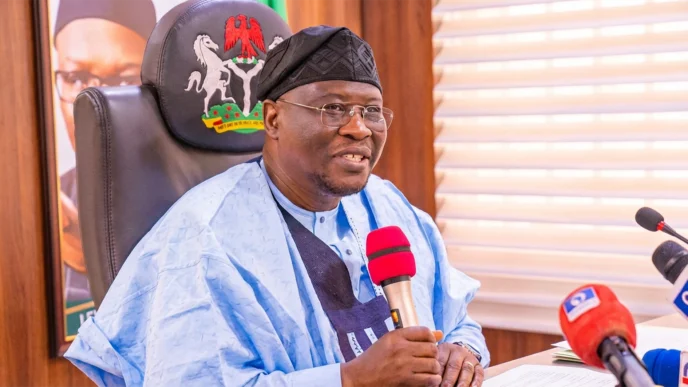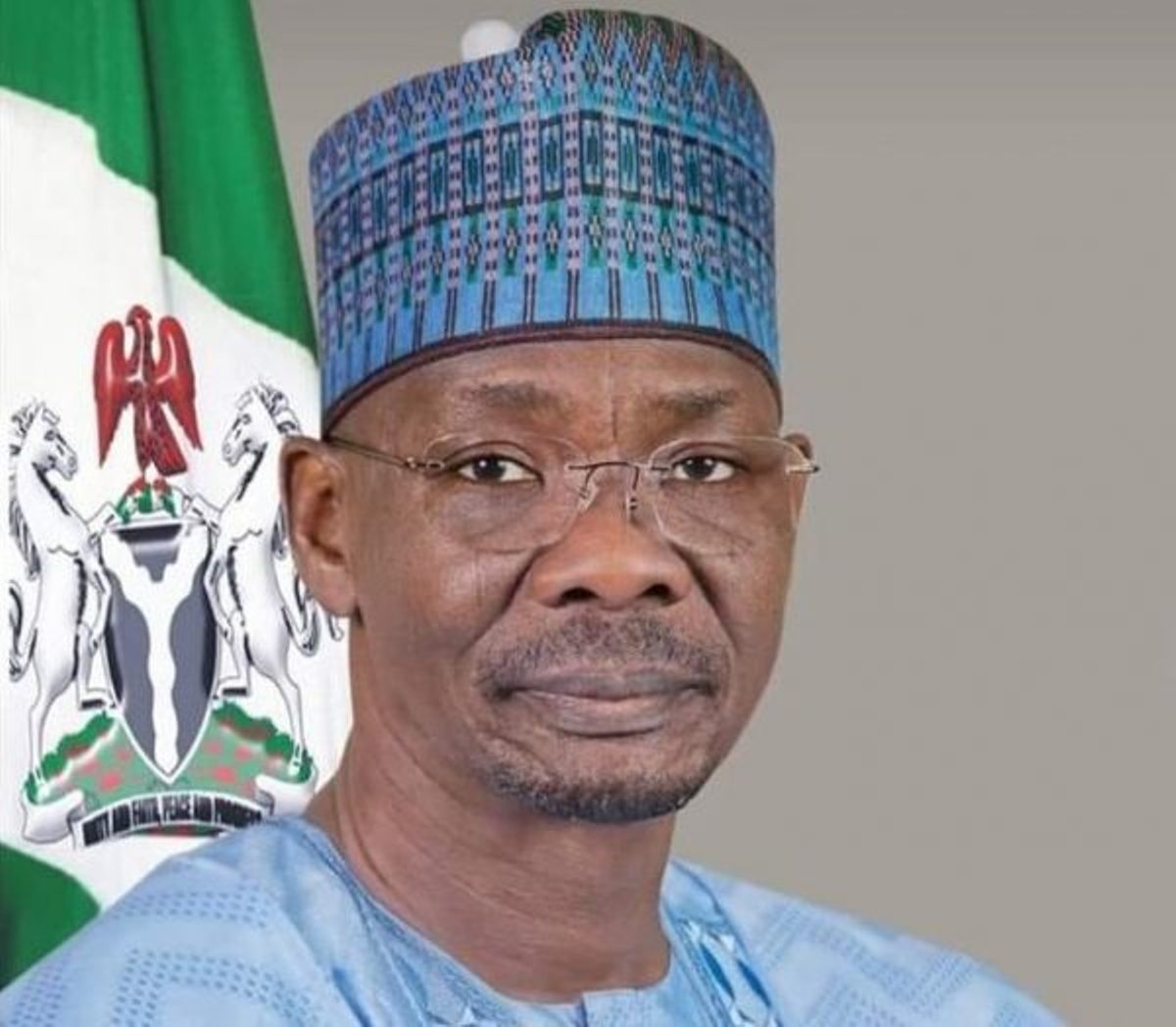
Nasarawa State Governor, Abdullahi Sule, has said he will lead a meeting of some state governors to address the implications of President Bola Tinubu’s Executive Order 9 (EO9), which has disrupted funding for oil exploration activities in parts of the country.
Gatekeepers News reports that Sule disclosed this during a meeting with newly elected All Progressives Congress (APC) local government and ward executives from Nasarawa North Senatorial Zone, held at the VIP Lodge in Akwanga.
He explained that while the President acted in line with constitutional provisions by ordering the direct remittance of oil and gas revenues to the Federation Account, the directive has created a funding gap for frontier oil exploration projects.
“The President did what the Constitution demands, and we cannot fight that. But there is a lacuna. The danger is that the money for frontier exploration will stop. That means exploration in Nasarawa, Lake Chad and other basins will be affected. Today, those who believe I am in the best position to offer advice are calling on me. Some governors are meeting with me so that we can come up with a solution that protects our interests while respecting the President’s directive,” Sule said.
He noted that under the previous arrangement, about 30 per cent of oil revenues managed by the Nigerian National Petroleum Company Limited (NNPCL) was partly used to fund exploration in frontier basins such as the Lake Chad Basin, the Benue Trough, and Nasarawa. According to him, the new order effectively halts that funding stream.
President Tinubu signed EO9 on February 18, 2026, mandating the direct remittance of oil and gas revenues to the Federation Account to ensure compliance with constitutional provisions and improve transparency.
Meanwhile, the South-South Governors’ Forum (SSGF) endorsed the executive order, describing it as a major step toward restoring transparency and fiscal accountability in Nigeria’s petroleum sector.
In a statement signed by its chairman and Bayelsa State Governor, Douye Diri, the forum said the directive would eliminate “opaque deductions” and remove the controversial 30 per cent Frontier Exploration Fund managed by the NNPCL.
“Mandating all operators and contractors under Production Sharing Contracts to remit Royalty Oil, Tax Oil and Profit Oil directly to the Federation Account will significantly plug revenue leakages,” the statement read.
The forum added that the move could increase funds available for infrastructure, healthcare, education, and other critical sectors across federal, state, and local governments.
The governors also urged the Federal Government to review aspects of the Petroleum Industry Act (PIA), including the reduction of host community allocations from the initially proposed 10 per cent to three per cent.
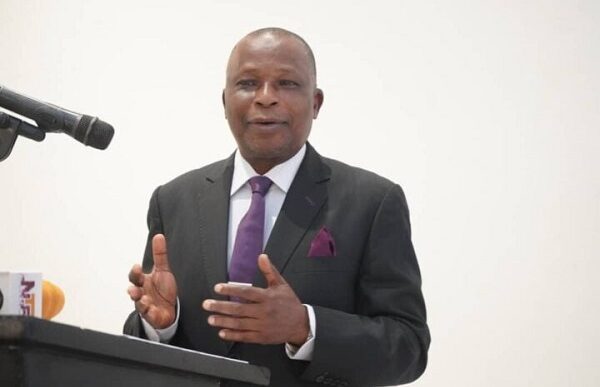
Separately, Senior Advocate of Nigeria, Olisa Agbakoba, called for deeper structural reforms, including the full privatisation of the NNPCL, arguing that its current structure creates legal and fiscal contradictions.
“The NNPC should be privatised, and I can understand that the NNPCL is a registered concern under the Corporate Affairs Commission (CAC), but it’s at the same time the property of the Federal Government under the Minister of Finance, with the President as the Minister of Petroleum Resources. There’s really a contradiction there,” he said.
Agbakoba also questioned the legality of past revenue deductions by the national oil company, noting that the Constitution requires all federation revenues to be paid into the Federation Account.
“The part that is of concern is that part where NNPCL takes about 70 per cent of the revenue we generate from oil. Section 162 states that money due to the federation must be paid into the federal account. But what has been happening is that NNPC… would deduct 70 per cent. And quite rightly, the President has passed the EO9 to say you can’t do that. So that has to go,” he stated.
He added that resolving the legal inconsistencies could significantly boost national revenues.