


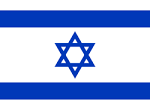
The distinction between biblical Israel and modern Israel is a complex topic with several interpretations. Biblical Israel in my opinion refers to the ancient kingdom and people described in the Hebrew Bible, with boundaries stretching from Egypt to the Euphrates River.
In contrast, the modern State of Israel was established in 1948, as a political entity with shifting borders defined by the UN, wars and treaties.
The biblical Israel of God’s promise was unique, a covenant people in a land with God-given borders.
The modern State of Israel, on the other hand, is a nation-state with political borders. While they overlap geographically, they are not the same spiritually or historically.
The modern nation’s borders have changed dramatically over time, shaped by factors like the 1948 Arab-Israeli war, the 1967 Six-Day War, and peace treaties.
Major differences include the covenant vs. nation-state distinction, with biblical Israel being a theocracy under God’s law and modern Israel being a secular democracy.
Additionally, biblical Israel’s borders were divinely ordained, whereas modern Israel’s borders are a result of political negotiations and conflicts.
The relationship between biblical and modern Israel is still being debated, with some seeing modern Israel as a fulfillment of prophecy and others viewing it as a separate entity. The Jewish people have maintained their identity and distinctiveness over centuries, and some genetic studies show a shared Middle Eastern ancestry among Jewish populations.
The state of Israel is not a Christian State with documented evidence persecution of the minority Christians.
The persecution of minority Christians in the present state of Israel is a pressing concern, with several reports indicating an increase in anti-Christian incidents. Reports indicate that in 2024 alone, there were over a hundred documented cases of harassment, physical assaults, and vandalism that were targeted against priests and pastors, churches, and Christian symbols, primarily perpetrated by ultra-Orthodox Jews and settlers. This hostile environment has resulted in a marked decline in the Christian population. Some estimates suggest that the Christians is made up of only about one percent of the population in historic Palestine.
The situation according to reports is worse in areas such as Taybeh, a predominantly Christian town in the West Bank, where settlers have escalated incursions and attacks on homes and property. The town’s parish priest, Rev Father Bashar Fawadleh, has appealed for international intervention, citing daily hardships and restrictions on movement. Similarly, in Gaza, Christian-owned homes and churches have been damaged and destroyed, forcing families to seek refuge in churches, which are also under the constant Israeli strikes.
The result of this systematic persecution is evident in the dwindling Christian population, with many considering emigration due to economic hardship, fear of persecution, and limited access to holy sites.
According to a recent survey, 48% of Christian youth under 30 are considering leaving the region, due to escalating discrimination and violence.
Frederick Braimah. Ph.D.
Elizade University, Ilara-mokin, Ondo State, Nigeria.
22 March, 2026.
Gatekeepers News is not liable for opinions expressed in this article; they’re strictly the writer’s