

The government of Ethiopia has instructed public institutions to place non-essential employees on annual leave as part of measures to ease pressure caused by a worsening fuel shortage affecting transportation nationwide.
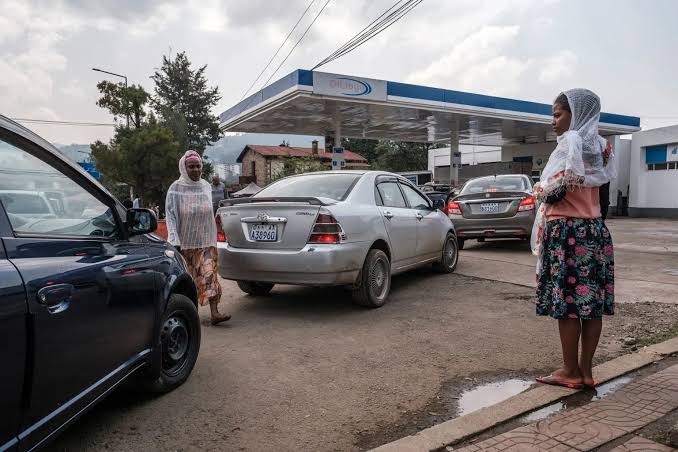
Gatekeepers News reports that officials said the directive is intended to reduce commuting and cut demand for fuel, as long queues of vehicles have formed at fuel stations across the country.
The crisis has been exacerbated by the ongoing conflict involving Iran, which has disrupted energy supplies and intensified fuel scarcity in the East African nation. Reports indicate that lines stretching overnight — sometimes involving hundreds of trucks, buses and cars — have become common at dispensing outlets.
Authorities said sending non-essential public workers on leave would help reduce travel demand and ease the strain on limited fuel supplies.
In the longer term, the government is planning a shift toward electric mobility. A document released by the Ministry of Finance and the Ethiopian Investment Commission outlines plans to replace the entire public vehicle fleet with electric vehicles by 2030.
Officials are also encouraging public transport operators to adopt compressed natural gas (CNG) as an alternative to diesel.
Ethiopia’s move places it among several countries implementing energy-saving measures as tensions in the Middle East continue to fuel a broader global energy crisis.
Last week, the government of Sri Lanka ordered local authorities to switch off street lights during unnecessary hours, reduce reliance on air conditioning in favour of electric fans, and limit elevator use by encouraging people to take the stairs.
Other countries, including India, Myanmar, Thailand, Philippines, Zimbabwe, South Sudan, Pakistan and others, are also adopting similar conservation steps to manage energy demand.