


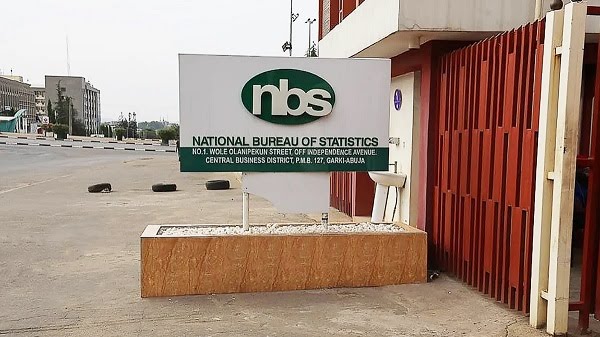
Nigeria has launched its first-ever National Household Survey on Climate Change, with a dedicated gender dimension, co-led by National Bureau of Statistics (NBS).
Gatekeepers News reports that the initiative marks a major step forward in strengthening the country’s climate governance and evidence base.
The survey is an initiative of the Gender Inclusive Climate Change Governance (GENCGOV) research programme, funded by UK Research and Innovation (UKRI), hosted at the University of Bradford, and delivered in collaboration with academic, government, research, and civil society partners across Nigeria, Kenya, South Africa, and the United Kingdom.
Key partners in Nigeria include the Environmental Law Research Institute (ELRI), Human and Environmental Development Agenda (HEDA Nigeria), Network of University Legal Aid Institutions (NULAI Nigeria), and the Environmental Defenders Network (EDEN).
For the first time, the survey, which will be held from 14th to21st May 2026, will generate structured, nationally representative evidence on how climate change is experienced across households, capturing differences across gender, age, and other social identifiers across Nigeria’s five climatic zones.
Its defining feature is the integration of gender and intersectional analysis into a national climate survey. Rather than only assessing whether communities are affected by climate change, the survey examines how impacts are distributed, who bears the greatest burden, who participates in decision-making, what support communities identify as priorities and what opportunities and resources exist for strengthening resilience. This approach makes the findings highly relevant for climate justice, inclusive planning, and more accountable governance.
The survey adopts an intersectional framework, recognising that climate impacts are shaped by factors such as gender, age, livelihood, location, access to resources, and decision-making power. Through household interviews and community-level focus group discussions, it aims to generate evidence grounded in lived experience, moving climate policy beyond broad assumptions.
A pretest conducted in Abuja in April 2026 highlighted the value of direct community engagement. Participants shared insights on climate challenges, adaptation needs, and gender dynamics in local decision-making, while also raising concerns about past surveys that did not lead to visible outcomes. These findings underscore the importance of ensuring that data collection is linked to feedback, policy learning, and tangible action.
Through collaboration between GENCGOV, the National Bureau of Statistics, the University of Bradford, ELRI, and other partners under the UKRI Future Leaders Fellowship programme, the survey is expected to strengthen Nigeria’s capacity to produce inclusive, gender-responsive climate policies and interventions.
Speaking at the launch, Dr. Pedi Obani, Associate Professor at the University of Bradford and Principal Investigator of GENCGOV, said:
“Without gender-disaggregated data, climate policy is flying blind. This groundbreaking national survey marks a major step toward inclusive, evidence-based climate governance in Nigeria by generating critical insights into how climate change affects women and men differently across diverse climatic zones.
The findings will help shift climate governance from broad assumptions to inclusive, data-driven action. It will equip policymakers with the tools to design more responsive and equitable climate policies, strengthenNigeria’s leadership in gender-responsive climate governance, and amplify the country’s credibility and influence in global climate negotiations.
At GENCGOV, we believe that climate governance must be inclusive by design. When women and marginalized groups are visible in the data, they become visible in policy, and that leads to stronger institutions, more resilient communities, and better climate outcomes for everyone.”
Prof. Olanrewaju Fagbohun SAN, Executive Director of Environmental Law Research Institute (ELRI) “The inauguration of Nigeria’s first National Household Survey on Climate Change is a watershed moment in building a more resilient, equitable and climate-just future.
By embedding gender-disaggregated and intersectional evidence into national climate research, the GenCGov programme, in collaboration with the University of Bradford, local partners and the National Bureau of Statistics, is helping to ensure that climate policy is grounded in the lived realities of households and communities.
This survey will support national and state governments to move beyond generic adaptation measures towards data-driven, gender-responsive interventions that reflect local vulnerabilities and priorities. As the findings are presented at the GenCGov International Conference in Abuja in June 2026, the evidence generated will strengthen inclusive climate governance and support policies that leave no community invisible.”
The Statistician General of the Federation and Chief Executive Officer of NBS, Mr Adeniran Adeyemi, said, “The National Bureau of Statistics is proud to implement Nigeria’s first National Household Survey on Climate Change. Reliable, inclusive data are essential for effective policymaking, particularly in addressing the growing challenges posed by climate change. This survey will provide critical evidence on how climate change affects households differently across the country and will support the design of responsive, evidence-based, and gender-sensitive policies and interventions for sustainable development.”
Mr. Olanrewaju Suraju, Chairman of the Human and Environmental Development Agenda stated “gender-disaggregated approach isn’t about dividing the issue. Itsabout seeing the full picture so solutions reach the people most affected and leverage the roles everyone already plays. We call on policymakers, civil society, and researchers to use this data to design climate programs that are targeted, effective, and equitable.”
The survey findings will be presented at the GENCGOV International Conference scheduled for 23 – 24 June 2026 in Abuja. The conference will position Nigeria as a continental leader in pioneering these solutions by bringing together leading academics, policymakers, civil society leaders, and grassroots innovators from across Africa and around the world to translate research into actionable, gender-responsive climate policy.
GENCGOV, the Gender Inclusive Climate Change Governance project, is a UK Research and Innovation-fundedprogramme hosted at the University of Bradford. The project brings together academic, government, civil society and community partners to strengthen inclusive, evidence-based and gender-responsive climate governance.
UK Research and Innovation is the United Kingdom’s national research and innovation funding body, supporting research and innovation that addresses major societal challenges and creates benefits for communities, policy and practice. GENCGOV is supported through UKRI’s Future Leaders Fellowship programme, which enables ambitious research and innovation with national and international impact.