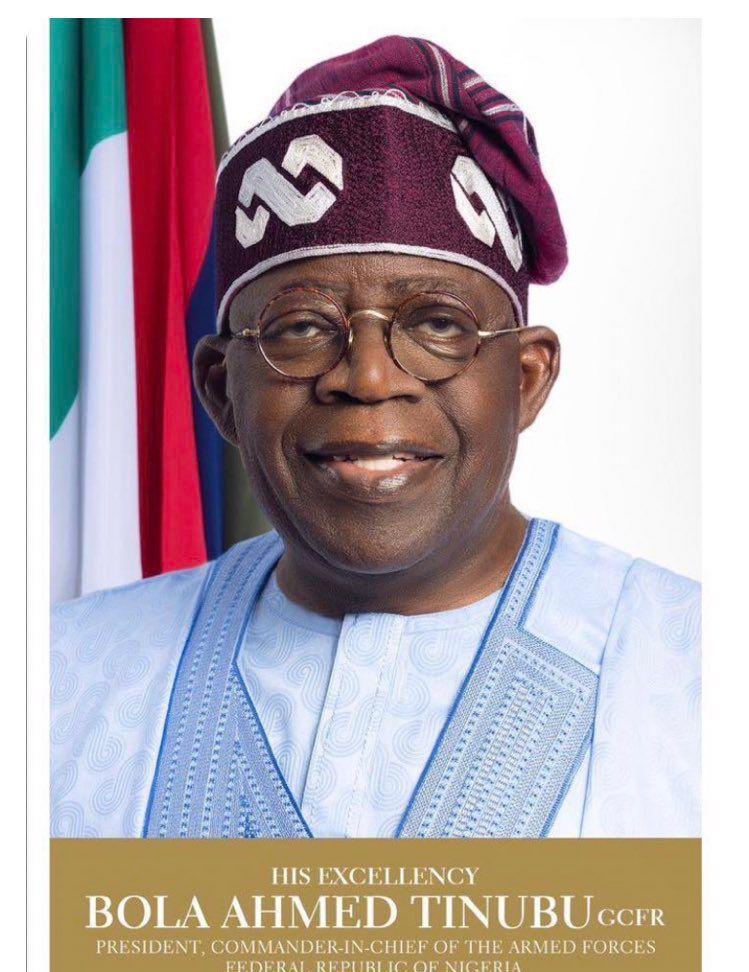
President Bola Ahmed Tinubu’s approval of four additional divisions for the Nigerian Army, alongside the recruitment of 28,000 additional personnel and the approval of improved salaries and welfare packages for members of the Armed Forces and other security agencies, represents one of the most significant defence policy decisions of his administration.
These decisions deserve commendation. They demonstrate strategic foresight and a clear appreciation of the indispensable role of the military and other security agencies in safeguarding Nigeria’s sovereignty, territorial integrity, and national stability. At a time when the nation continues to confront terrorism, insurgency, banditry, kidnapping, oil theft, piracy, and other emerging security threats, strengthening the security architecture is not merely desirable, it is imperative.
Yet while these announcements have generated understandable excitement, it is important that Nigerians appreciate the distinction between establishing new military formations and generating actual combat power. The two are not synonymous.
The creation of four new army divisions is a bold strategic decision, but it should not be interpreted as an immediate expansion of Nigeria’s battlefield capability. Military force generation is a deliberate, resource-intensive, and time-consuming process.
Although the Federal Government has approved the recruitment of 28,000 additional personnel, that figure, impressive as it may appear, is not sufficient to fully man four new divisions. A modern army division typically requires approximately 20,000 personnel, depending on its organisational structure, operational doctrine, and assigned mission. Consequently, four fully established divisions would ultimately require roughly 80,000 personnel, including senior officers, field-grade officers, company-grade officers, warrant officers, non-commissioned officers, and enlisted soldiers, together with the numerous technical specialists required to sustain modern military operations.
Even then, it would be unrealistic to assume that all 28,000 newly recruited personnel will be assigned exclusively to these four new divisions. The Nigerian Army already faces numerous personnel requirements across its existing formations and institutions. Reinforcements will be needed in operational divisions already engaged in combat, specialised corps, training institutions, logistics formations, intelligence units, medical services, engineering formations, signals, aviation, artillery, armour, military police, and other combat support and combat service support organisations. A substantial proportion of the new recruits will therefore be absorbed into existing structures to address longstanding manpower shortages before the new divisions can attain meaningful operational strength.
There is another equally important consideration. Military organisations are not built simply by recruiting soldiers. Every newly established division requires an experienced leadership cadre. Commanders, principal staff officers, battalion commanders, company commanders, platoon leaders, senior warrant officers, regimental sergeant majors, and experienced non-commissioned officers cannot be manufactured overnight. They must be drawn from existing formations where they have accumulated years of operational experience and professional competence. This necessary redistribution of experienced personnel inevitably places temporary pressure on existing formations as leadership and technical expertise are transferred to establish new headquarters and subordinate units.
Furthermore, many people mistakenly assume that once a Major General is appointed to command a division, the division itself is ready for combat. Nothing could be further from reality. A division headquarters is primarily a command-and-control organisation. It plans, coordinates, supervises, and directs military operations, but it is not the principal fighting force.
The real combat capability of any division resides in its subordinate combat formations: brigades, battalions, companies, platoons, and sections supported by artillery, armour, engineers, signals, intelligence, logistics, medical services, aviation, air defence, maintenance, transportation, supply, and numerous other specialised units. Each of these organisations must be recruited, trained, equipped, integrated, exercised, evaluated, and certified before the division can honestly be regarded as combat-ready.
That process requires enormous investment in barracks, training facilities, weapons systems, armoured fighting vehicles, artillery platforms, communications equipment, ammunition stockpiles, engineering equipment, mobility assets, fuel infrastructure, maintenance workshops, medical facilities, intelligence systems, and countless other operational requirements. It also requires continuous collective training. Individual soldiers must first master their personal military skills before progressing to section, platoon, company, battalion, brigade, and finally division-level exercises. Only after repeated operational training can newly formed units develop the cohesion, discipline, confidence, and interoperability necessary for successful combat operations.
Military history consistently demonstrates that effective combat formations are built through years of rigorous training, realistic exercises, capable leadership, and shared operational experience. They cannot simply be created through administrative announcements.
This reality should not diminish the importance of President Tinubu’s decision. On the contrary, it underscores its strategic significance. By approving four additional divisions, the President has initiated a long-term force expansion programme that has the potential to substantially enhance Nigeria’s military capabilities over the coming years. It is an investment in the nation’s future security rather than an instant solution to today’s security challenges.
Equally commendable is the administration’s approval of improved salaries and welfare packages for members of the Armed Forces and other security agencies. Professional armed forces depend not only on modern equipment but also on motivated personnel. Better remuneration, improved welfare, enhanced healthcare, housing, insurance, education opportunities for military families, and improved working conditions all contribute significantly to morale, retention, operational effectiveness, and institutional professionalism.
Although the full benefits of these welfare initiatives may not be immediately apparent, every meaningful reform begins with a deliberate first step. The decision to improve the welfare of those who daily place their lives on the line in defence of Nigeria is both timely and commendable. Sustained investment in personnel welfare is not an expense; it is a strategic investment in national security.
Ultimately, the approval of additional divisions, increased recruitment, and enhanced welfare packages should be viewed as complementary components of a broader national defence modernisation strategy. If successive phases of recruitment, equipment acquisition, infrastructure development, leadership development, and sustained funding are consistently implemented, Nigeria will gradually build a larger, stronger, more professional, and more capable military that is better positioned to confront both current and future security threats.
The journey has begun. What remains is sustained political commitment, adequate funding, professional implementation, and patience. In military affairs, there are no shortcuts to building combat power. Announcing new divisions is an important first step. Building fully manned, professionally led, properly equipped, combat-ready divisions is the real mission—and that mission will take years, not months.
Capt. Bishop C. Johnson (US Army, Retired), is a National Defense and Military Strategist
Gatekeepers News is not liable for opinions expressed in this article; they’re strictly the writer’s.