



The Federal Government has set a target of wheeling 6,000 megawatts (MW) of electricity before December as part of efforts to strengthen Nigeria’s transmission network and improve the reliability of power supply.
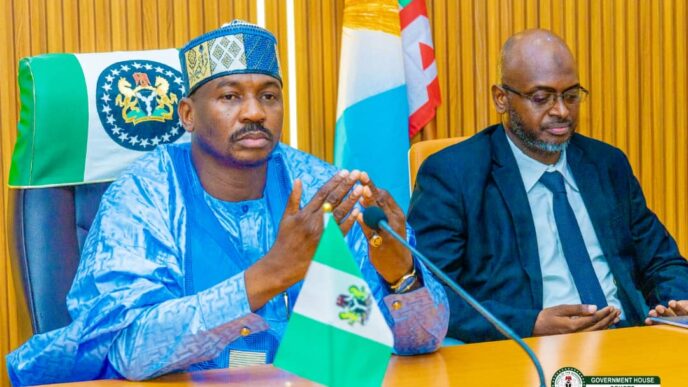
Gatekeepers News reports that the Minister of Power, Joseph Tegbe, disclosed this in Lagos while commissioning two new 100 megavolt-amperes (MVA), 132/33 kilovolt power transformers at the Ijora Transmission Substation.
Tegbe also said the government planned to commission 20 transmission projects before the end of the year to strengthen the nation’s electricity infrastructure and improve the national grid’s capacity to evacuate available generation.
“Let me put on record that the objective of this commitment is not just to generate more megawatts. The objective is to create a power system that can reliably deliver electricity to where it is needed, when it is needed, and at a quality and cost that supports economic activity,” he said.
He stressed that increasing power generation alone would not solve Nigeria’s electricity challenges if the transmission network lacked the capacity to reliably move available electricity to consumers.
“This is my second transmission project commissioning today, and we all agreed that before the end of the year, we should commission 20. The most important thing is to be able to wheel comfortably, 6,000 megawatts before December. Will that happen?” the minister asked.
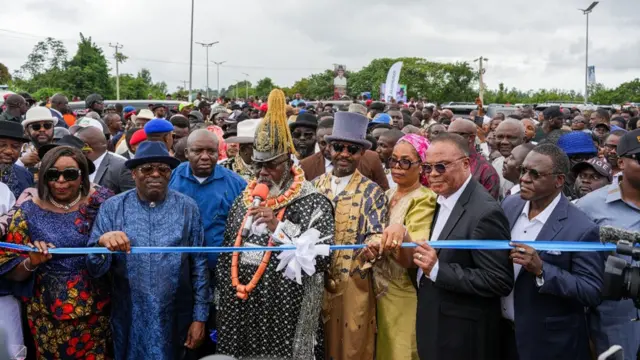
Tegbe subsequently commissioned the two 100 MVA, 132/33 kV transformers and associated upgraded facilities, dedicating the project to Lagos residents as well as businesses and industries operating in the area.
Earlier, the minister unveiled the 2×60 MVA, 132/33 kV gas-insulated switchgear (GIS) substation on Apapa Road, Lagos. The project was funded by the Japan International Cooperation Agency.
Ijora Upgrade Raises Capacity to 230MVA
Speaking on the significance of the Ijora upgrade, Tegbe said the substation was strategically located within one of Lagos’ major economic corridors, serving industries, ports, commercial centres and surrounding communities.
He said the original Ijora substation had three 30 MVA transformers, giving it a combined installed capacity of 90 MVA, which had become inadequate as population growth and commercial and industrial activities increased.
According to the minister, two of the existing 30 MVA transformers have been replaced with two 100 MVA units, increasing the substation’s total installed capacity from 90 MVA to 230 MVA.
“This improvement represents a substantial intervention. Two of the existing 30 MVA transformers are replaced with two modern 100 MVA, 132/33 kV transformers, resulting in an increase of total installed capacity from 90 MVA to 230 MVA, equivalent to about 184MW. And that represents an additional 125MW of bulk transmission capacity that will translate into real economic value going forward,” he said.
Tegbe said the upgrade would improve electricity supply to Ijora, Costain, Oyigbo, Customs and Ajegunle communities, while supporting businesses and consumers within the franchise area of Eko Electricity Distribution Company.
He said investments in transmission infrastructure were critical to achieving President Bola Tinubu’s ambition of transforming Nigeria into a $1 trillion economy.
According to the minister, transmission had previously constituted a major constraint in the power sector, but the government was now addressing structural challenges across the electricity value chain.
World Bank Approves $200m for Off-Grid Power
Meanwhile, the World Bank has approved an additional $200 million in financing to support Nigeria’s off-grid electricity sector as the country seeks to expand access to reliable power through mini-grids and other decentralised energy solutions.
The funding is being provided under the Distributed Access through Renewable Energy Scale-Up (DARES) Project, which aims to increase electricity access for households, businesses and public institutions that remain underserved by the conventional grid.
The additional financing is expected to support the deployment of solar mini-grids and other distributed renewable energy systems, particularly in communities where extending the national grid is difficult or economically unviable.
The intervention comes amid persistent challenges in Nigeria’s electricity sector, including unreliable supply, high energy costs and limited grid coverage.
For many businesses, particularly Micro, Small and Medium Enterprises (MSMEs), unreliable electricity remains a major operational challenge, forcing them to rely heavily on petrol and diesel generators.
Under the DARES programme, the government and development partners are seeking to increase private-sector participation in Nigeria’s off-grid electricity market. The initiative is expected to create opportunities for renewable energy companies, mini-grid developers, equipment suppliers and other businesses across the clean-energy value chain.
Changes to Nigeria’s mini-grid regulatory framework are also expected to influence how developers operate in the sector, with the new rules aimed at providing clearer guidelines for mini-grid development and creating a more predictable environment for private investment.
The improved regulatory framework could encourage additional investment as demand for alternative electricity sources continues to grow among households, commercial users and industrial consumers.
DARES has so far reached 5.3 million Nigerians against its target of 16.2 million beneficiaries by the end of the project. Solar home unit deployments have reached 1.046 million against a target of 2.75 million.
The World Bank approved the additional financing after Nigeria met four performance conditions, although it continues to rate the country’s political and macroeconomic risks as high.