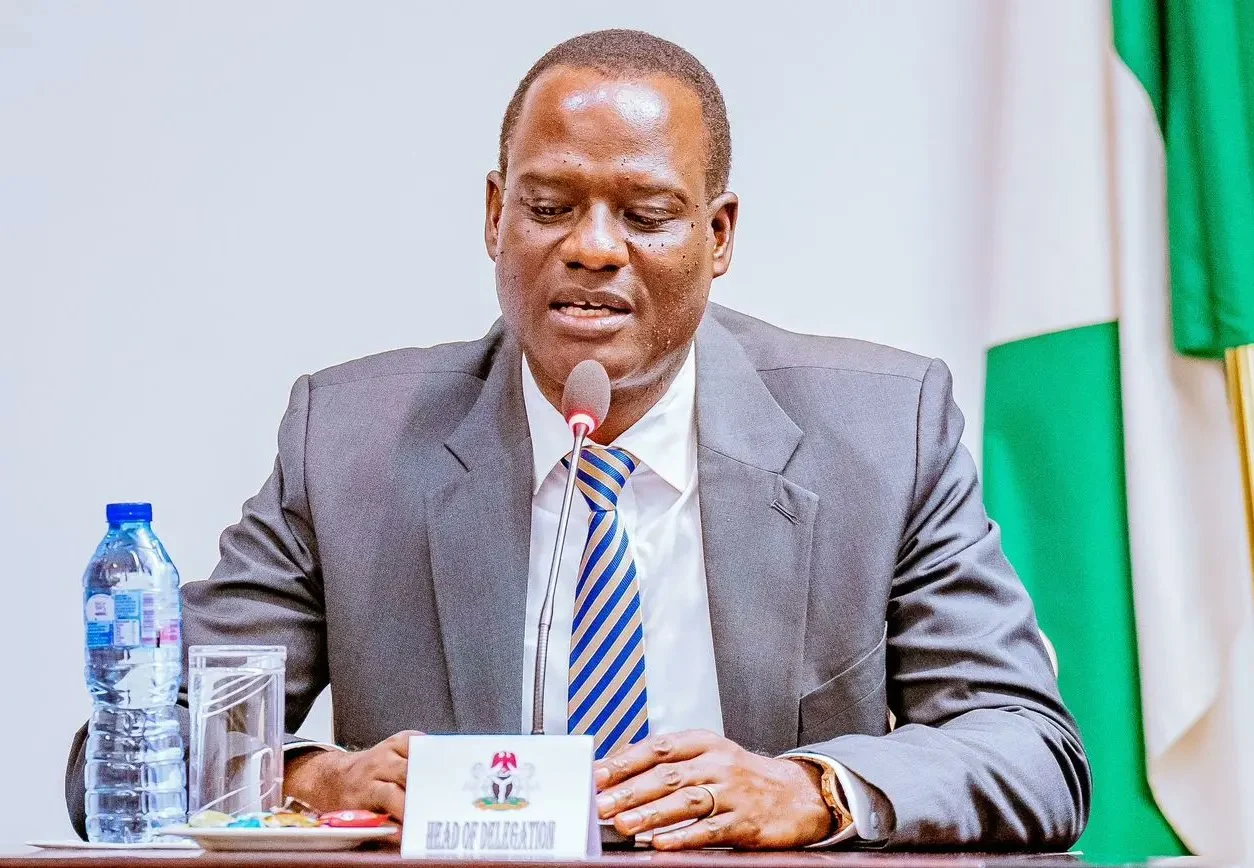
The Federal Government spent N9.39 trillion on wage adjustments, minimum wage increases and allowances for public servants between June 2023 and December 2025, the Minister of Finance and Coordinating Minister of the Economy, Taiwo Oyedele, has said.
Gatekeepers News reports that Oyedele disclosed this on Wednesday at a press conference in Abuja on the financial impact of the economic reforms implemented by the administration of President Bola Tinubu.
In June 2024, Tinubu approved an increase in the national minimum wage from N30,000 to N70,000 after assenting to the new minimum wage legislation, which provides for a review every three years.
According to Oyedele, the N9.39 trillion spent on wages and related adjustments during the period exceeded the Federal Government’s entire share of resources generated from the removal of the petrol subsidy.
“The incremental amount that the federal government spends paying higher wages is more than the entire savings that the federal government earned from subsidy removal,” he said.
The minister said the Federal Government received N5.4 trillion out of the N15.8 trillion in resources mobilised for the federation through the petrol subsidy removal and foreign exchange reforms between June 2023 and December 2025.
He said the remaining N10.4 trillion was shared among state and local governments.
Oyedele explained that the resources generated from the reforms, together with additional revenue and borrowing, provided the Federal Government with incremental resources of N20.4 trillion during the period.
However, he said the government’s incremental expenditure stood at N30.64 trillion.
A breakdown showed that N9.39 trillion was spent on wage adjustments and allowances, N9.37 trillion on external debt servicing and N6.5 trillion on strategic infrastructure.
Oyedele said the increase in wage expenditure reflected adjustments introduced by the government following the removal of the petrol subsidy in June 2023.
The subsidy removal led to a sharp increase in petrol prices, which raised costs for households and businesses across the country.
The minister acknowledged that the reforms had imposed significant costs on Nigerians but said the government had taken measures to cushion their impact.
He said the decisions came at a “real cost, and we are not here to pretend otherwise”.