

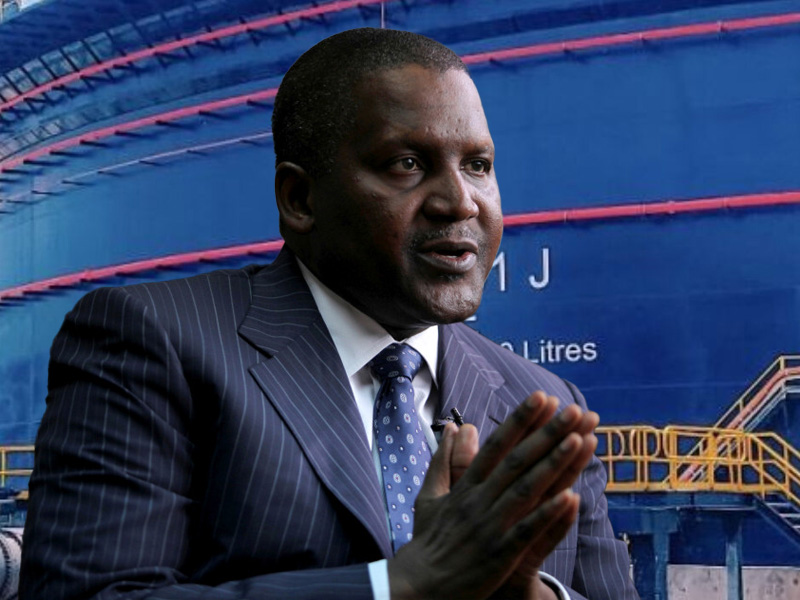
The Emir of Kano, Muhammadu Sanusi II, has cautioned Nigerians against taking excessive financial risks to participate in the Dangote Petroleum Refinery and Petrochemicals FZE initial public offering (IPO).
Gatekeepers News reports that Sanusi urged prospective investors not to sell their homes or use their children’s school fees to purchase shares, advising them instead to invest only money they could comfortably set aside.
The former Central Bank of Nigeria (CBN) governor spoke at the Dangote Refinery IPO roadshow in Kano State, which was attended by investors, stockbrokers, bank representatives, business leaders, traditional rulers and prospective shareholders.
“Do not take your children’s school fees and put your shares. Do not sell your house that you live in and put in shares, but what you can afford — 10,000, 20,000, 30,000,” Sanusi said.
He encouraged investors to commit funds they could leave untouched for an extended period, saying the investment could appreciate over time based on the company’s fundamentals.
“What you can afford to set aside for some time, set it aside, and if you look at the fundamentals of the economy over time, you can be assured that this investment will grow,” he said.
“And you will not regret it. And to be honest, people are buying from all over the country. I speak as Emir of Kano. I would like my people to be owners of this. I do not want us to be left behind in the capital markets.”
Sanusi also urged Kano residents to support the investment, describing Aliko Dangote as a “son” of the state.
He, however, advised investors against buying shares with the intention of making quick returns.
“And I’m not talking about someone who will buy 5,000 shares and wants to sell tomorrow and believes you get 10,000. No, I’m talking about you have some money, put it in, leave it there for some time, and just watch your money grow,” he said.
“Forget about it for some time. You’ll be surprised in five years, the ₦10,000 you invest today, what it will be.
“The ₦100,000 you invest will be. So I would urge all of us to try to begin the process of owning, and if you’re going to own, you might as well own in a company that has the right economic fundamentals, a company that is producing; you can see the assets on the ground.”
The Emir said Kano’s history of producing successful entrepreneurs was linked to a culture of risk-taking, hard work and enterprise.
He also commended Dangote for the refinery, saying the project had the potential to alter Nigeria’s long-standing dependence on imported refined petroleum products.
Sanusi recalled that, during his tenure as CBN governor, one of the major challenges facing the country was the use of foreign exchange earned from crude oil exports to finance the importation of refined petroleum products.
“As governor of the Central Bank, one of my biggest and saddest problems was seeing how every day, we would spend so much effort to earn foreign exchange from all sectors exporting crude oil, under-spend the same foreign exchange importing petroleum products,” he said.
“Instead of using the foreign exchange to develop agriculture, to develop infrastructure, to develop education, we would export crude oil and then turn around and import refined petroleum products and actually pay subsidy to keep refineries open in Europe, refineries open in Asia because we bought the petroleum products at markets.”
He said the Dangote refinery had disrupted that model by enabling Nigeria to refine crude domestically rather than exporting crude for processing and subsequently importing refined products.
“We don’t need someone to refine, take our crude to England and France, refine it and sell it back to us as a profit. We don’t. We should find it here and buy, and also sell to others,” the Emir said.
“We have moved from a country using its foreign exchange to import petroleum products, to one that potentially will be earning foreign exchange from an exporter, not just of crude but also of refined products.”
The Dangote Refinery IPO, which opened on September 14, 2026, comprises 4.1 billion new ordinary shares priced at ₦525 per share. The minimum subscription is 10 shares, valued at ₦5,250.
The offer is scheduled to close on October 13, 2026, subject to the terms contained in the prospectus.
The transaction is open to retail, institutional and eligible African investors and is aimed at broadening ownership of the refinery while deepening participation in Nigeria’s capital market.
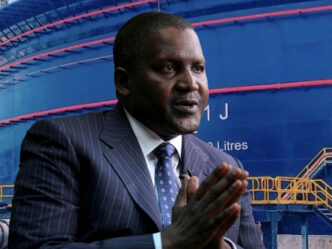
Speaking at the IPO gong-sounding ceremony on the trading floor of the Nigerian Exchange (NGX) on Monday, Dangote Group President Aliko Dangote said the refinery would become the most viable company in Africa by the end of December 2026.