


The federal government is proposing mandatory impact assessments before introducing major economic policy changes as part of efforts to reduce uncertainty for businesses and investors.
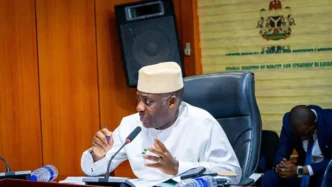
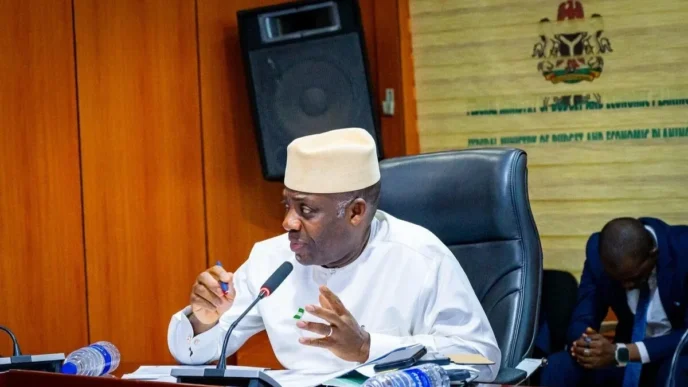
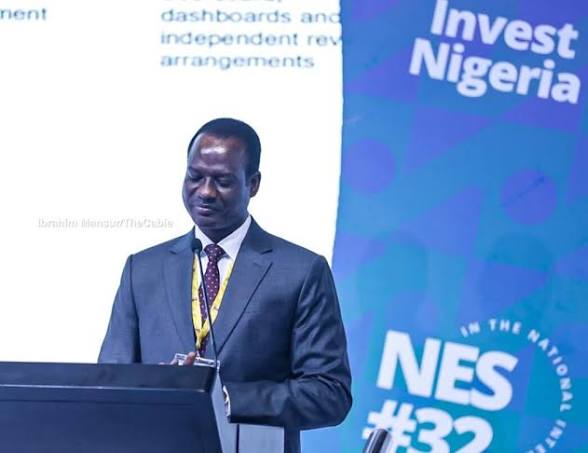
Gatekeepers News reports that Taiwo Oyedele, minister of finance and coordinating minister of the economy, disclosed this on Monday at the 32nd Nigerian Economic Summit (NES) in Abuja, where he presented the proposed Nigeria Economic Policy Framework for public consultation.
Oyedele said the framework would require policymakers to clearly explain the problems an intervention seeks to address, the evidence supporting it, its intended beneficiaries, who would bear the costs and the conditions under which the policy would be discontinued.
He stressed that the document remains a consultation draft designed to establish enduring principles for economic policymaking across successive administrations, rather than serve as a development plan or the manifesto of a particular government.
“Our challenge has never been a shortage of ambition or good ideas. It has been the absence of an enduring economic philosophy, consistent policy making, and disciplined implementation,” Oyedele said.
According to the minister, frequent policy reversals, inadequate impact assessments and limited consultation with businesses have weakened investor confidence and undermined economic growth.
“Policy uncertainty is an invisible tax on enterprise, and unlike most taxes, it generates no revenue for government. It only destroys value and discourages investment,” he said.
Oyedele explained that the proposed framework would organise Nigeria’s economic priorities around seven interconnected areas: stability, productivity, enterprise, capital, people, markets and institutions.
He said it would also introduce an annual national economic scorecard, to be published on or before October 1 each year, to monitor key indicators, including real wages, productive employment and poverty levels.
“GDP growth matters, but per capita income matters even more,” he said.
The minister argued that economic performance should be assessed not only through aggregate growth figures but also through improvements in household incomes, employment opportunities and business productivity.
He said the framework would be anchored on three principles: enterprise as the engine of growth, open but fair markets, and effective coordination across government institutions.
Oyedele added that the government’s role would be to support private enterprise through the provision of public goods, enforcement of the rule of law, correction of market failures and protection of vulnerable groups.
Tariffs Should Support Industrial Development, Says Oyedele
On trade policy, the minister said tariffs should promote the development of domestic industries without permanently shielding inefficient businesses from competition.
“A tariff must serve as a runway for local industry to take off, never a permanent shelter from competition,” he said.
Oyedele announced that the draft framework would be opened for public consultation from November 27, 2026, with Nigerians invited to respond to 17 questions through the Federal Ministry of Finance’s website.
He said the document would be submitted to the Federal Executive Council for approval and the National Economic Council for endorsement after the consultation and validation process.
The minister urged businesses and other stakeholders to examine the proposals and submit evidence-based recommendations to help shape a consistent and predictable economic policy direction for the country.