

As the countdown to the 2027 general elections gathers momentum, curiously, much of the opposition’s strategy appears directed less at convincing the electorate on why they deserve to be voted for than at pre-emptively constructing narratives to justify their expected electoral defeat.
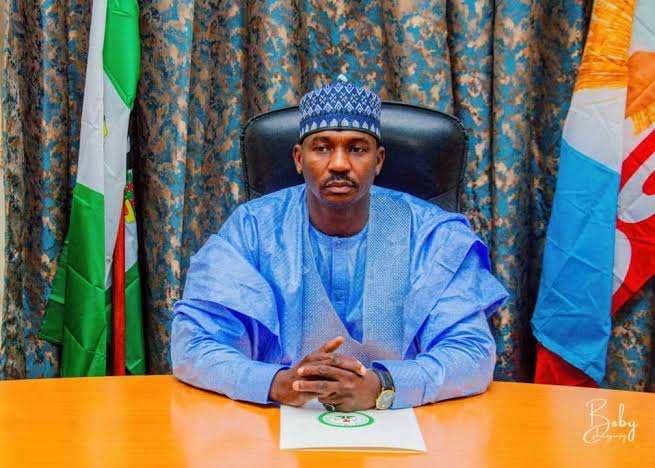
In Sokoto, the historic Seat of the Caliphate, Governor Ahmed Aliyu and his administration have become the main targets of an increasingly fiery negative media campaign aimed at portraying him as anti-democratic and to undermine his administration’s superlative performance.
The African Democratic Congress (ADC), the main opposition party—which is actually a paper tiger—has offered no policy agenda for the development of the state. Instead, its emerging playbook is to rely on grievances, especially the fuel subsidy removal and foreign exchange unification, which have driven up the cost of goods and transport fares. The opposition strategists are attempting a political sleight of hand. They have also attempted to cash in on the persistent banditry and kidnapping across the North-West and North-Central, and the distribution of ministerial and agency appointments to compensate for their lack of support in the state.
While the national economic realities have undoubtedly impacted many Nigerians, the Sokoto State Government under Governor Aliyu must be judged on how effectively it has utilized the state’s resources to cushion the shocks and whether he has delivered on his campaign promises. To attempt to build its campaign entirely on demonizing Governor Aliyu to win the election is an insult to the intelligence of the Sokoto State people. But, by the way, Aminu Tambuwal and Munir Muhammad Dan’iya, the governorship candidate of the African Democratic Congress (ADC), have never hidden their contempt for the people. Their poor performance in office between 2015 and 2023 is a testimony to that fact.
Despite the national economic downturn, the Aliyu administration has continued to deliver on its transformative 9-Point Smart Agenda, with measurable interventions across critical sectors. In infrastructure, the government has completed more than 350 roads, which have improved and opened up the rural areas for economic activities. In education, it has constructed more than 1,175 classrooms to address the challenge of inadequate learning facilities, while 1,850 housing units have been delivered as part of efforts to improve access to decent accommodation. In the health sector, the recruitment of 800 nurses has strengthened manpower capacity across public health facilities, complementing investments in the rehabilitation, equipping and upgrading of healthcare institutions. These interventions are not merely figures on a government scorecard; they represent tangible responses to longstanding development challenges and demonstrate an administration focused on translating public resources into projects and services that will directly improve the lives of ordinary people. Recognising that security is foundational to economic activity, the state government has also consistently equipped and supported security agencies operating within the state, restored monthly allowances, funded the Sokoto State Community Corps and provided operational logistics, including the construction of military bases at Illela, the border town between Nigeria and the Niger Republic. Furthermore, Sokoto’s urban and rural communities have witnessed visible transformation through infrastructure renewal, including solar-powered streetlights along completed roads, alongside free maternal and child healthcare schemes and targeted social safety nets.
While opposition politics is vital to a thriving democracy, it must be built on solutions and not on a campaign of calumny. If the ADC and other opposition coalitions wish to make a serious claim on the Seat of the Caliphate in 2027, they must move past their negative narrative and outline concrete, alternative policy frameworks. Unlike them, Governor Aliyu’s re-election campaign remains firmly anchored on a visible scorecard of performance and a promise to build on the solid foundation already laid.
On the allegations by the ADC that the sealing of its state office along a major thoroughfare in the state capital is politically motivated, opposition commentators have latched on to the incident as evidence of high-handedness without looking at the facts. This shows how guilty they are of the same crime they accuse others of. The state government maintains that its intervention was necessary to maintain public safety and prevent civil disorder after conflicting claims emerged regarding the tenancy and physical occupation of the premises. The property in question carries documented legal encumbrances stemming from the liquidation of the defunct Savannah Bank, where the Nigeria Deposit Insurance Corporation (NDIC) retains statutory oversight regarding asset liquidation and ownership verification.
Allowing the occupation of the contested property along a major metropolitan area of the state capital by either the Peoples Democratic Party (PDP) or the ADC poses potential security risks to the whole state and not just the immediate area. The assertion by opposition members that they will forcibly reopen legally sealed premises shows their lack of respect for law and order and their desire to achieve through violence justifies the government decision.Political legitimacy in a democracy is ultimately earned through performance, and Governor Aliyu’s administration has delivered substantially and demonstrated that its development priorities underpin its political appeal.
Governor Aliyu’s political strength is rooted in his deep connections with the people of Sokoto State and the political structure he shares with his political leader, Senator Aliyu Magatakarda Wamakko, a central figure in Sokoto politics since 2007. Working in close synergy, both leaders have sustained an extensive All Progressives Congress (APC) grassroots network spanning every ward and polling unit across the state. This is a political advantage the ADC has struggled to replicate, particularly amid its internal divisions and the defection of members who have expressed confidence in Governor Aliyu’s leadership and performance.
It is deeply ironic when political figures like former Vice President Atiku Abubakar—a serial contender who has crisscrossed multiple political parties in his relentless pursuit of the presidency—accuse others of being anti-democratic alongside his co-travellers like Aminu Tambuwal, who have toed the exact same path. Their sudden posturing as champions of democratic principles reeks of opportunism, especially given Atiku’s selective relationship with the party’s zoning arrangements. When power-sharing agreements favored his region, he championed equity and rotation; yet, whenever zoning stood as an obstacle to his ambitions, he conveniently discarded party consensus to run on a platform of “pure competence.” Opportunistic posturing can never replace consistent community engagement, and shifting constitutional principles to fit personal ambition only exposes a politics driven by expediency rather than democratic conviction.
Recognizing their own structural weakness, which has guaranteed them defeat at the ballot box, and their lack of grassroots support, the ADC will continue to leverage on national tensions—such as the fuel subsidy removal—and exploit persistent North-West security challenges like banditry and kidnapping to argue that the ruling party should be voted out. They will simultaneously amplify grievances over federal appointment imbalances and infrastructure spending to foster a volatile political narrative.And nothing more.
But they cannot deny that the Governor Aliyu administration has performed across the state. They also cannot deny that they have no comparable record from their eight years in office. These interventions are significant not merely because of the number of projects executed, but because they address longstanding development challenges affecting communities across the state, which they bluntly refused to do.
When opposition parties realise that their electoral prospects are constrained by a lack of local structure, their standard fallback mechanism is to cry foul, claim state intimidation, and issue open letters to international observers. But the people of Sokoto State understand the difference between governance and lack of it. They witnessed it first-hand.
Undeterred by the opposition noise, Governor Ahmed Aliyu has remained laser-focused on his assignment, building a transformative record that renders political intimidation completely unnecessary. Across all 23 Local Government Areas of Sokoto State, his administration’s impact is visible, tangible, and undeniable—touching lives through aggressive rural infrastructure, revitalized healthcare facilities, enhanced security support, and sustained human capital development. Governor Aliyu does not need to engage in petty political coercion when his performance speaks for itself; his true mandate is secured not by political leverage, but by the trust of a people who directly reap the dividends of focused, grassroots governance.
As Nigeria moves toward the 2027 elections, the opposition would serve the public far better by presenting clear, actionable policy alternatives rather than orchestrating media confrontations over property disputes and inciting unrest. Democracy thrives on law and order, and a compelling vision for the future—not political theater. Having experienced tangible progress, the people of Sokoto State can readily distinguish between a leader genuinely dedicated to governance and opportunists desperately chasing relevance, proving that real delivery will always triumph over disruptive politics.
Gatekeepers News is not liable for opinions expressed in this article; they’re strictly the writer’s.