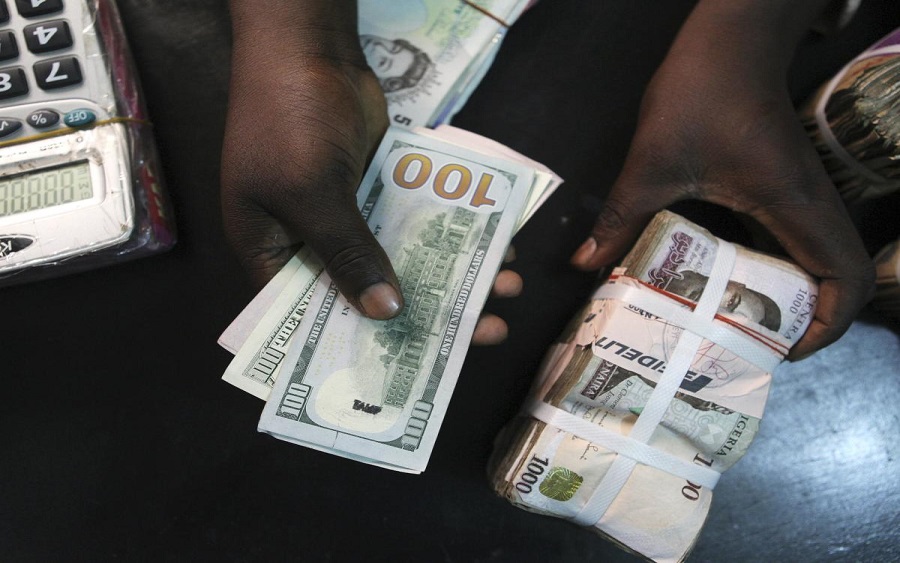


The African Union (AU) says Africa loses an estimated $80 billion annually to corruption and illicit financial flows, warning that the massive financial losses pose a significant threat to the continent’s development.
Gatekeepers News reports that Kwami Senanu, chairperson of the AU Advisory Board Against Corruption (AUABC), disclosed this on Tuesday at the first general assembly of the African Asset Recovery Practitioners’ Forum (AARP-F) in Abuja.
Senanu described the scale of the losses as alarming, noting that estimates from some stakeholders put the amount lost to illicit financial flows even higher.
“It is a fact that Africa continues to lose vast amounts of resources every year to corruption and illicit financial flows. Our UN partners put in about $80 billion annually,” he said.
“Some other stakeholders on the continent look at about $125 billion being lost annually just to illicit financial flows. Approximately, perhaps about 50% of our domestic revenue mobilisation and 25% of GDP is being lost. This is a very important issue.”
He called for urgent and sustained efforts to curb the movement of illicit funds out of Africa and ensure that recovered assets are returned, retained and managed in ways that directly benefit citizens.
According to him, effective asset recovery presents an important opportunity for African countries to address their socioeconomic challenges.
Senanu said funds lost through corruption and illicit financial activities could otherwise be channelled into critical sectors such as healthcare, education, transportation and infrastructure development.
Also speaking, Musa Aliyu, chairman of the Independent Corrupt Practices and Other Related Offences Commission (ICPC), said asset recovery goes beyond financial investigations, describing it as a critical instrument for promoting accountability.
Aliyu, who also chairs the interim steering council of AARP-F, said corruption and illicit financial flows had become increasingly complex and transnational.
He explained that stolen assets were often concealed, transferred or invested across multiple jurisdictions through sophisticated financial arrangements designed to frustrate investigations and recovery efforts.
The ICPC chairman stressed that no country or institution could effectively tackle the challenge independently, highlighting the importance of mutual trust, sustained cooperation, timely information sharing, specialised expertise and collaboration across legal and institutional boundaries.
In his remarks, Bankole Adeoye, AU commissioner for political affairs, peace and security, reaffirmed the bloc’s commitment to strengthening governance, promoting integrity in public institutions and improving cooperation in the recovery and repatriation of illicitly acquired assets.
Adeoye, who was represented by Isiaka Garba, an AU commissioner, said the union was gradually shifting from policy formulation and advocacy towards implementation, institutional strengthening and practical cooperation among member states.
He cited frameworks such as the AU Convention on Preventing and Combating Corruption and the Common African Position on Asset Recovery (CAPAR) as key instruments supporting the initiative.
Adeoye disclosed that the AU Commission was developing a draft CAPAR compliance monitoring tool to strengthen accountability and help member states assess their progress in implementing agreed continental commitments.
He added that the commission was also conducting a continental study on mutual legal assistance in Africa to identify practical ways of improving cross-border cooperation in criminal investigations, asset tracing and recovery.