

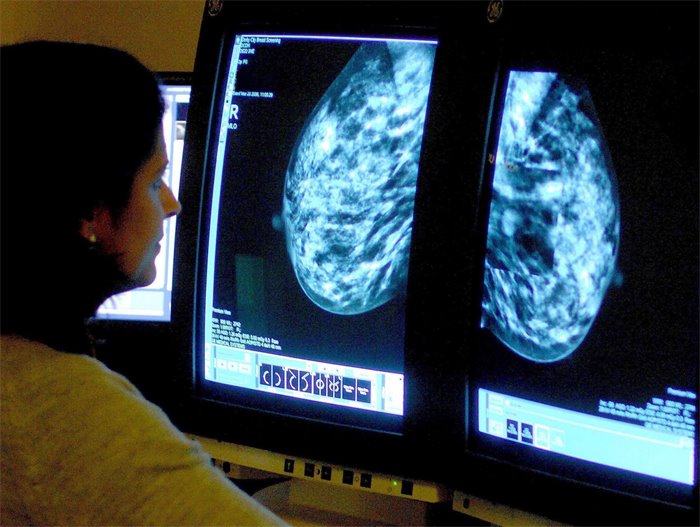
England’s National Health Service (NHS) has launched the world’s largest trial of artificial intelligence (AI) in breast cancer screening. Nearly 700,000 women will be invited to take part over the next three years.
Gatekeepers News reports that the trial, called EDITH, will test whether AI can safely take the place of one of the two specialists who currently examine every mammogram. Researchers want to know whether the technology can detect cancers earlier and ease pressure on staff without leading to unnecessary recalls or overdiagnosis.
Recruitment has started at Cambridge University Hospitals, the first of 30 screening sites. Women will receive information about the study with their routine screening invitation and can choose not to take part.
The trial will test two approaches. In one, AI grades the images before a specialist reviews them. In the other, AI reviews the images afterwards.
“Millions of women have a mammogram each year and only a small number, less than 1%, will have cancer,” said Professor Fiona Gilbert, one of the trial’s co-chief investigators. “Technology can make reviewing these images more efficient, freeing up specialist breast radiologists to spend more time caring for patients with cancer, supporting faster diagnosis and earlier treatment.”
Fellow co-chief investigator Professor Sian Taylor-Phillips said: “AI-assisted technology could help improve early cancer detection but we want to avoid the overdiagnosis of milder disease that would never have caused symptoms.”
Health Secretary Yvette Cooper said: “AI has huge potential to improve treatment, which is why we need trials like this to ensure we are using it in the most effective way with proper safeguards.”
Professor Peter Johnson, NHS England’s national clinical director for cancer, said: “Every scan will still be seen by a specialist, and if proven effective, it could ensure women get the diagnosis and treatment they need sooner.”
The trial is funded by the National Institute for Health and Care Research (NIHR). It is led by the University of Warwick, the University of Cambridge and Cambridge University Hospitals NHS Foundation Trust, working with NHS England.