

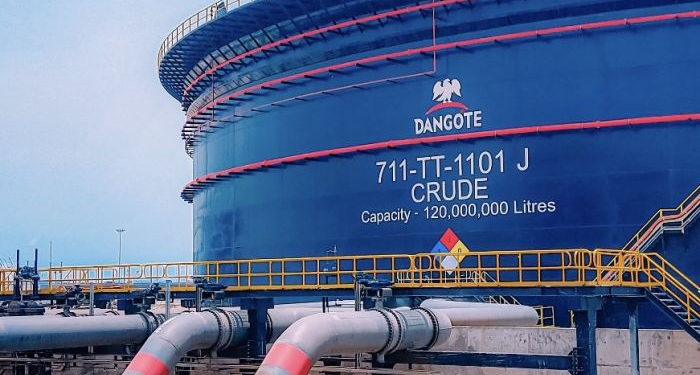
Dangote Petroleum Refinery Plc says it has achieved a daily offtake of 50 million litres of Premium Motor Spirit (PMS), marking a major milestone in domestic fuel supply and distribution.
Gatekeepers News reports that the Managing Director of the refinery, Mr David Bird, disclosed this on Wednesday during a press briefing in Lagos, citing the facility’s seamless fuel supply during the recent Christmas and New Year holidays as evidence of its growing operational stability.
Bird said the refinery currently evacuates over 1,000 trucks of fuel daily, stressing that the milestone reflects both production capacity and effective offtake.
“So we have been easily able to achieve over a thousand trucks of offtake. So it’s not just the production, it’s also the offtake that has achieved 50 million litres a day,” he said.
He noted that daily evacuation figures fluctuate based on demand, particularly during weekends, but expressed confidence that the refinery can sustain or exceed current levels.
“We see a dip on the weekends and so forth. And obviously it all depends on the demand and what is further inland in terms of stocks and volumes. But very confident going forward that that will be the offtake—or certainly as needed. If not, we can export,” Bird added.
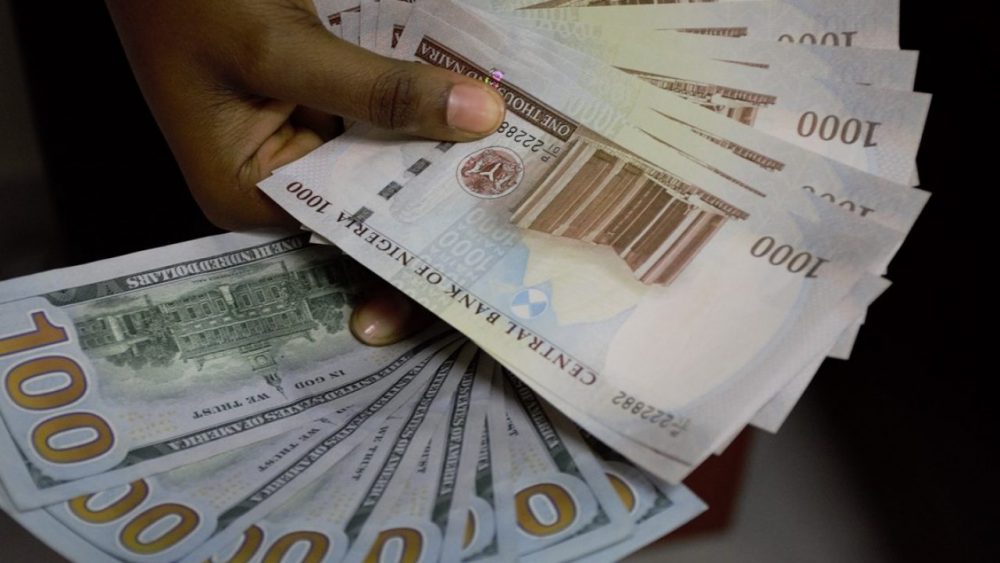
He described the achievement as significant, noting that stable and relatively lower fuel prices are contributing to broader economic stability, including support for the naira.
Bird also said Nigeria is now consuming world-class fuels produced to Euro 5 standards, adding that the refinery exports gasoline to Europe and jet fuel to markets such as Dubai.
He criticised the historical dumping of substandard fuel products in West Africa, saying Dangote Refinery’s output represents a major public health improvement due to lower sulphur content and cleaner fuel quality.
According to him, the company’s decision to invest further in refining capacity and expand polypropylene production to 2.4 million tonnes would strengthen domestic manufacturing and create a large industrial ecosystem.
Bird said the refinery is focused on capacity building and expansion rather than dwelling on the controversial reorganisation that occurred in October.
“Dangote’s vision for the expansion is all about enforcing lower costs that can expand to areas that are population-led,” he said.
He also dismissed claims by some industry players that the N739 petrol price was anti-competitive.
“The retail price is fully competitive. The consumer has a choice to choose whichever, and I’d like to see a change in how regulator works for the market,” Bird stated.
Also speaking, the Head of Communications for the Dangote Group, Mr Anthony Chiejina, said global supply disruptions, including the ongoing crisis in Venezuela, underscore the importance of domestic refining.
“We are a producing country,” Chiejina said, as Bird added that local refining is critical to insulating Nigeria from global oil price volatility and international supply shocks.
Bird explained that despite ramping up some units in the second half of 2025, the refinery has consistently supplied over 50 million litres of finished fuel daily, sometimes exceeding 52 million litres.
“Dangote Refinery is not a conventional single-crude refinery, but a highly flexible merchant refining, blending and trading platform,” he said.
On logistics, Bird disclosed that about 4,000 trucks are currently on site, adding that the final step before full rollout of free trucking is the deployment of a computerised security system to ensure accurate fuel delivery.
On petrochemicals, he said polypropylene production remains central to the refinery’s strategy. The existing plant has a capacity of 800,000 tonnes, while an additional propane dehydrogenation (PDH) unit will increase output to 1.2 million tonnes, with expansion plans ultimately lifting capacity to 2.4 million tonnes.
He added that future diversification could include detergents, base oils, lubricants and Liquefied Petroleum Gas (LPG), driven by import substitution and population growth.
Addressing the crude-for-naira arrangement, Bird said between 30 and 40 per cent of the refinery’s crude supply currently comes from the programme.
He said ongoing engagement with Nigerian National Petroleum Company (NNPC) Limited and the federal government could improve crude allocations, noting that the initiative has contributed to naira stability and could be expanded in Nigeria’s long-term interest.