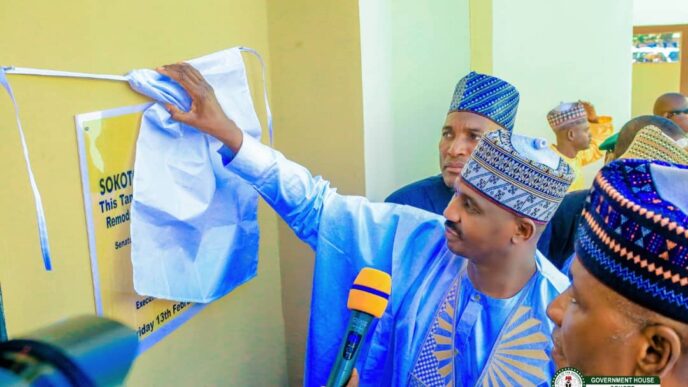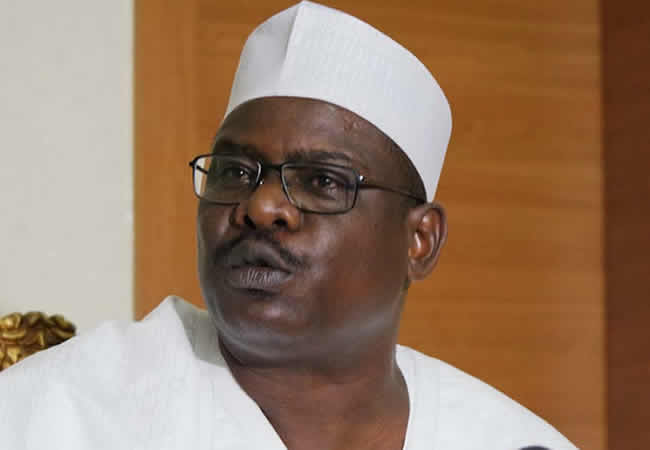
Senator Ali Ndume has expressed surprise over a bill introduced in the United States Congress seeking sanctions against former Kano State governor Rabiu Kwankwaso, describing the move as “fishy” and out of place.
Gatekeepers News reports that Ndume, who represents Borno South, spoke on Politics Today on Channels Television.
“I am surprised that Kwankwaso’s name was mentioned, and I want to know why and how he got mentioned,” the lawmaker said.
“For them to mention just Kwankwaso, a former governor, something must be fishy somewhere. Perhaps there is intelligence and information available to others that some of us aren’t aware of.
“I don’t want to go too deeply into that, but in my view, the asset freezes and sanctions proposed by the UK, America, and other developed countries are misplaced,” he added.
On Tuesday, five US lawmakers introduced a bill in Congress seeking to sanction Kwankwaso, the Miyetti Allah Cattle Breeders Association of Nigeria (MACBAN), and Miyetti Allah Kautal Hore over alleged violations of religious freedom.
The proposed legislation, titled “Nigeria Religious Freedom and Accountability Act of 2026,” is sponsored by Chris Smith, Riley Moore (bill author), Brian Mast, Mario Diaz-Ballast, and Bill Huizenga.
Part of the bill states:
“The Department of State and the Department of the Treasury should impose targeted sanctions, including visa bans and asset freezes under the Global Magnitsky Human Rights Accountability Act, on individuals or entities responsible for severe religious freedom violations, or report to Congress the reasons such sanctions have not been imposed, including— Fulani-ethnic nomad militias in Nigeria; Rabiu Musa Kwankwaso, former Kano State Governor; Miyetti Allah Cattle Breeders Association of Nigeria (MACBAN); and Miyetti Allah Kautal Hore.”
The move comes months after US President Donald Trump redesignated Nigeria as a Country of Particular Concern (CPC) over the killing of Christians—an action the lawmakers said was justified.
Ndume, however, said the US and other countries should go beyond labeling Nigeria as a CPC.
“If they want to help us, they should focus their attention on ‘People of Particular Concern’ rather than labeling the entire nation a ‘Country of Particular Concern,’” he said.
“The majority of Nigerians are innocent people. But there are a few people who are holding Nigeria’s assets outside, and they [foreign powers] know, and up to now, there is no exposure [of such people].”
Meanwhile, the Kwankwasiyya Movement, led by Kwankwaso, rejected the bill, describing the allegations as “unfounded” and “politically motivated,” and demanded the immediate removal of his name from the legislation.
“We state unequivocally that these allegations are consistent with nothing in the verifiable public record of Senator Kwankwaso’s life and service,” its spokesperson Habibu Mohammed said in a statement.
A chieftain of the New Nigeria Peoples Party (NNPP), the platform under which Kwankwaso contested the 2023 presidential election, also criticised the proposal.
Speaking on The Morning Brief, Folashade Aliu said:
“How can anybody in their right senses put up a bill that is as important as talking about religion and terrorism and single out one individual in this country?”
As of the time of filing this report, Kwankwaso has not issued an official response to the proposed legislation.