

Rising political spending ahead of the 2027 general elections is expected to test the Central Bank of Nigeria’s (CBN) efforts to sustain exchange rate stability and keep inflation under control, amid fears that election-driven liquidity could reverse recent economic gains.
Gatekeepers News reports that with pre-election activities gathering momentum following the release of the new electoral timetable, analysts warn that politically induced cash flows could disrupt the modest price stability achieved since last year and revive the volatility experienced between 2023 and 2024.
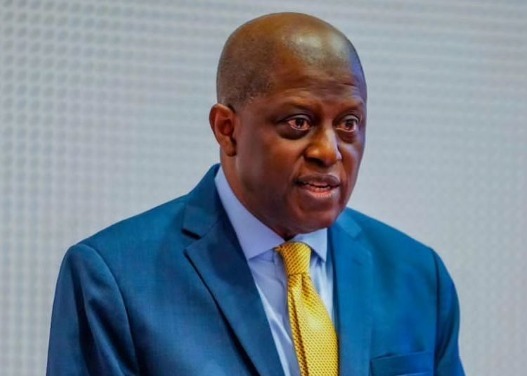
CBN Governor Yemi Cardoso is expected to address the issue at a press briefing following the first Monetary Policy Committee (MPC) meeting of the year, outlining how the apex bank plans to manage potential market distortions caused by increased political spending.
Historically, pre-election periods in Nigeria are associated with surging demand for foreign exchange, putting pressure on the naira and fuelling inflation. Unlike conventional fiscal or monetary activity, election-related spending is difficult to predict due to its scale, informal nature, and weak regulatory oversight.
Minister of Finance Wale Edun recently warned that political activities could erode the naira’s recent appreciation, reflecting a pattern seen in previous election cycles.
For instance, during the build-up to the 2023 elections, politicians reportedly bought large volumes of dollars in Lagos, Abuja, and other cities to finance nomination contests and campaign logistics. The resulting scarcity pushed the naira to about N900 per dollar on the parallel market, while the official rate stood near N460 per dollar, widening arbitrage and discouraging foreign investment.
Similar trends were observed during earlier elections, including the 2003 polls, when delegates converted large cash payments into foreign currency after party primaries, further tightening the FX market.
Recent reforms have helped stabilise the economy. Since 2025, the naira has appreciated by roughly N200 against the dollar, while inflation has dropped from over 30 per cent to slightly above 15 per cent as of January, supported by tighter monetary policy and slower money supply growth.
However, analysts warn that increased campaign spending could inject fresh liquidity into the system and undermine those gains. While credit to the private sector grew marginally last year, government borrowing surged from N27.14 trillion to N34.22 trillion, highlighting the strong influence of political activity on financial conditions.
Electoral Act raises campaign spending limits
Concerns have intensified following the signing of the Electoral Act 2026, which significantly increased campaign spending and donation limits.
Under the new law, presidential candidates can spend up to N10 billion, up from N5 billion, while governorship candidates are allowed N3 billion, compared with N1 billion previously. Senatorial candidates may now spend N500 million, up from N100 million, while House of Representatives aspirants can spend N250 million, compared with N70 million.
The law also raised the maximum donation from individuals or organisations from N50 million to N500 million per candidate.
Lawmakers said the changes reflect inflation and rising campaign costs, but governance advocacy group Policy and Legal Advocacy Centre (PLAC) warned that the increases—ranging from 100 to 400 per cent—could deepen money politics and distort the economy.
PLAC noted that the tenfold increase in donation limits could enable wealthy individuals or organisations to exert disproportionate influence over candidates, adding that transparency provisions would only be effective if properly enforced.
Stakeholders warn of economic and political risks
Political and civil society stakeholders have expressed concern that higher campaign spending could weaken the naira, increase inflation, and further exclude less-funded candidates.
Election expert Fouad Oki said the N10 billion presidential spending cap may still be unrealistic given the scale of nationwide campaigning.
“In the current state of the economy, an aspirant must tour all 36 states, meet governors, stakeholders and delegates, and engage traditional and religious leaders—all of which involve enormous financial commitments,” he said.
He added that costs such as transport, accommodation, staffing, security, media promotions, and nomination forms—priced at up to N100 million by major parties—can easily exceed the legal limits.
Regional groups, including the Pan Niger Delta Forum (PANDEF) and the Ijaw National Congress (INC), warned that the law could worsen corruption and inject excessive liquidity into the economy.
PANDEF spokesman Obiuwevbi Ominimini criticised the high cost of political participation, saying nomination fees already exclude ordinary Nigerians.
“We are saying that the law should make provision for the maximum amount any political party can charge for expression of interest and nomination forms. It should not be more than the nation’s minimum wage,” he said.
He also cautioned that higher spending ceilings could strengthen political “godfatherism” and increase pressure on the naira.
INC spokesman Ezonebi Oyakemeagbegha warned that excessive campaign spending could weaken the exchange rate and increase borrowing, adding that it may deepen corruption and widen inequality between political elites and ordinary citizens.
Anti-corruption advocates also questioned whether the Independent National Electoral Commission (INEC) has the capacity to enforce campaign finance rules.
Debo Adeniran of the Centre for Anti-Corruption and Open Leadership said, “Secrecy pervades the system. Banks rarely flag campaign-related transactions, and there is no real-time transparency.”
Former Senate Minority Leader Olorunnimbe Mamora suggested that monitoring campaign finance should be handled by specialised financial intelligence agencies rather than INEC, which he said is already overstretched.
Despite recent economic improvements, analysts warn that without strict enforcement and fiscal discipline, election-related spending could trigger renewed pressure on the naira, complicate inflation control, and undermine the CBN’s monetary policy gains.