

The Senate Committee on Electoral Matters has recommended an additional N30 billion allocation to the Independent National Electoral Commission (INEC) to strengthen preparations for the 2027 general elections.
Gatekeepers News reports that if approved, the increase will raise the commission’s proposed election budget from N873.78 billion to N903.78 billion. The committee said the extra funds would be used to improve logistics, enhance operational capacity, and address challenges associated with conducting nationwide polls.
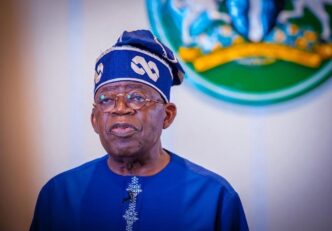
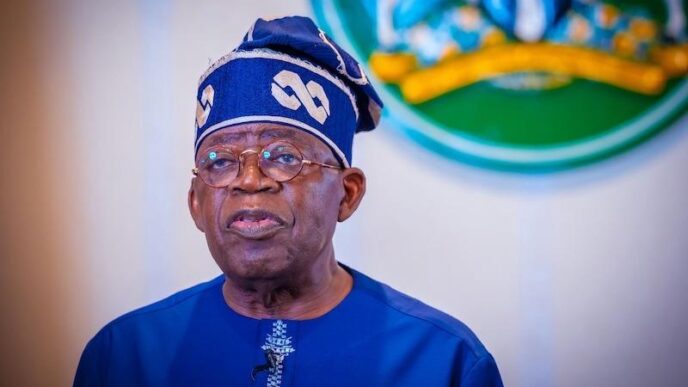
Meanwhile, President Bola Tinubu on Wednesday evening hosted members of the Senate to a Ramadan iftar at the Presidential Villa, Abuja, in what observers described as both a religious and strategic engagement.
The closed-door meeting, which began shortly after 6:30 p.m., created an informal platform for consultation between the executive and the upper legislative chamber at a critical time in the political calendar.
Senators arrived at the Villa in several buses from about 5:55 p.m. and were ushered into the President’s Conference Room ahead of the breaking of the fast. Vice President Kashim Shettima, Chief of Staff to the President, Femi Gbajabiamila, and other senior government officials were also present.
The gathering came less than 48 hours after Tinubu hosted state governors from across political parties for a similar Ramadan iftar, reinforcing the administration’s use of the holy month to foster dialogue and cooperation among political stakeholders.
Although no official statement was released after the meeting, previous iftar engagements have served as informal avenues for consensus-building and discussions on national priorities, including governance, economic reforms, and security.
Separately, human rights lawyer and Senior Advocate of Nigeria, Olisa Agbakoba, renewed his call for reforms to Nigeria’s electoral framework, emphasising the need for clear legal backing for electronic transmission of election results.
“E-voting is different from electronic transmission,” he said. “Let’s start with transmission. Transmission simply means seeing the results. Right now, they hide it.”
He warned that the current manual collation process leaves room for manipulation as results move through multiple collation centres.
“The presiding officer leaves the polling unit and goes to the ward collation centre. Are you going to follow him? In between, the results can change. By the time it moves from ward to local council to state, it has changed. That’s the problem,” Agbakoba stated.
He added that although INEC had introduced guidelines supporting electronic transmission, the absence of explicit provisions in the Electoral Act creates legal uncertainty. According to him, a Supreme Court ruling had weakened reliance on such guidelines where they are not clearly backed by statute.