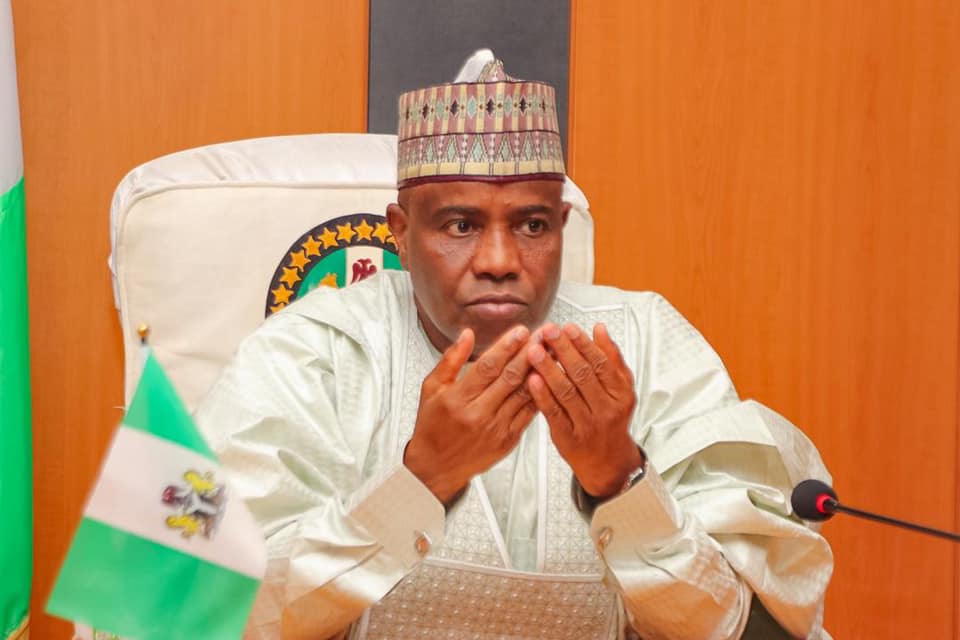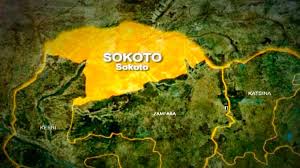


At a time when many states across Nigeria are struggling with mounting debts, abandoned projects, rising inflation that has significantly weakened the real value of the improved Federation Account allocations, and growing public disaffection, Sokoto State has emerged as a compelling example of how disciplined governance can despite challenges deliver meaningful development without reckless borrowing.Under the leadership of Governor Ahmed Aliyu, the state is pursuing a development strategy that combines infrastructure development with fiscal discipline. What makes this approach particularly remarkable is not merely the scale of projects being executed by the Aliyu administration, but the fact that many of these achievements include abandoned projects by the Aminu Tambuwal administration.
For years, Nigerians have grown accustomed to political promises that rarely translate into tangible results. Budgets are presented with impressive projections and ambitious targets, yet poor implementation continues to prevent citizens from feeling their true impact. Across many parts of the country, this cycle of unfulfilled promises has steadily weakened public confidence in the ability of government to provide essential services and meaningful development.
In Sokoto State,however, there is a huge relief among the people that government is finally working for them, and in a refreshing new direction. Governor Ahmed Aliyu’s administration approach reflects an understanding that development is not simply about “intentions”, but about the successful execution of projects that will improve the lives of the ordinary citizens while preserving the financial stability of the state. In Sokoto today, development and fiscal responsibility are increasingly being pursued side by side.
One of the clearest examples of this transformation is the delivery and ongoing construction of over 1,500 housing units across Sokoto State, including major estates at Gidan Salanke, Wajake in Wamakko Local Government Area, and the Kwannawa Housing Estate acquired from the Federal Government. At a time when Nigeria is estimated to face a housing deficit of over 28 million units, according to industry projections, the initiative represents a deliberate effort to confront the accommodation crisis through practical intervention. It reflects an administration that understands the connection between housing, human dignity, security, social stability, and economic growth. Beyond providing shelter, the estates form part of a broader urban renewal strategy aimed at modernising Sokoto, expanding residential infrastructure, and improving the living conditions of thousands of families across the state.
Alongside the housing programme, the Ahmed Aliyu administration has embarked on extensive road construction and rehabilitation projects across Sokoto State, with the strategic investments targeting both urban mobility and rural connectivity. Critical projects include the completion of the Rijiya Flyover Bridge, the rehabilitation of major township roads in Mabera, Sahara, Gawon Nama, Ramen Kura, New Arkilla, and Tudun Wada, as well as the construction of the 14-kilometre Buzulega–Lukuyawa–Yar Gada–Tabanni–Malikawa–Shalla–Kware rural road linking communities across Kware, Gwadabawa, and Wurno Local Government Areas. The administration has to date completed over 40 township roads, while additional roads remain at various stages of completion. These critical projects are designed to improve the movement of agricultural produce, reduce transportation costs, enhance access to schools and healthcare facilities, address flooding challenges in densely populated communities, and stimulate commercial activities across the state. In a predominantly agrarian economy like Sokoto, road infrastructure remains fundamental to productivity, market access, and long term economic growth.
The administration has also invested significantly in the installation of solar powered streetlights across major roads, markets, and residential areas within Sokoto State. The initiative is helping to strengthen security by improving night time visibility and reducing criminal activities in previously dark locations. The streetlights have also extended commercial activities in many parts of the state, enabling traders, transport operators, and small businesses to operate more safely and for longer hours after sunset.
The installation of the solar street lights represents both an economic and security intervention with direct benefits for everyday life.
What gives these projects under Governor Ahmed Aliyu added significance is the fiscal discipline driving them. At a time when heavy public borrowing has become almost standard practice across many states in Nigeria, Sokoto State is pursuing its development through budgeting, strategic prioritisation, and prudent management of resources. The administration has consistently maintained that economic development should not come at the cost of unsustainable debt obligations capable of burdening future administrations and generations yet unborn.
This philosophy is strongly reflected in the state’s “Budget of Socio Economic Expansion.” According to the 2026 budget proposal presented before the Sokoto State House of Assembly, the government proposed a budget of ₦758.7 billion, out of which ₦551.4 billion was allocated to capital expenditure. This represents approximately 72 percent of the total budget, one of the highest capital expenditure allocations among Nigerian states in recent years.
The significance of dedicating such a large portion of the budget to capital projects cannot be overstated. In many states, recurrent expenditure often consumes the majority of government spending, leaving little room for development projects that citizens can directly feel. Sokoto State’s allocation sends a clear message about the administration’s priorities. Rather than allowing salaries, overhead costs, and political expenses to dominate public spending, the government is directing the larger share of resources toward roads, housing, healthcare, education, water supply, security, and other infrastructure projects capable of stimulating long term growth.
In practical terms, this means that more communities are being connected, more businesses are finding opportunities to grow, and more citizens are beginning to experience visible improvements in public infrastructure. It also suggests an administration that is attempting to plan beyond immediate political gains and that has instead focused on laying durable foundations for future economic expansion.
Equally important is the administration’s emphasis on financing its development projects largely through internally generated revenue, Federation Account allocations, grants, and development funds. Government officials maintain that projected revenues for the 2026 budget are expected to come primarily from the Federation Account Allocation Committee (FAAC), improved internally generated revenue, and strategic fiscal management. While borrowing remains a legitimate tool for development, the Ahmed Aliyu administration appears more committed to careful financial management and prudent utilisation of available resources.
At a period when national conversations are increasingly dominated by concerns over rising debt servicing obligations, Sokoto State’s approach stands out as an alternative model that prioritises management. Across Nigeria, many states continue to depend heavily on loans to finance projects, often leaving future administrations burdened with repayment obligations that limit fiscal flexibility. It’s thus not surprising that Sokoto’s effort to pursue its development is attracting more attention among observers who view fiscal responsibility as one of the most important requirements for sustainable governance.
The Governor Ahmed Aliyu administration has also made great efforts to strengthen public confidence by promoting a more inclusive budgeting process. The 2026 budget for instance was prepared after consultations across the three senatorial districts of the state with participation from all 23 local government areas and 244 political wards in the state. The government is right to have described the process as “citizen driven budgeting,” an approach intended to ensure that public spending reflects the actual needs of the communities.
This level of consultation is significant because one of the major criticisms of governance in Nigeria is the disconnect between public budgets and the real priorities of citizens. By involving communities in the planning process, the administration greatly improved accountability and has ensured that projects respond more directly to local realities.
Beyond physical infrastructure, the government is also pursuing institutional reforms aimed at modernising governance itself. One of the most important initiatives in this regard is the proposed E Government Bill. There is no doubt that bureaucracy continues to slow down public service delivery, frustrate investors,which creates opportunities for inefficiency and corruption. The move towards digital governance by the Sokoto State Government therefore represents an important attempt to improve transparency, speed, and administrative accountability.
By integrating technology into government operations, the administration hopes to reduce unnecessary delays, improve record keeping, simplify administrative procedures, and make public institutions more responsive to citizens. This transition is especially important for younger generations who increasingly expect governance to reflect the realities of a rapidly evolving digital world.
The E Government initiative also demonstrates that development today is no longer measured solely by physical structures. Smart governance requires smart systems. Roads and housing projects may provide visible evidence of progress, but institutional efficiency remains equally important for long term economic transformation. Sokoto’s effort to combine physical infrastructure with administrative modernisation suggests a broader understanding of what sustainable development requires in the twenty first century.
The administration’s broader development philosophy is captured in what Governor Ahmed Aliyu describes as the Smart Agenda, a comprehensive roadmap aimed at transforming Sokoto into one of the top ten economies in Nigeria by the year 2030. While the ambition may appear bold, the projects already being implemented suggest that the government is attempting to move beyond slogans toward practical implementation.
The Governor Aliyu administration has consistently linked infrastructure investment to wider economic expansion. Under the 2026 budget proposal, ₦122.7 billion was allocated to healthcare, ₦115.9 billion to education, and ₦45.2 billion to security operations. These allocations indicate that the government views development as an investment in human capital, public safety, and social stability.
Speaking during the budget presentation, Governor Ahmed Aliyu stated: “Together, we will execute projects that promote economic growth, education, healthcare, and infrastructure development.” The statement reflects the administration’s attempt to position infrastructure as part of a larger economic transformation strategy rather than isolated construction activities.
The importance of continuity is therefore central to discussions about Sokoto State’s future, because development plans of this scale cannot achieve their full impact within a single political cycle. Roads, housing programmes, digital reforms, healthcare investments, and economic expansion strategies require sustained implementation and policy consistency, as interrupting long term development plans midway often leads to abandoned projects, wasted resources, and policy reversals that slow progress. Continuity, on the other hand, allows governments to consolidate on recorded achievements and gradually expand development gains over time, which is why Governor Ahmed Aliyu deserves a second term to sustain the momentum already created and to fully implement the objectives outlined in the 9-Point Smart Agenda.
Governor Ahmed Aliyu’s development strategy is gradually shaping a new narrative for Sokoto State; one that combines ambition with prudence and development with responsibility. Through sustained investments in housing, roads, healthcare, education, digital governance, and budgeting reforms, the administration is clearly in a hurry to develop; a state that seeks growth without debt, and progress without waste. If the current trajectory continues with consistency, and sustained public support, Governor Aliyu’s ambition of making Sokoto State one of Nigeria’s leading economies by the end of his second term appears genuinely achievable.
Ultimately, the true value of leadership is measured by impact on the lives of the ordinary people. Across Sokoto State, citizens can increasingly point to projects that reflect purposeful governance and strategic direction. The roads being built, the homes being delivered, the reforms being introduced, and the financial discipline being maintained all suggest that a new Sokoto is steadily emerging.
Gatekeepers News is not liable for opinions expressed in this article; they’re strictly the writer’s