The House of Representatives Ad-hoc Committee investigating the activities of the controversial Presidential Foreign Investment Promotion Council (PFIPC) is set to conclude its inquiry without taking testimony from two key figures linked to the matter—Femi Gbajabiamila and Matthew Adeniyi Adeyemi.
Gatekeepers News reports that instead, the committee said it would rely on documentary evidence gathered during weeks of investigation, as well as reports from security agencies, before presenting its preliminary findings next week.
The development comes as the Independent Corrupt Practices and Other Related Offences Commission (ICPC) continues its investigation into the PFIPC following President Bola Tinubu’s directive.
Head of Service Admits Vetting Lapses
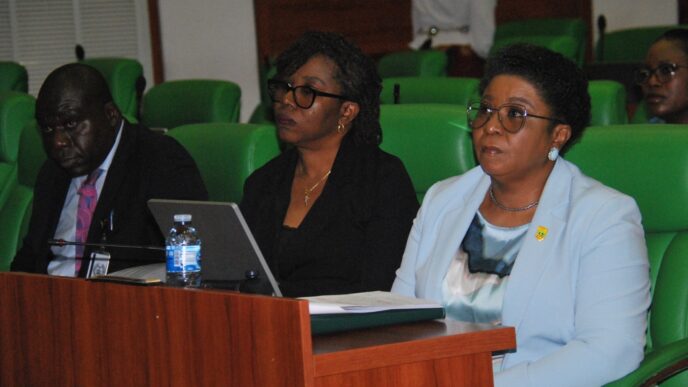
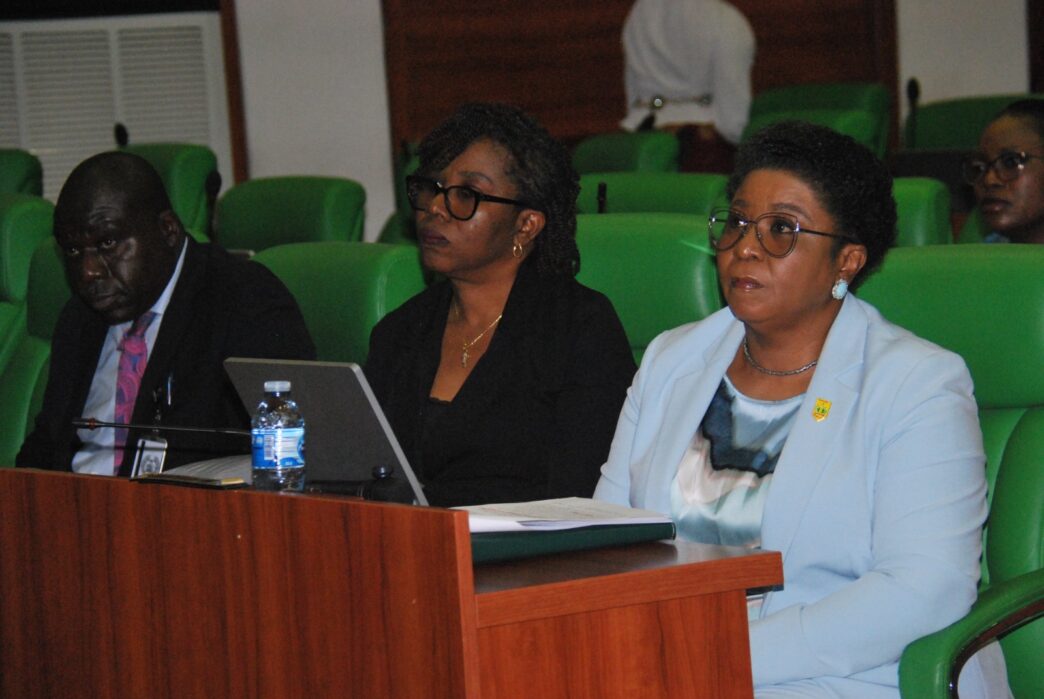
At the committee’s resumed hearing on Wednesday, Didi Esther Walson-Jack admitted that the Office of the Head of the Civil Service failed to conduct adequate due diligence before approving recruitment requests submitted by the PFIPC.
Appearing before lawmakers, Walson-Jack said her office relied on documents presented by representatives of the Presidential Economic Advisory Council (PEAC) and PFIPC, including a purported Establishment Act and appointment letter, without independently verifying their authenticity.
“My office received the Letter of Appointment and the Establishment Act and, based on those documents and also based on the interaction with the representatives of the PEAC and PFIPC, we went on to issue the Authorised Establishment and later the Recruitment Waiver,” she said.
She acknowledged that more rigorous verification should have been undertaken before the approvals were granted.
“Having now seen all the facts and examined all the documents, we concede that we ought to have carried out more due diligence in issuing the Authorised Establishment and Recruitment Waiver to the PEAC/PFIPC,” she said.
Walson-Jack explained that the existence of the Presidential Economic Advisory Council as an ad hoc body may have contributed to the confusion, noting that the documents submitted to her office bore the combined designation “PEAC/PFIPC.”
“We knew that PEAC existed as an ad hoc organisation, and the documents presented carried PEAC/PFIPC. However, proper due diligence could have established whether those documents were genuine,” she added.
Police Explain Why Adeyemi Was Not Produced
The committee had earlier directed the Inspector-General of Police, Olatunji Disu, to produce Adeyemi after a 48-hour deadline elapsed.
At Wednesday’s hearing, the police were represented by Deputy Commissioner of Police Olufemi Akinola and Assistant Commissioner of Police Bashir Abdullahi.
Akinola told lawmakers that Adeyemi could not be produced because he remains in custody under a valid order of the Federal High Court.
“The NPF may not be able to produce the suspect as requested in view of the subsisting warrant. However, in this case, it will be appreciated if the reproduction warrant could be sought from the court of competent jurisdiction to enable the police to comply with this request,” he said.
Committee Chairman Yusuf Gagdi accepted the explanation and said the panel would immediately seek the necessary court order before making another request to the police.
Gagdi also clarified that Adeyemi did not ignore the committee’s summons.
“The Inspector-General did not refuse to produce him before this committee. The police only informed us that the suspect remains in custody by virtue of a subsisting court order,” he said.
He added that the committee remains mindful of parallel investigations being conducted by the ICPC, the Nigeria Police Force, the Economic and Financial Crimes Commission (EFCC), the Department of State Services (DSS), and the Office of the National Security Adviser, and would continue engaging those agencies through official correspondence before submitting its report.
The decision means the House panel will conclude one of its most high-profile investigations without directly hearing from Gbajabiamila, whose alleged signature appeared on some of the documents linked to the council, or Adeyemi, who allegedly presented himself as the PFIPC’s director-general.
CACOL Questions Parallel Investigation
Meanwhile, Debo Adeniran, chairman of the Centre for Anti-Corruption and Open Leadership (CACOL), criticised the House probe, describing it as an unnecessary duplication of the ICPC’s investigation.
He argued that the anti-corruption agency should be allowed to carry out its statutory responsibilities without interference from lawmakers.
“I don’t want to speculate on whether there is an attempt to cover up the matter, but the ICPC should be allowed to do its work without interference,” he said.
Adeniran maintained that the ICPC possesses the legal mandate and investigative capacity to handle allegations of corruption and abuse of office, while the National Assembly’s oversight role does not extend to criminal prosecution.
He also stressed the need for greater transparency and stricter due diligence whenever organisations claim government affiliation or seek to represent the Federal Government in dealings with investors.
According to him, all allegations surrounding the PFIPC should be thoroughly investigated by the appropriate law enforcement agencies, with anyone found culpable held accountable, while those wrongly accused should be exonerated through an impartial investigative process.