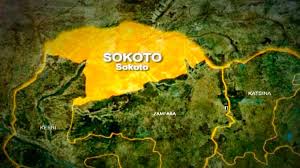
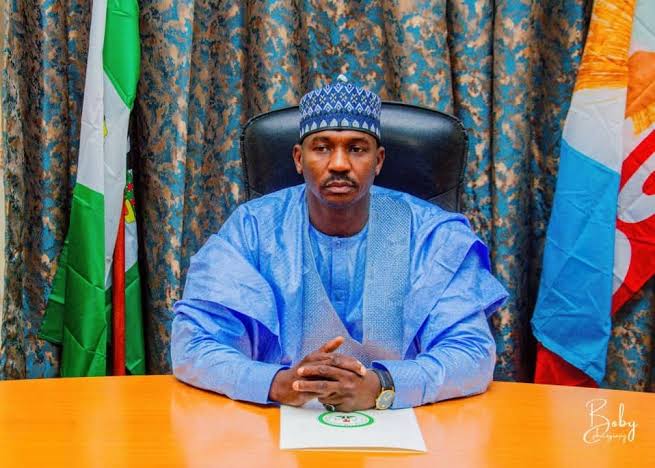
Sokoto State’s economy has always rested on two enduring strengths: agriculture and commerce. From its vast cultivable land and livestock resources to its strategic position as a trading hub the state possesses enormous economic potentials. Recognizing this, Governor Ahmed Aliyu’s administration has invested heavily in reviving agriculture through the provision of fertilizers, improved seeds, mechanized farming equipment, irrigation support, and rural infrastructure designed to boost productivity and strengthen food security. These interventions have helped reinforce agriculture’s position as the backbone of the state’s economy and the primary source of livelihood for thousands of households.
The administration also understands that agricultural investments alone cannot deliver sustained economic transformation. Farmers require access to markets, businesses need access to credit, investors demand regulatory certainty, and entrepreneurs depend on efficient public institutions. Economic growth is ultimately determined not only by what a state produces but also by how effectively its institutions support enterprise and investment.
It is against this backdrop that Governor Aliyu’s administration launched the Business Enabling Reforms Action Plan (BERAP), a comprehensive framework aimed at modernizing governance, improving the ease of doing business, attracting private investment, and creating a more competitive economy. As part of the Federal Government and World Bank-supported State Action on Business Enabling Reforms (SABER) programme, BERAP seeks to strategically remove the bureaucratic obstacles that have historically constrained economic activity and to position Sokoto State as one of Nigeria’s emerging destinations for business, agriculture, and long-term investment.
At its core, BERAP seeks to answer a simple but important question: what has prevented businesses from investing, expanding, and creating jobs in Sokoto State?
The answer often lies in the everyday frustrations faced by both local and foreign investors, entrepreneurs, farmers, and small business owners—delayed permits, cumbersome land registration processes, poor access to digital infrastructure, multiple taxation concerns, and slow dispute resolution mechanisms. BERAP is designed to frontally address these obstacles systematically by modernizing government processes, improving transparency, and reducing the cost of doing business.
One of the most significant reforms by this administration has been in land administration. Across Nigeria, access to secure land titles remains a major challenge for investors and entrepreneurs. Without clear ownership documentation, land cannot effectively serve as collateral, making it difficult for businesses and farmers to access credit.
To address this challenge, the Aliyu administration invested approximately ₦698.4 million in the modernization of the Sokoto Geographic Information System (SOGIS). The upgraded system now supports automated title processing, digital archiving, real-time application tracking, and electronically verifiable certificates. More importantly, BERAP has tied these improvements to measurable targets, including reducing the average Certificate of Occupancy processing period from about 120 days to 60 days.
For a farmer seeking financing to expand, a property developer pursuing a new housing project, or a small business owner attempting to access bank credit, such reforms are not merely administrative improvements; they can be the difference between securing investment and losing an opportunity.
Agriculture, which remains the backbone of Sokoto’s economy, stands to benefit enormously from these changes. Secure land ownership encourages long-term agricultural investment, while improved infrastructure and export support would create new opportunities across value chains involving livestock, onions, sesame, grains, beans, tomatoes, and other agricultural commodities. By combining agricultural support programmes with institutional reforms, the administration is creating conditions for both higher productivity and greater private-sector participation in the agricultural economy.
The administration has complemented these reforms with significant investments in transport infrastructure. Through its budget, which allocates roughly 70% of the total expenditure to capital projects, the government has funded the construction and rehabilitation of over 240 township roads and more than 101 kilometres of rural feeder roads. It has several other road projects under construction.
For rural communities, these roads do more than connect the various towns. They have reduced transportation costs, improved access to markets, and helped farmers move produce quickly to urban centres and processing facilities. Agricultural products that once struggled to reach buyers can now be moved more efficiently through commercial supply chains, reducing post-harvest losses and improving rural incomes.
The state’s economic transformation strategy also recognizes that modern economies require digital infrastructure alongside physical infrastructure. Increasingly, investment decisions depend on broadband connectivity as much as they depend on roads and land availability.
Under BERAP, Sokoto has introduced transparent Right-of-Way guidelines, published approval requirements and fees, and established timelines for processing applications. These reforms have reduced uncertainty for telecommunications providers and support ongoing efforts to expand broadband penetration across the state.
The significance of this cannot be overstated. Broadband access enables digital commerce, would attract technology-driven businesses, support financial inclusion, and open new opportunities for young entrepreneurs. In a rapidly digitizing economy, connectivity is not a luxury; it is an economic necessity.
Equally important is the administration’s effort to strengthen Public-Private Partnership (PPP) frameworks. Investors are generally willing to finance infrastructure and development projects when there is regulatory clarity and predictable governance. Through BERAP, the state has established project preparation mechanisms, standardized procurement guidelines, and improved transparency in project development.
By reducing uncertainty and improving project bankability, these reforms have positioned Sokoto State to attract larger volumes of private capital into sectors ranging from infrastructure and agriculture to housing, logistics, and manufacturing.Sokoto is also home to the 8 million metric tonnes per annum (MTPA)Bua Cement Company. Strategically positioned near vast, high-grade limestone formations.
The administration has also focused on reducing the bureaucratic burden on businesses. Several government agencies are now required to operate under published Service Level Agreements that specify timelines for delivering services. Business registrations, tax clearances, utility approvals, and planning certifications are increasingly governed by measurable standards rather than administrative discretion.
For small and medium-sized enterprises, which account for the overwhelming majority of businesses in the state, these reforms have translated directly into lower operating costs and greater certainty. A trader seeking a permit, an entrepreneur registering a business, or an investor processing approvals now expects greater predictability from government institutions.
Tax administration has similarly undergone modernization. By simplifying payment procedures and expanding digital payment options, the state has not only reduced compliance costs, but has improved its revenue collection efficiency. This approach benefits both government and taxpayers by replacing cumbersome manual processes with more transparent systems.
Reliable utilities remain another crucial component of economic competitiveness. Recognizing this, the administration has committed substantial resources to water infrastructure, including the completion and rehabilitation of major township water schemes. The reactivation of the Old Airport Water Scheme, and Tamaje projects have added millions of gallons of treated water to the metropolitan supply network. A total of four water projects have been completed,while work is ongoing in two others. The administration hopes to add 40 million liters of water to the existing water supply line.
Beyond water, the installation of solar-powered streetlights across all 23 local government areas has contributed to public safety, extended commercial activity into evening hours, and improved the overall business environment. While electricity challenges remain a national issue, such interventions demonstrate a recognition that economic growth requires dependable supporting infrastructure.
The Aliyu administration has completed the 38 Megawatts (MW) Sokoto State Independent Power Plant,which has a long history, spanning several administrations. For context, Sokoto historically receives a limited and unstable allocation from the national grid (often hovering around 10MW to 40MW), which heavily restricted local industrial and socio-economic growth.
Another often-overlooked obstacle to business growth is the slow resolution of commercial disputes. Small businesses can be crippled by delayed payments or contractual disagreements that remain tied up in court for years.
To address this challenge, the state has expanded the Small Claims Courts across its senatorial zones and established timelines aimed at resolving commercial disputes within 60 days. Quick resolution of disputes will reduce business risks, strengthens commercial confidence, and encourage greater participation in formal economic activities.
Perhaps most importantly, Sokoto State is positioning itself to participate more actively in regional and international markets. Through collaboration with export promotion institutions and reforms designed to simplify export registration procedures, the state is creating new pathways for local producers to access larger markets. This is particularly important for agricultural exporters seeking to move beyond local consumption and tap into regional and international value chains. The export of onions from Sokoto State to Ghana and other West African nations represents a multi-million dollar regional trade pipeline. As the largest producer of onions in sub-Saharan Africa—Sokoto contributes heavily to Nigeria’s annual output of roughly 1.4 million metric tonnes.
To insulate local producers from sudden export shocks and seasonal price crashes, the Sokoto State Government under Governor Ahmed Aliyu has partnered with the Ministry of Finance Incorporated (MOFI) to commission a modern onion cold-storage facility. This infrastructure aims to mitigate historic post-harvest losses, allowing traders to safely store supply during peak harvest seasons rather than being forced into desperate, low-margin sales.
Like every ambitious reform programme, BERAP faces some implementation challenges. Sustaining digital systems, maintaining infrastructure, coordinating multiple agencies, and continuously building civil service capacity requires persistence and discipline. However, the Governor Aliyu administration has shown the necessary political will to address them.
Ultimately, economic transformation is rarely achieved through isolated projects,it occurs through countless improvements in how government interacts with citizens, businesses, and investors. It is achieved through faster approvals, clearer regulations, modern infrastructure, and stronger institutions.
Governor Ahmed Aliyu’s BERAP agenda reflects an understanding of this reality. By combining major investments in agriculture with reforms in land administration, digital infrastructure, tax systems, dispute resolution, and public-private partnerships, the administration has laid the foundation for a more competitive economy. The true measure of success will not be limited to the number of reforms completed, but the more jobs created, greater investment, stronger businesses, higher agricultural productivity, and rising prosperity for the people of Sokoto State.
There is no doubt that BERAP is one of the most consequential economic reform initiatives in the state’s recent history, which has positioned Sokoto State as one of Nigeria’s most attractive destinations for investment, enterprise, and long-term economic growth.
Gatekeepers News is not liable for opinions expressed in this article; they’re strictly the writer’s