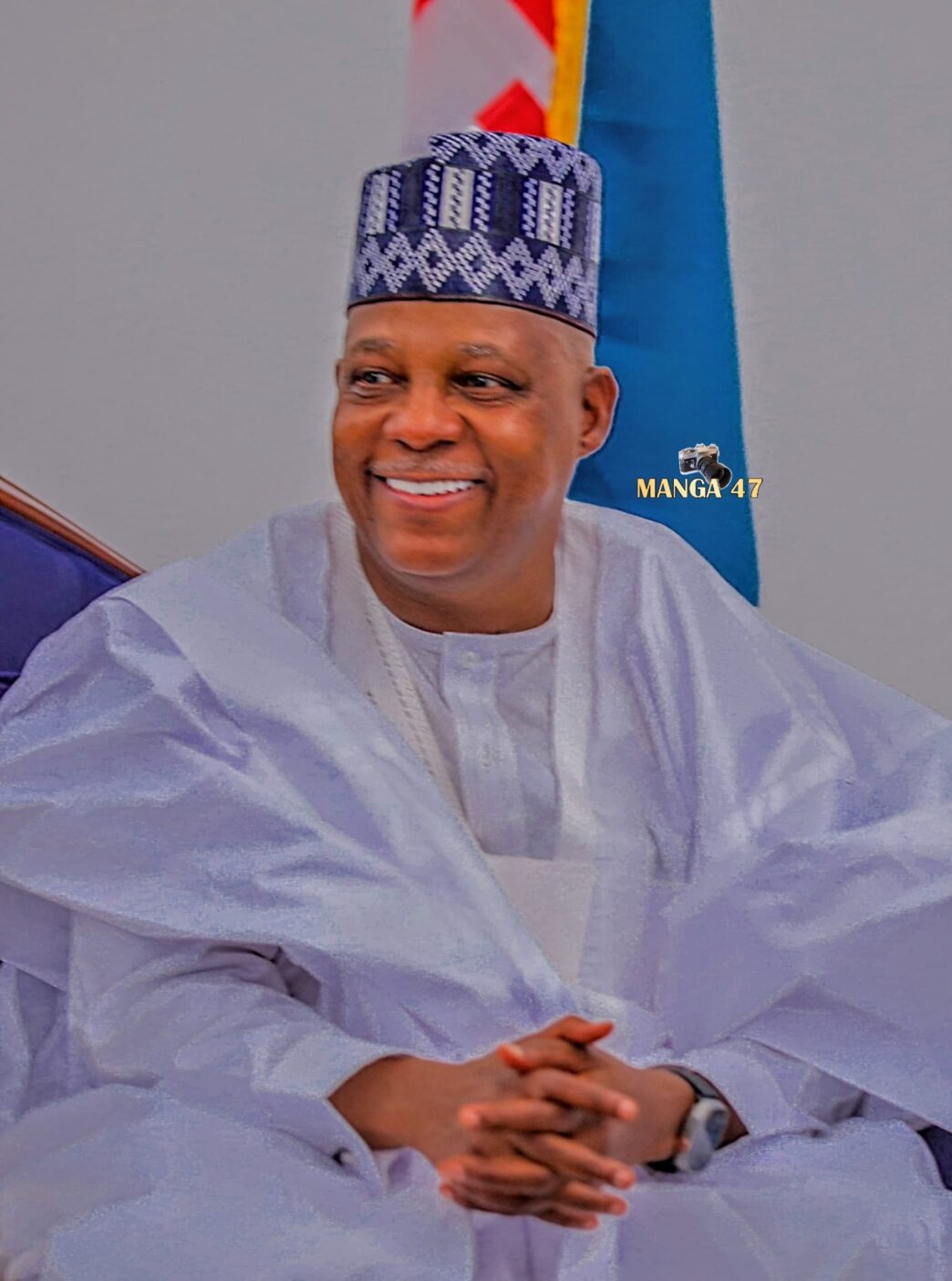
Vice-President Kashim Shettima has urged Northern political leaders and stakeholders to support President Bola Tinubu’s re-election bid in 2027, as fresh efforts to build a consensus among opposition presidential aspirants gather momentum without former Vice-President Atiku Abubakar.
Gatekeepers News reports that the renewed political activities come amid growing divisions within opposition parties and competing efforts by political groups to consolidate support ahead of the 2027 general election.
The Christian Social Movement of Nigeria (CSMN) has reopened discussions on a possible opposition consensus candidate, inviting 13 Christian presidential aspirants, including Peter Obi, Oyo State Governor Seyi Makinde and former Cross River State Governor Donald Duke, to participate in its consensus-building initiative.
Meanwhile, the Grassroots Mobilisation Initiative (GMI), a group supporting Tinubu’s re-election, has argued that divisions among opposition parties and regional vote splits could affect their ability to mount a united challenge against the incumbent.
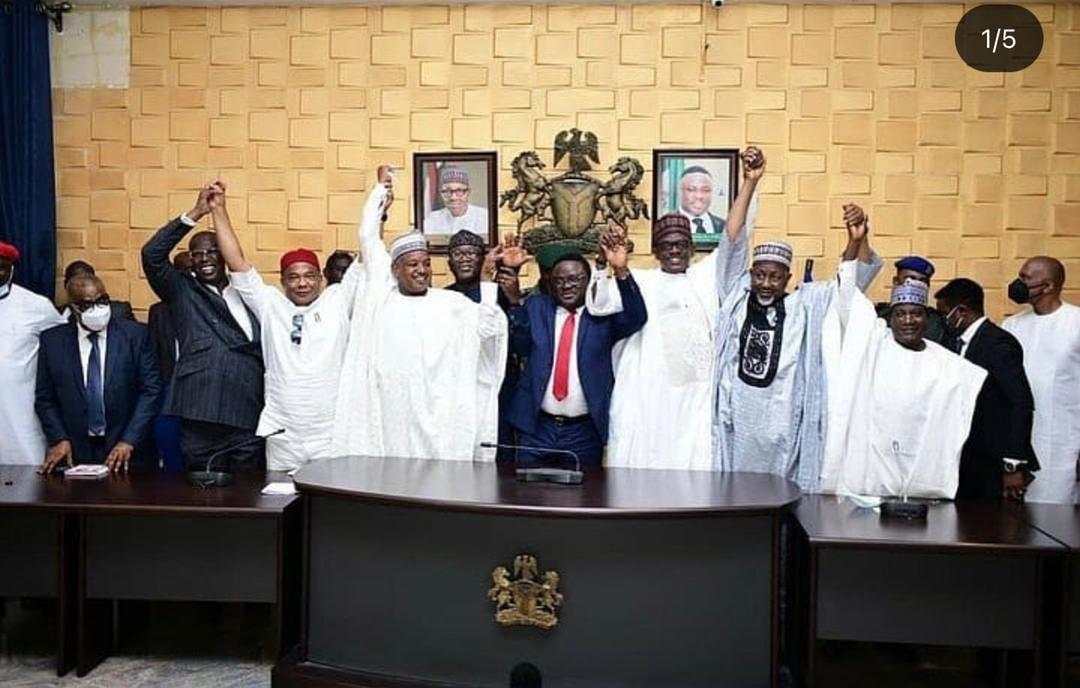
Against this backdrop, Shettima on Monday held a closed-door meeting with former Kogi State Governor Yahaya Bello, former Jigawa State Governor Abubakar Badaru and other former governors, ministers and political figures at the Presidential Villa in Abuja.
The delegation, identified as leaders of the National Directorate of Arewa for Asiwaju Movement, arrived at the State House at about 4 p.m. and proceeded to the Vice-President’s wing.
Shettima was, however, attending a separate meeting at the President’s wing, which began around 2 p.m., when the delegation arrived. The earlier meeting was attended by the Minister of Livestock Development, Idi Maiha, and the President’s Special Adviser and Coordinator of the Presidential Livestock Reform, Professor Attahiru Jega, a former chairman of the Independent National Electoral Commission (INEC), among others.
Although the purpose of the delegation’s visit was not immediately disclosed, it was gathered that the meeting was a courtesy visit.
Other political figures present at the Villa included former Plateau State Governor Simon Lalong, Director-General of the National Drug Law Enforcement Agency, Brigadier-General Buba Marwa (retd.), and Special Adviser to the President on Policy Coordination, Hadiza Bala-Usman.
The meeting came ahead of the planned inauguration of the All Progressives Congress (APC) Presidential Campaign Council on Wednesday, October 14, at the State House Conference Centre, Abuja. It also preceded the party’s scheduled campaign flag-off in Kaduna State on October 24.
Shettima urges North to back Tinubu
At the meeting, Shettima called on Northern leaders and stakeholders to rally behind Tinubu’s second-term ambition, assuring them that the region stood to benefit from another four years of the administration.
He argued that the President’s policies, appointments and development projects had created opportunities for the North, urging political leaders and citizens to unite in pursuit of economic development and improved welfare.
The Vice-President cited the reported disbursement of ₦450 billion by the Bank of Agriculture to 700,000 smallholder farmers nationwide, claiming that about 70 per cent of the beneficiaries were from the North.
According to him, the figures demonstrated the administration’s commitment to improving livelihoods and expanding economic opportunities, particularly in the region.
“I can assure you that the President loves the North and the President will work for the North,” Shettima said.
Earlier, Badaru, who is the Director-General of Arewa for Asiwaju, pledged that the organisation would sustain its mobilisation campaign until Tinubu secured another term.
He said the group planned to engage religious leaders, including Muslim and Christian clerics, alongside other prominent Nigerians, to canvass support for the Tinubu-Shettima ticket ahead of the 2027 election.
Christian group revives opposition consensus initiative
While the ruling party intensifies its mobilisation, the Christian Social Movement of Nigeria has renewed efforts to encourage opposition presidential aspirants to consider a consensus arrangement.
The organisation said its initiative, known as the Christian Political Consensus Project, was designed to facilitate dialogue among candidates, identify areas of agreement and explore ways to harmonise their political interests in the national interest.
Speaking virtually at a press conference on Monday, Chairman of the CSMN Governing Council, Elder Sunday Oibe, urged the aspirants to prioritise national interests over personal ambitions.
He said the 2027 election offered Christians an opportunity to contribute to the emergence of ethical leadership capable of addressing Nigeria’s security and governance challenges.
Oibe, however, clarified that the initiative was not intended to compel any candidate to withdraw from the race or surrender their constitutional right to contest the presidency.
He urged the aspirants to approach the consultations with open minds, present their visions for Nigeria and consider areas where their political platforms and support bases could be harmonised.
According to the organisation, the process would require patience, mutual respect, credible selection criteria and a willingness to negotiate, given that only one candidate could emerge victorious in the presidential election.
The initiative comes amid continuing disagreements among opposition figures over political alliances and the possibility of presenting a common candidate against the APC.
Former Vice-President Atiku Abubakar, former Anambra State Governor Peter Obi and former Kano State Governor Rabiu Kwankwaso remain among the prominent opposition figures discussed in assessments of the emerging political landscape.
Group predicts opposition vote splits
In a statement, GMI National Coordinator Samaila Musa argued that Tinubu’s political alliances across the country could provide the ruling party with an advantage in the 2027 contest.
The group based its assessment on political developments across the South-West, South-East, North-West, North-East and North-Central regions, focusing on potential competition among opposition candidates.
Musa claimed that divisions among opposition parties would make it difficult for them to consolidate their support across the six geopolitical zones.
“Following a nationwide evaluation of political dynamics across all six geopolitical zones, GMI highlights that political realities on the ground coupled with a divided opposition make an opposition victory mathematically impossible,” he said.
Assessing the South, Musa argued that Atiku would struggle to secure substantial support in the region, claiming that Obi and some South-East governors had altered the political dynamics in the zone.
He also described the South-West as a stronghold of the President, while arguing that competition among opposition figures in the North-West could divide votes that might otherwise support a single challenger.
“North-West Vote Split: In the North-West, Kwankwaso is set to capture substantial votes in Kano and Jigawa, as well as a reasonable outing in Katsina. Rather than forming a united front, these votes will be siphoned directly from Atiku’s traditional base, severely diluting the opposition’s voting power,” Musa said.
On the North-East, he pointed to the competing political interests of Shettima, regional governors and Atiku, arguing that the resulting division could affect opposition prospects.
Musa also maintained that northern votes alone had historically been insufficient to secure the presidency, citing former President Muhammadu Buhari’s eventual alliance with Tinubu before his victory in 2015.
“Without Southern states, any presidential bid remains dead on arrival,” he said.
The projections represent GMI’s political assessment and were not accompanied by polling figures or other quantitative evidence in the statement to substantiate its conclusion about the election outcome.
APC chieftain dismisses Atiku’s regional appeal
Similarly, an APC chieftain, Dr Iliyasu Musa Kwankwaso, has dismissed the prospect of Atiku securing Northern votes primarily through ethnic or regional appeals.
Kwankwaso, Director of Finance at the Hadejia Jama’are River Basin Development Authority, said on Monday that voters in the region were increasingly considering governance, development and tangible benefits when deciding which candidates to support.
He argued that political aspirants could no longer assume that Northern voters would automatically support a candidate because of their ethnic or geographical background.
“The North has no candidate for 2027 because the two candidates from the North are not of the people. Ethno-political card will not favour them,” he said.
The APC chieftain maintained that candidates seeking support in the region would need to demonstrate their commitment to development rather than rely on identity politics.
He also cited ongoing federal projects across Northern Nigeria as evidence of what he described as Tinubu’s commitment to the region, arguing that the administration’s development initiatives would feature in voters’ assessment of its performance.
APC campaign council faults Atiku over Tinubu’s name
Meanwhile, the APC Presidential Campaign Council has criticised Atiku for referring to Tinubu by his first name, describing the action as disrespectful to the office of the President.
However, the council urged its leaders, spokespersons, members and support groups to continue extending the courtesies due to Atiku as a former vice-president and presidential candidate.
In a statement issued on Monday, the council’s spokesperson, Dele Alake, said Atiku, who is the presidential candidate of the African Democratic Congress (ADC), had fallen short of the standard of decorum expected of someone who had occupied the country’s second-highest political office and was seeking its highest office.
The council expressed concern over Atiku’s decision to address Tinubu as “Bola”, arguing that his public conduct should reflect the dignity associated with his previous office and current presidential ambition.
It also accused the former vice-president of allowing political animosity and ambition to influence his public statements since his defeat in the last presidential election.
Despite its criticism, the council said the APC’s campaign would focus on issues affecting Nigerians rather than personal exchanges with opposition figures.
It said the party intended to highlight its programmes, showcase Tinubu’s record in office and explain how the administration planned to translate its ongoing reforms into prosperity as the President seeks a second term.
Obi engages young Nigerians on TikTok Live
In a separate development, Obi has attracted attention on social media after making his debut appearance on a TikTok Live session, where viewers sent him virtual gifts during an interaction with young Nigerians.
The former Anambra governor joined a live broadcast hosted by the Emir Sirdam Show on Sunday night, engaging viewers through comments and reacting to digital gifts and animated visual effects.
The gifts reportedly included flowers, lions and universe tokens, while filters placed different caps, glasses and moustaches on his face.
Reacting to the experience, Obi appeared surprised by the activity on the screen.
“I am wondering what is happening to me this evening,” he said with a smile.
The programme’s host explained the virtual gifts and visual effects, adding a light-hearted moment to the broadcast.
The session reportedly attracted thousands of concurrent viewers and millions of likes, while clips from the interaction generated discussions across social media platforms.
Obi’s appearance highlighted the growing use of digital platforms by politicians seeking to engage younger audiences beyond traditional campaign rallies, television interviews and press conferences.
TikTok Live enables users to interact with hosts in real time through comments, virtual gifts and visual effects, providing public figures with an informal channel for audience engagement.
During the session, Obi also pledged to promote national inclusion and ensure that Nigerians across the six geopolitical zones felt represented in governance, regardless of their ethnic or regional backgrounds.
He argued that attempts to divide Nigerians would undermine the country’s progress, stressing the importance of balanced development across all regions.
The former governor said his proposed administration would prioritise direct engagement with citizens to address concerns about marginalisation and ensure that people from different parts of the country felt included in government decisions.
“That’s why I said that I will be president of Nigeria. I will ensure that I visit every state annually,” Obi said.
He further pledged to spend his holidays in different states across the six geopolitical zones and make himself accessible to Nigerians rather than govern from a distance.
Obi said his proposed town hall meetings would provide citizens with opportunities to understand government decisions, policies and ongoing projects.
His comments added another dimension to the unfolding political activities ahead of the 2027 election, as political parties and aspirants explore different strategies to build support, negotiate alliances and communicate their messages to voters.