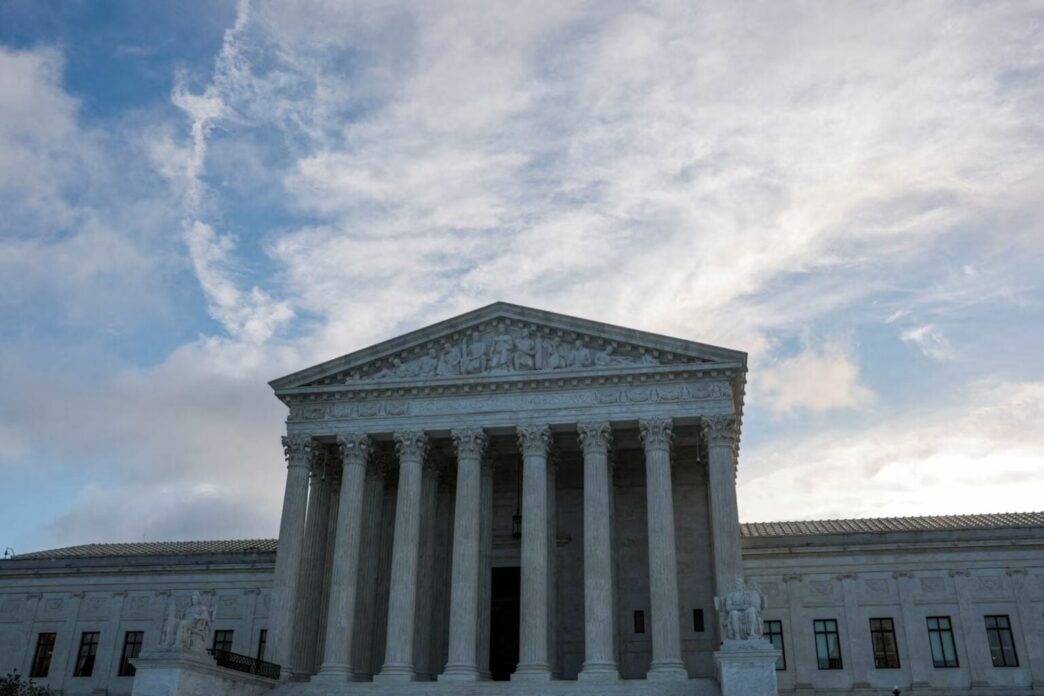
The United States Supreme Court has agreed to hear an appeal by President Donald Trump’s administration seeking to deny asylum to Izuchukwu Ozurumba, a Nigerian man who says he was forced to cook for the suspected separatist group known as the Unknown Gunmen.
Gatekeepers News reports that the case centres on whether preparing meals for members of a group classified by US authorities as a terrorist organisation amounts to providing “material support” for terrorism under American immigration law.
The Supreme Court agreed on Tuesday to review the Justice Department’s challenge to a September 2025 ruling by the US Court of Appeals for the Fourth Circuit, which found that Ozurumba’s cooking work did not constitute material support for terrorism.
Court documents show that Ozurumba travelled to a remote camp outside Lagos in 2022 after receiving information about a job opportunity. He was employed as a cook but later discovered that the camp was allegedly operated by the Unknown Gunmen.
His lawyers said he became suspicious of the group’s activities after observing that the movements of some young men from the camp coincided with reports of killings and arson.
Ozurumba reportedly attempted to leave but was prevented from doing so and forced to continue working without pay. After about six months, he escaped while on a trip to purchase supplies and returned to Lagos.
His lawyers further said he was subsequently beaten and threatened with death, forcing him to flee to Venezuela, where the threats allegedly continued.
In July 2023, Ozurumba entered the United States through its southern border and applied for asylum and other protection against deportation.
An immigration judge denied his application, ruling that the Unknown Gunmen constituted a terrorist organisation and that preparing meals for its members helped the group meet its “basic human needs”. The judge also held that the circumstances of his employment, including his claim that he was forced to remain at the camp, did not exempt him from the immigration restrictions.
Ozurumba was deported to Nigeria in 2025 while his appeal was pending.
However, in September 2025, a divided panel of the Fourth Circuit Court of Appeals ruled in his favour, describing him as a captive labourer and finding that his work did not amount to material support for terrorist activities.
The appellate court held that his work “provided nothing that the organisation could use or readily divert to plan or carry out its terrorist activities”. It ordered further proceedings in his asylum case but did not direct US authorities to return him to the country.
Dissatisfied with the decision, the Trump administration approached the Supreme Court, arguing that providing meals to members of a terrorist organisation should qualify as material support under US law.
“Providing meals to a terrorist organization’s members is no less a material form of support than providing gasoline for its vehicles,” the Justice Department argued in its appeal.
The administration also warned that allowing the lower court’s ruling to stand could make it more difficult for the government to exclude non-citizens with links to terrorism.
Ozurumba’s legal representatives, however, challenged the government’s interpretation of the law, arguing that asylum should not be denied to people who provided no meaningful support to a terrorist group and were compelled to work against their will.
Aimee Mayer-Salins, an attorney with the Amica Center for Immigrant Rights, which is representing Ozurumba, said the case raised concerns about the government’s interpretation of the law and its implications for people seeking asylum.
The Supreme Court is expected to hear arguments and deliver its decision by the end of June 2027.