

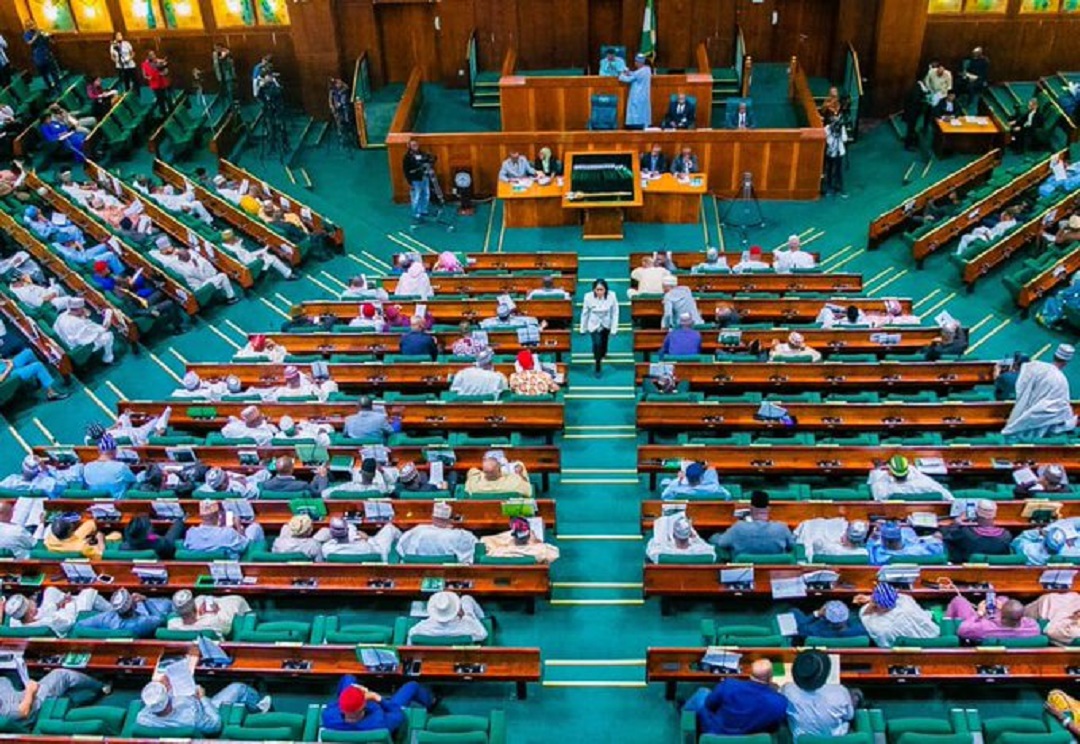
House of Representatives has urged the Federal Government to concession eligible federal roads to private investors and reintroduce toll gates on selected highways after rehabilitation to improve road infrastructure and ensure sustainable maintenance.
Gatekeepers News reports that the lawmakers made the call during plenary on Wednesday following the adoption of a motion sponsored by Esosa Iyawe, representing Oredo Federal Constituency in Edo State, alongside Olusola Fatoba, Abdulmaleek Danga and Uche Okonkwo.
Moving the motion, Iyawe said Nigeria’s federal road network had deteriorated significantly due to prolonged neglect, inadequate maintenance funding and pressure from heavy-duty vehicles.
He noted that the poor condition of the roads had contributed to avoidable accidents, loss of lives, vehicle damage, increased transportation costs and delays in the movement of goods and passengers.
The lawmaker particularly highlighted the condition of roads in Edo State, which serves as a major transportation corridor linking several parts of southern Nigeria.
He said the situation had affected commercial activities, increased the cost of transporting agricultural produce and other essential commodities, discouraged investment and placed additional economic pressure on residents, commuters and businesses.
Iyawe argued that relying on annual budgetary allocations to maintain the extensive federal road network had not consistently delivered the level of rehabilitation required.
He therefore proposed the use of transparent public-private partnership arrangements to attract private capital, technical expertise and efficient project management for the rehabilitation, operation and long-term maintenance of eligible highways.
According to him, tolls on rehabilitated roads could enable investors to recover their investments while providing funds for routine maintenance, road safety operations and government revenue.
He said toll plazas could also create employment opportunities for host communities through toll administration, security services, traffic management, maintenance and other related businesses.
The lawmaker further argued that strategically located toll plazas could support security operations by providing additional points for intelligence gathering, emergency response and the monitoring of vehicular movements, provided they were properly coordinated with relevant security agencies.
However, he stressed that any tolling arrangement must be transparent, affordable and technologically efficient, with enforceable service standards to ensure motorists receive measurable improvements in road quality and safety in return for their payments.
Following the adoption of the motion, the House urged the Federal Ministry of Works to develop a comprehensive national framework for concessioning eligible federal roads under transparent public-private partnership arrangements, prioritising highways requiring urgent rehabilitation and major economic corridors.
The lawmakers also called for the ministry to work with the Federal Roads Maintenance Agency, the Infrastructure Concession Regulatory Commission and other relevant agencies to assess the federal road network and identify roads suitable for concessioning.
They further recommended that toll gates be reintroduced only after substantial rehabilitation and the establishment of clear concession agreements, with charges determined through economic assessments, public consultation and affordability considerations.
The motion was referred to the relevant House committees for further legislative action, with a four-week period set for them to engage relevant agencies and report back to the House.