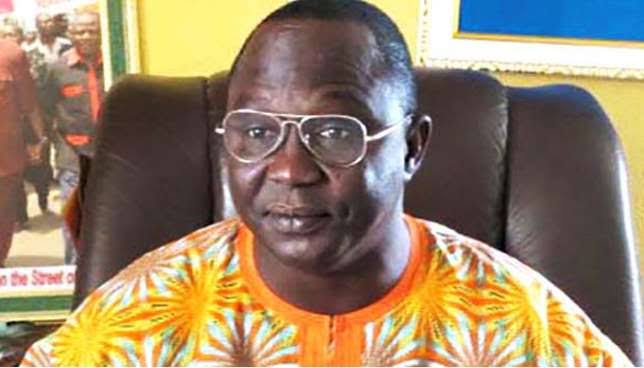




Nigeria Centre for Disease Control and Prevention (NCDC) has confirmed that two suspected Ebola cases identified in Adamawa State tested negative after two rounds of laboratory testing.
Gatekeepers News reports that the development followed an earlier alert by the agency that two individuals in the North-East region had presented with symptoms suggestive of the viral disease.
In a statement on Sunday, November 1, 2026, NCDC Director-General, Jide Idris, said the report was received by the Adamawa State Public Health Emergency Operations Centre in the early hours of October 30, following the identification of the two individuals.
He said the individuals were immediately isolated, while appropriate public health measures were initiated and samples collected to determine the cause of their illnesses.
“Samples were collected for laboratory testing to establish the cause of the illness. Fortunately, the samples turned out negative for EBV after two rounds of testing,” Idris said.
He commended the Adamawa State Commissioner for Health and his team for their response, describing their approach as proactive.
“At this juncture, I wish to commend the efforts of the Adamawa health commissioner and his team for their proactive approach,” he said.
Idris clarified that there was currently no laboratory-confirmed Ebola case in Adamawa State, adding that the index case previously confirmed in the Federal Capital Territory (FCT) remained the only confirmed case reported in Nigeria.
“Currently, there is no laboratory-confirmed Ebola case in Adamawa state,” he said.
“The index case previously confirmed in the Federal Capital Territory remains the only confirmed case reported in Nigeria to date.”
The NCDC director-general urged Nigerians to remain calm and avoid spreading unverified information or speculating about the situation.
“The public is encouraged to obtain information from official government and public health communication channels,” he added.
He also advised anyone experiencing symptoms such as fever, severe weakness, headache, muscle pain, vomiting, diarrhoea or unexplained bleeding, particularly after possible exposure, to seek immediate medical attention.
“Individuals should avoid self-medication and follow the advice of healthcare professionals,” Idris said.
Nigeria confirmed its first Ebola case in more than a decade on October 20, 2026, after a 42-year-old Swiss woman who travelled from Uganda tested positive for the Bundibugyo strain of the virus in Abuja.
The patient was subsequently isolated and treated by Nigerian health workers before being evacuated to Switzerland on October 26 for continued medical care. Her husband, who was identified as a close contact, was also evacuated.