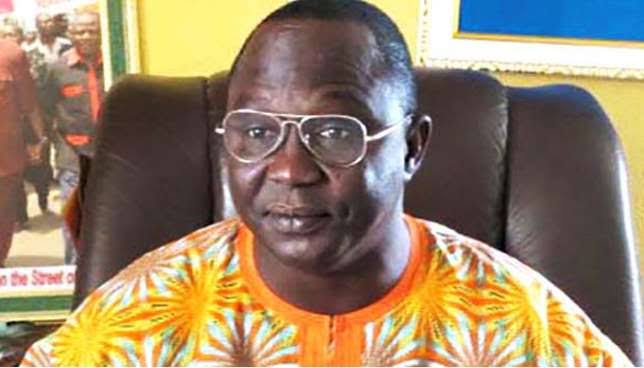



Fisayo Soyombo, founder of the Foundation for Investigative Journalism (FIJ), has called on the federal government to intensify efforts to combat disinformation about irregular migration through public awareness campaigns in local languages, particularly in hard-to-reach communities.
Gatekeepers News reports that Soyombo made the call on Wednesday at the exclusive opening of his photography exhibition, titled “Desserts from the Desert”, held at the British High Commission in Abuja.
He said the government needed to move beyond routine press releases and adopt grassroots communication strategies that would enable people in remote communities to understand the dangers of irregular migration and the false promises made by human traffickers.
“Nigeria should reach the hinterland on migration disinformation,” he said.
“Tackling migration should not be done by the regular press releases but through information disseminated in local languages to reach people in the hinterland of Nigeria.
“Many people don’t know the kind of disinformation that traffickers feed victims with.”
The investigative journalist described trafficking networks across Africa as well-organised operations, warning that false information spread by traffickers was contributing to the growing problem of irregular migration.
In October, Soyombo held a three-day photography exhibition in Lagos to document the experiences of African migrants travelling through the Sahara Desert in search of a route to Europe.
The photographs were drawn from his three-part undercover investigation, “Undercover: Europe Through the Sahara Desert and the Mediterranean Sea”, during which he spent 47 days travelling along major migration routes.
His journey took him from Kano, Nigeria, through Zinder, Agadez and Dirkou in Niger Republic, and Al Gatrun and Sabha in Libya, before reaching Tripoli.
The investigation documented the experiences of migrants from Nigeria, Ghana, Niger, South Sudan, Eritrea and Somalia, including accounts of deaths, starvation, sexual violence, abductions, torture, physical assault and forced labour.
Soyombo said he embarked on the journey to witness the migrants’ experiences firsthand and draw attention to the dangers of irregular migration, with the aim of helping to reduce the estimated 80,000 Nigerians who undertake the journey annually.
Through the exhibition, he hopes to bring the harsh realities of the journey to public attention, using photographs that capture the people, conditions and dangers encountered during his investigation.