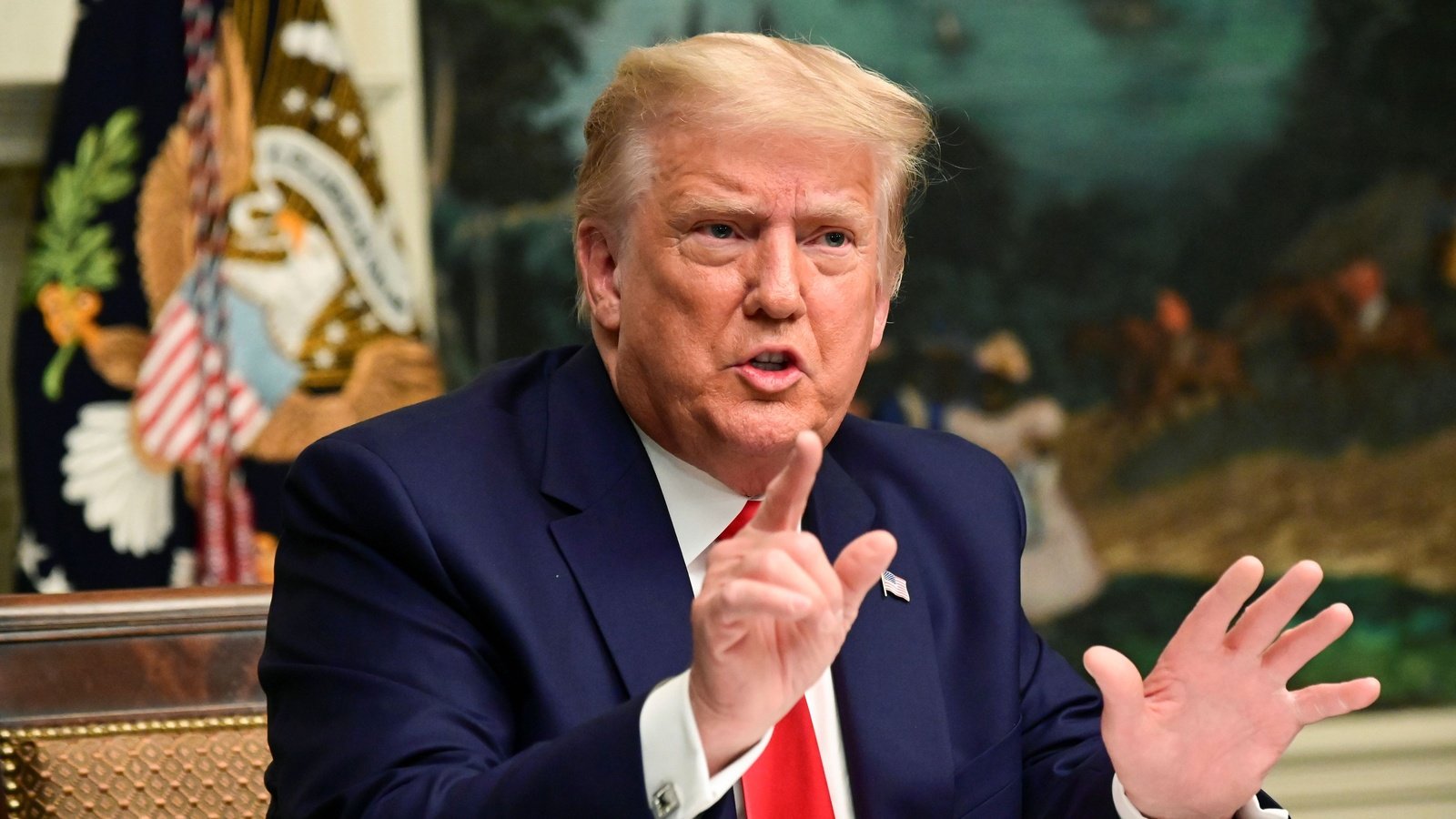
President Donald Trump said on Friday that only Iran’s “unconditional surrender” would end the ongoing Middle East war, as Tehran faced some of the heaviest US-Israeli strikes since the conflict began a week ago.
Gatekeepers News reports that now in its seventh day, the war has expanded beyond the region, disrupted global energy and transport sectors, and caused chaos in typically peaceful areas of the Gulf. The conflict has also spread to Lebanon, where Prime Minister Nawaf Salam warned of a looming humanitarian disaster as tens of thousands fled Israeli airstrikes on southern Beirut suburbs.
Trump, who has offered varying justifications for launching strikes that killed Iran’s supreme leader Ali Khamenei last weekend, promised economic assistance if Tehran installed an “acceptable” new leader.
“There will be no deal with Iran except UNCONDITIONAL SURRENDER,” Trump wrote on his Truth Social platform.
“MAKE IRAN GREAT AGAIN (MIGA!),” he added.
In Tehran, crowds gathered for Friday prayers—the first since the conflict began—amid heavy explosions that sent plumes of black smoke into the sky. A Tehran businessman identified only as Robert told AFP:
“It’s really very scary. Checkpoints have been put in place in the city to prevent looting and ensure control.”
Escalation and casualties
Both the US and Israel warned they would escalate strikes on Iran.
“We have additional surprises ahead which I do not intend to disclose,” said Eyal Zamir.
According to Iran’s health ministry, US and Israeli strikes have killed 926 people, with 30% reportedly children, though AFP could not independently verify the toll. Iran has retaliated with missile and drone attacks on Israel and Gulf states, while Israel reported at least 10 deaths. The US military confirmed six personnel killed.
The conflict has also drawn in Lebanon, after Iran-aligned Hezbollah fired missiles at Israel. Israeli airstrikes hit southern and eastern Lebanon, causing widespread destruction and displacing hundreds of thousands of residents.
“We’ll sleep on the road tonight and God alone knows what will happen to us,” one man told AFP on Beirut’s coastline.
Lebanon’s health ministry reported 217 deaths, while Israel claimed over 70 Hezbollah militants killed, though AFP could not independently verify either number. Drones struck an airport and oil facilities in southern Iraq, halting crude production and pushing oil prices higher.
International reactions
The United Nations declared the crisis a major humanitarian emergency, urging an immediate response. The UN rights chief called for “impartial investigations” after Iran reported a school strike killing more than 150 people—a claim neither the US nor Israel has confirmed. US Secretary of State Marco Rubio said the Pentagon is investigating.
European leaders have voiced criticism, with Pedro Sanchez calling the strikes an “extraordinary mistake” and “not in accordance with international law.” The European Union will hold talks on Monday.
The Gulf has also been affected: Qatar intercepted a drone attack on a US air base, Saudi Arabia shot down three drones near Riyadh, and at least 13 people have died across Gulf countries, including an 11-year-old in Kuwait. Explosions were reported in Kuwait City on Friday.
The war’s reach has extended even further, including an Iranian frigate torpedoed by a US submarine off Sri Lanka and a drone strike on an airport in Azerbaijan, prompting threats of retaliation. Global markets and shipping, especially through the Strait of Hormuz, have been heavily disrupted, with crude oil prices surging about 20% in a week.