

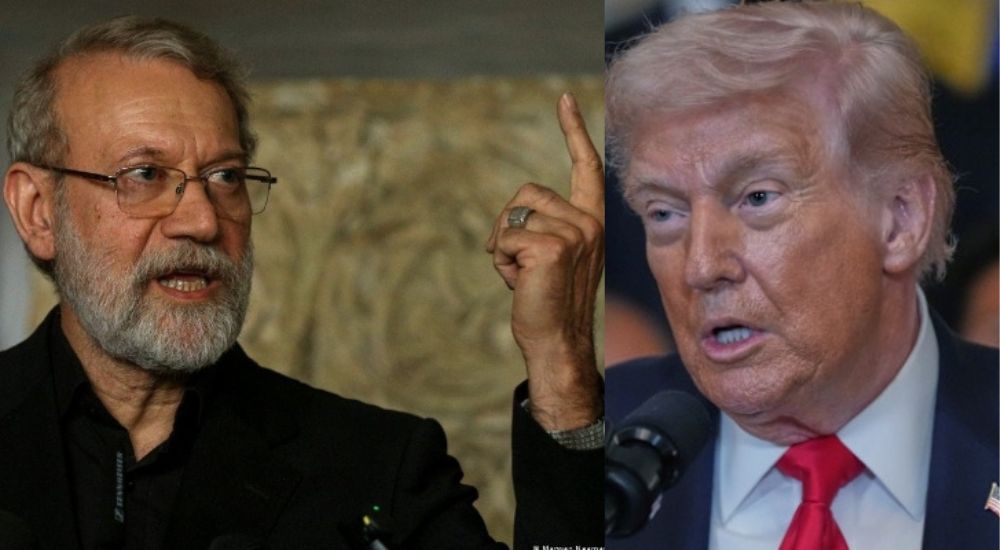
Iran on Tuesday issued a strong warning to United States President Donald Trump, telling him to “be careful not to be eliminated” as tensions intensify over the widening Middle East conflict and threats surrounding the strategic Strait of Hormuz.
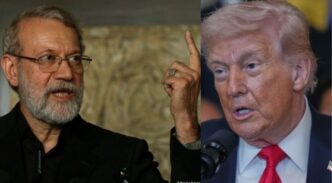
Gatekeepers News reports that the warning came from Iran’s senior security official Ali Larijani, who dismissed Trump’s recent threats as “empty” and said Iran would not be intimidated.
Writing on social media platform X, Larijani said the Iranian nation had faced more powerful adversaries in the past and survived.
“Iran is not afraid of your empty threats. Even those greater than you could not eliminate the Iranian nation. Take care of yourself not to be eliminated,” he wrote.
Larijani’s remarks followed a series of warnings from Trump cautioning Iran against disrupting oil shipments through the Strait of Hormuz — one of the world’s most important maritime chokepoints for global energy supply.
Nearly a fifth of the world’s crude oil passes through the narrow waterway linking the Persian Gulf to the Gulf of Oman.
Trump had earlier threatened that if Iran attempted to block oil tankers passing through the strait, the United States would respond with overwhelming force.
In a post on his Truth Social platform, Trump warned that Iran would be hit “twenty times harder” than previous attacks if it interfered with oil traffic.
“If Iran does anything that stops the flow of oil within the Strait of Hormuz, they will be hit by the United States twenty times harder than they have been hit thus far,” Trump wrote, adding that “death, fire and fury” could follow if Tehran escalated the situation.
The exchange marks the latest escalation in rhetoric between Washington and Tehran as a regional conflict involving Israel, Iran and their allies continues to expand across the Middle East.
The confrontation intensified following reports from Iranian sources that the country’s Supreme Leader, Ali Khamenei, was killed during a series of strikes launched by the United States and Israel late last month.
The attacks reportedly targeted military installations and key infrastructure across Iran, prompting retaliatory missile and drone strikes by Iranian forces against Israeli and allied positions in the region.
The conflict has heightened fears of disruptions to global energy markets, particularly if hostilities spread to the Persian Gulf or affect shipping through the Strait of Hormuz.
Analysts warn that any prolonged closure of the waterway could send global oil prices soaring and deepen geopolitical instability.
Iranian officials have repeatedly suggested that the country could block oil exports from the region if pressure from the United States and its allies continues. Iranian forces have also stepped up missile and drone operations targeting military installations and strategic facilities linked to the conflict.
Meanwhile, Washington has vowed to maintain freedom of navigation in the Gulf and has deployed additional naval forces to the region to protect commercial shipping and deter further escalation.