Two weeks into what the Trump administration billed as a swift, decisive campaign, the United States and Israel find themselves mired in the very kind of grinding attrition that Vladimir Putin has mastered in Ukraine. The parallels are not only real and historical; they are strategic, economic, and now deeply personal for the American president who promised to end “forever wars.”
Recall Putin’s gamble three years ago. In February 2022, Russia massed troops and hardware along Ukraine’s border, launched its so-called “Special Military Operation,” and expected to decapitate Kyiv’s government within 72 hours. The objective was unambiguous: install a pliant pro-Moscow regime and absorb the country. Instead, a vastly outgunned Ukraine, bolstered by Western sanctions, intelligence, weapons, and training, turned the invasion into a protracted meat grinder. Russia’s economy buckled under sanctions, its military suffered catastrophic losses, and the war settled into a bloody stalemate far beyond the territories Moscow held before the full-scale assault.
Fast-forward to February 2026. The United States and Israel, acting in defiance of the United Nations and the cautious reservations of Gulf allies, launched Operation Epic Fury against Iran. The stated aim, though the messaging shifted daily, was regime change: degrade the Islamic Revolutionary Guard Corps, shatter the theocratic structure led by Supreme Leader Ayatollah Ali Khamenei (and now his successor), and open space for internal opposition that had already been crushed in earlier protests. Like Putin before him, Trump anticipated a lightning victory measured in days. Two weeks later, American and Israeli forces remain deeply engaged inside Iran.
Iranian resistance has defied every expectation of quick collapse. Despite the overwhelming technological superiority of U.S. and Israeli airpower, Tehran has responded with relentless ballistic-missile barrages and swarms of suicide drones. Targets in Israel have been struck; U.S. military bases, embassies, and assets across the Gulf have taken hits. American aircraft have been damaged and U.S. service members killed. Most devastatingly for the global economy, Iran has effectively shut the Strait of Hormuz, the chokepoint through which roughly 20 percent of the world’s daily crude oil flows. Oil prices have skyrocketed, gasoline and consumer goods costs have surged worldwide, and the resulting economic shock has created the exact political nightmare Trump sought to avoid.
The most telling parallel, however, lies in the external patron. Just as NATO and the West sustained Ukraine, Russia is now quietly sustaining Iran. U.S. intelligence officials confirm that Moscow is supplying Tehran with precise, real-time targeting data on American troop movements, warship positions, and aircraft locations. The results have been lethal: Iranian strikes have landed with uncanny accuracy. In a further twist that must sting in Washington, the Trump administration has reportedly eased sanctions on Russian oil exports, temporarily, granting Moscow a critical financial lifeline to sustain its own war in Ukraine. Putin has thus achieved the strategic symmetry he could only have dreamed of: America is now bleeding treasure, prestige, and lives in a Middle Eastern quagmire while Russia gains breathing room on the Ukrainian front.
Iran does not need outright military victory. Survival of the regime, even under Mojtaba Khamenei, constitutes strategic success. The Islamic Republic has already disrupted global energy markets on a scale experts describe as unprecedented. It has forced Gulf states that hosted U.S. bases to confront the limits of American security guarantees. Tourist seasons canceled, sports events scrapped, shipping lanes paralyzed, the economic and political costs mount daily.
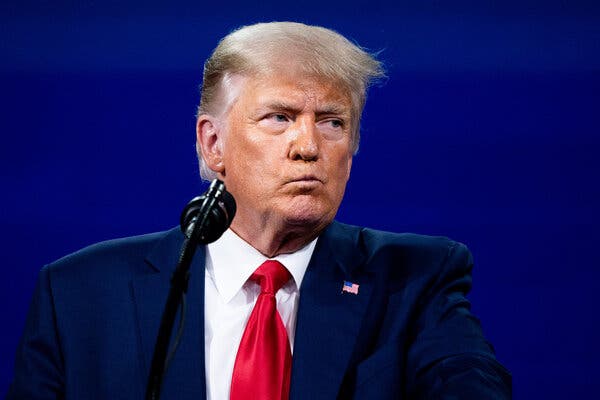
Trump entered this conflict promising speed and decisiveness. Instead, he has walked into the classic “fog of war” trap that Putin understands intimately: the longer the fight drags on, the more the superior power bleeds political capital at home and credibility capital abroad. Ukraine taught the world that determination, asymmetric tools, and a powerful external patron can humble even the largest military machine. Iran, with Russia’s help, is now teaching the same lesson again, this time to the man who once mocked endless Middle Eastern wars.
In the end, the greatest winner may not be in Tehran or even Moscow, but in the simple arithmetic of attrition: Putin has maneuvered his American counterpart into precisely the protracted, costly conflict he himself has endured for three years. And unlike Ukraine, this time the world’s oil lifeblood is the hostage. The fog is thick indeed and Donald Trump is exactly where Vladimir Putin wants him, in a stalled, protracted and costly war in the Middle East.
Capt. Bishop C. Johnson, US Army (rtd), is a national defense and military strategist, and a political commentator.
Gatekeepers News is not liable for opinions expressed in this article; they’re strictly the writer’s