


Iran has vowed “crushing” attacks against the United States and Israel, launching missiles toward Tel Aviv after US President Donald Trump threatened to bomb the Islamic Republic “back to the Stone Ages”.
Gatekeepers News reports that the conflict, which began more than a month ago following joint US-Israeli strikes on Iran, has expanded across the Middle East, disrupting global markets and affecting millions worldwide.
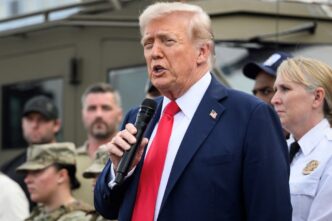
In a prime-time address from the White House, Trump said the US was “very close” to achieving its objectives but warned that military action would intensify if Iran failed to agree to a negotiated settlement.
“Over the next two to three weeks, we are going to bring them back to the Stone Ages, where they belong,” Trump said in a 19-minute speech delivered before American flags.
Iran responded swiftly, with missiles targeting Tel Aviv and Israeli air defence systems activated. Police reported “several” impact sites, while at least four people were said to have sustained minor injuries.
Iran’s military command centre, Khatam al-Anbiya, issued a statement broadcast on state television, warning the US and Israel to expect “more crushing, broader, and more destructive actions”.
“With trust in Almighty God, this war will continue until your humiliation, disgrace, permanent and certain regret, and surrender,” the statement said.
The latest escalation coincided with Passover celebrations in Israel, forcing some residents to observe the festival in underground shelters.
“This is not my first choice,” said a Tel Aviv resident identified as Jeffrey, speaking from a bunker. “But at least in the shelter, we can sit here and just ride it out.”
‘Resist until the end’
Trump has recently floated the possibility of negotiations, saying a deal could be reached with Iran’s new leadership, which he described as “less radical and much more reasonable”.
However, Tehran has rejected Washington’s overtures, calling US demands “maximalist and irrational”.
Iranian foreign ministry spokesman Esmaeil Baqaei said messages had been exchanged through intermediaries, including Pakistan, but confirmed there were no direct talks with Washington.
Trump also warned that if no agreement is reached, the US has “our eyes on key targets including the country’s electric generating plants”.
In Tehran, pro-government demonstrators expressed defiance during the funeral of a Revolutionary Guards naval commander killed in an Israeli strike.
“This war has lasted a month. However long it takes, we will continue,” said Moussa Nowruzi, a 57-year-old pensioner. “We will resist until the end.”
Regional spillover and global impact
The conflict has widened beyond Iran and Israel. In Lebanon, Hezbollah said it launched drones and rockets toward northern Israel, while Israeli authorities confirmed air raid sirens were activated.
A day earlier, Israeli strikes in Beirut reportedly killed a senior Hezbollah commander and several others, according to Lebanese officials.
Since the escalation between Israel and Iran-backed Hezbollah began on March 2, authorities in Lebanon say more than 1,300 people have been killed.
Gulf countries have also been drawn into the crisis, with the United Arab Emirates reporting that its air defence systems responded to missile and drone threats.
Trump reiterated that the US would protect its regional allies, including Israel, Saudi Arabia, Qatar, the UAE, Kuwait and Bahrain.
The war has also underscored the strategic importance of the Strait of Hormuz, a key النفط shipping route through which about one-fifth of the world’s oil supply passes. Iran has threatened to shut the strait, while Washington has made its reopening a condition for any ceasefire.
Britain is set to lead a summit of 35 countries to address maritime security and ensure freedom of navigation in the waterway.
Markets reacted sharply to Trump’s speech, with oil prices rising and global stocks falling.
Stephen Innes, an analyst at SPI Asset Management, said the message was “unmistakably one of unfinished business”.
“And in markets, unfinished business is oxygen for volatility,” he added.
The World Bank also warned of the broader economic fallout, expressing concern over rising inflation, job losses and food insecurity.
The impact is already being felt globally, with airlines in China increasing fuel surcharges and Malaysian civil servants asked to work remotely.
Even Bhutan has been affected, as authorities cited external pressures for rising fuel costs. Long queues were reported at petrol stations in the capital, Thimphu.
“I don’t know what to say. It’s not like our government is responsible,” said resident Karma Kalden. “We are helpless.”