

By : Gbenga Akingbule
For sixteen-year-old Maryam Auwal Abubakar, the onset of her first menstrual cycle was a frightening experience. Ashamed and uncertain about what was happening to her body, she resolved never to return to school, fearing that her classmates would mock and ridicule her.
Gatekeepers News reports that another girl , Hauwa Mohammed Hussaini had an even more terrifying experience when she had her first menstrual cycle. The sight of blood left the 16-year-old frightened and confused, as she believed she was seriously ill and might die.
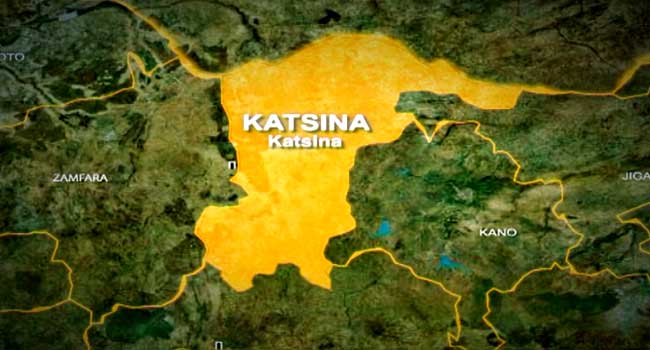
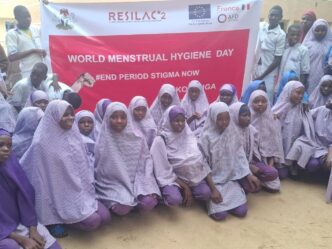
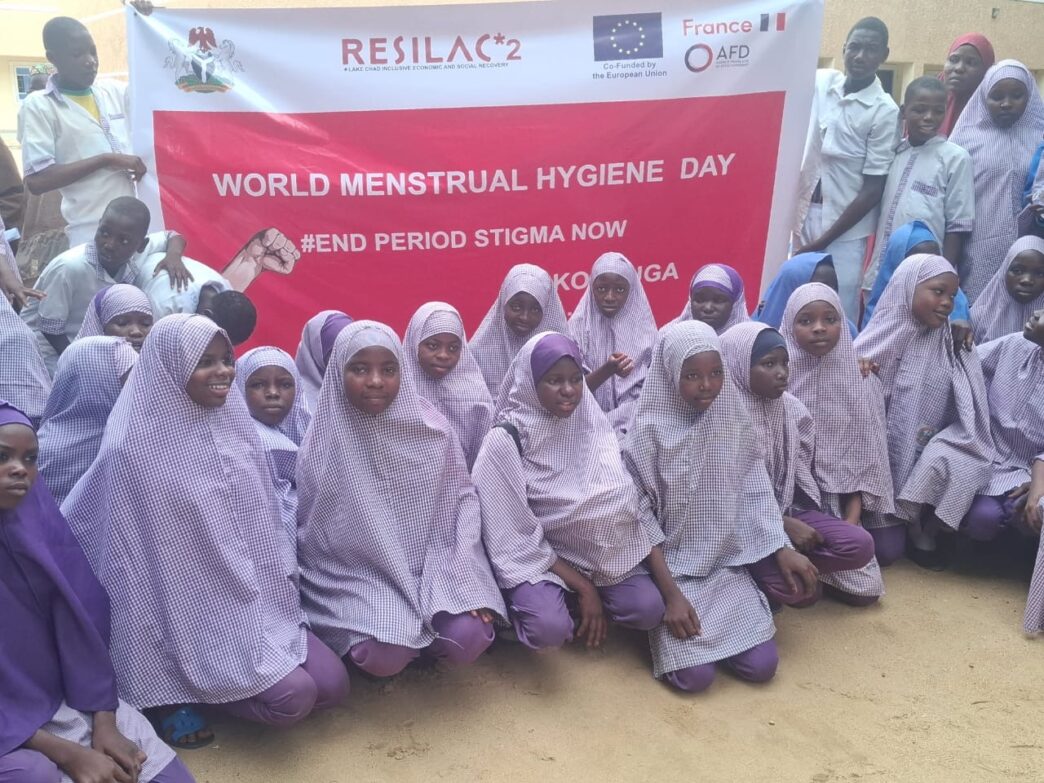
With no prior knowledge of menstruation or menstrual hygiene, both Abubakar and Hussaini, students in JSS3 and JSS2 respectively at Government Day Junior Secondary School, Pompomari, in Konduga Local Government Area, were among participants in this year’s Menstrual Hygiene Management Day celebration held on Wednesday and organised by the Lake Chad Inclusive Economic and Social Recovery Programme (RESILAC).
Like the two adolescent girls from Pompomari Junior Secondary School, many young girls across Borno State and beyond continue to grapple with misconceptions surrounding menstruation. These misconceptions according to RESILAC often fuel fear, stigma and embarrassment, preventing girls from accessing accurate information and proper menstrual hygiene management practices.
“We are here to sensitize the community—women, girls, boys, and men—on how they can contribute to addressing the stigma associated with menstrual hygiene. We are also here to demonstrate our commitment and support for women and girls facing challenges during their menstrual periods, while encouraging access to menstrual hygiene education, support, and related services,” Sabiu Suleiman Shehu, Advocacy and Communication Coordinator for RESILAC, said while speaking during the event.
Sabiu explained that this year’s International Menstrual Hygiene Day, usually observed on May 28, coincided with the Eid-el-Kabir celebration. As a result, the annual event was rescheduled to June 10, where participants embarked on a solidarity walk to raise public awareness about menstrual hygiene and promote support for women and girls.
Fatima Ali Abatcha, Health System Strengthening Officer at Action Against Hunger, took time to educate the students and women present on menstrual hygiene management, emphasizing the importance of maintaining proper hygiene during menstruation. She also addressed common misconceptions surrounding menstruation and encouraged participants to seek accurate information and support services whenever necessary.

Strengthening Officer – Action Against Hunger
During an interactive quiz session, participants were tested on their knowledge of menstruation and menstrual health. Questions focused on the average menstrual cycle, duration of menstrual bleeding, common myths surrounding menstruation, and menstrual-related health conditions such as dysmenorrhea. Abatcha who moderated the session used the exercise to dispel misconceptions and provide scientifically accurate information on menstrual health.
The event also provided opportunity for organisers to challenge harmful cultural norms and misconceptions surrounding menstruation, while engaging key stakeholders in efforts to promote menstrual hygiene awareness and break the stigma associated with the natural biological process.
A representative of the traditional institution and Ward Head Grema Musa Abdullahi (Bulama) of Moramti described the awareness campaign as timely and commendable, noting that it would help address misconceptions surrounding menstruation and promote better menstrual hygiene practices among women and girls in the community.

The Ward Head, who also serves as the Principal of Government Day Junior Secondary School, pledged the support of traditional leaders towards sustaining efforts aimed at improving menstrual health awareness and promoting menstrual hygiene management among adolescent girls and women in the community.
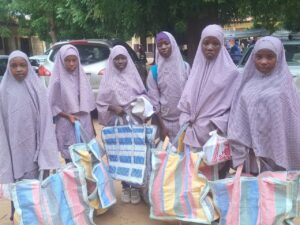
Schoolgirls who attended the event participated in a practical training session on how to make sustainable reusable sanitary pads using locally available materials. With support from the organisers under the RESILAC project, funded by the European Union and the French Development Agency (AFD) and implemented by CARE Nigeria and Action Against Hunger (ACF), the adolescent girls were also provided with Menstrual Hygiene Management (MHM) kits to support safe and dignified menstrual health practices.
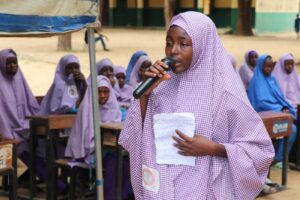
As Maryam grabbed her MHM kit, beaming with a smile, she recalled how her mother helped her conquer her fear of returning to the classroom. Maryam now stands confidently before her classmates and invited guests, sharing vital messages on menstrual hygiene management and the importance of breaking the stigma associated with menstruation.
“RESILAC has provided a great opportunity to dispel the misconceptions surrounding menstruation and menstrual hygiene management. I wish I had received this education before I started menstruating at the age of 13. It would have saved me from the fear and confusion that made me consider staying away from school because I was afraid my classmates would mock me.” Maryam Auwal Abubakar said .