

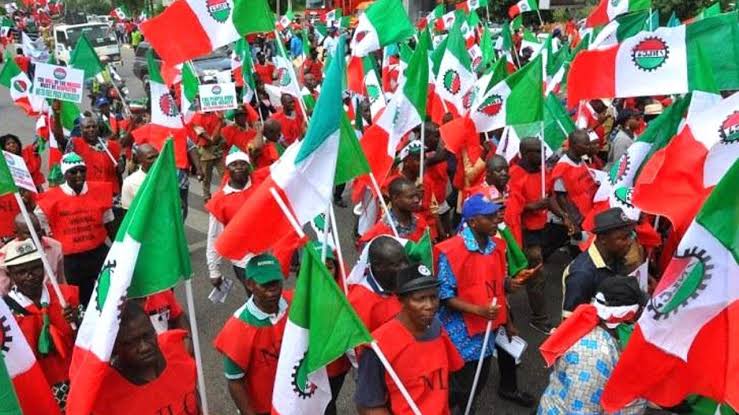
The growing dispute between the Nigeria Labour Congress (NLC) and a pro-President Bola Ahmed Tinubu support group has sparked a wider debate ahead of the 2027 elections over whether organised labour can influence or dictate the political choices of individual workers.
Gatekeepers News reports that at the centre of the controversy is Working People United (WoPU), a support group led by the immediate past President of the Nigeria Union of Petroleum and Natural Gas Workers (NUPENG), Comrade Williams Akporeha.
The NLC national secretariat reportedly directed the presidents and general secretaries of its affiliate unions to distance themselves from WoPU, which is mobilising support for Tinubu’s re-election in 2027.
The directive has, however, generated resistance, particularly following the inauguration of WoPU’s Lagos State chapter, where NLC Lagos Council Chairman, Comrade Agnes Sessi, serves as the state coordinator.
Sessi’s participation in the event, which was attended by Lagos State Governor Babajide Sanwo-Olu and the All Progressives Congress (APC) governorship candidate, Obafemi Hamzat, subsequently drew the attention of the NLC national leadership.
In a memo dated August 11, 2026, and signed by the NLC Deputy General Secretary and Head of Information, Public Affairs and Education Department, Benson Upah, Sessi was asked to explain her involvement with WoPU.
The national secretariat accused her of acting contrary to the Congress’s directives, undermining the authority of the national leadership and supporting what it described as a parallel organisation.
WoPU Challenges NLC Position
WoPU, however, has reframed the dispute as a question of workers’ freedom to make independent political choices.
Akporeha argued that while the NLC is entitled to adopt institutional positions on political issues, it cannot compel individual workers to vote for a particular candidate or political party.
He cited Section 40 of the 1999 Constitution, which guarantees citizens the right to freely assemble and associate with others, including through political parties, trade unions and other associations.
According to him, belonging to a labour union does not take away a worker’s political independence.
He maintained that a worker could belong to the NLC, support its legitimate labour struggles and still vote for a candidate different from the one supported by the union’s leadership.
Akporeha also accused the NLC leadership under Comrade Joe Ajaero of attempting to extend the Congress’s institutional influence into the political choices of individual workers.
He alleged that the Congress had previously attempted to mobilise workers behind the Labour Party during the 2023 elections and was seeking to adopt a similar approach ahead of 2027.
WoPU said its membership comprises professionals, artisans, traders, market men and women, as well as workers in both the formal and informal sectors who have independently chosen to support Tinubu.
The group argued that no union leadership could take away an individual worker’s right to determine, in the privacy of the ballot box, the candidate or party to support.
The controversy is likely to become more significant as political activities intensify ahead of the 2027 general elections.
For organised labour, the dispute raises the question of where the line should be drawn between adopting a collective political position and attempting to enforce political conformity among members.
A union may endorse a candidate, campaign or mobilise its members around an issue. However, the final decision at the ballot box remains with the individual voter.
The NLC-WoPU dispute therefore extends beyond the involvement of one support group or the position of one Lagos labour leader. It has raised a broader democratic question ahead of 2027: workers may belong to the same union, but must they vote the same way?
For WoPU, the answer is an emphatic no.