

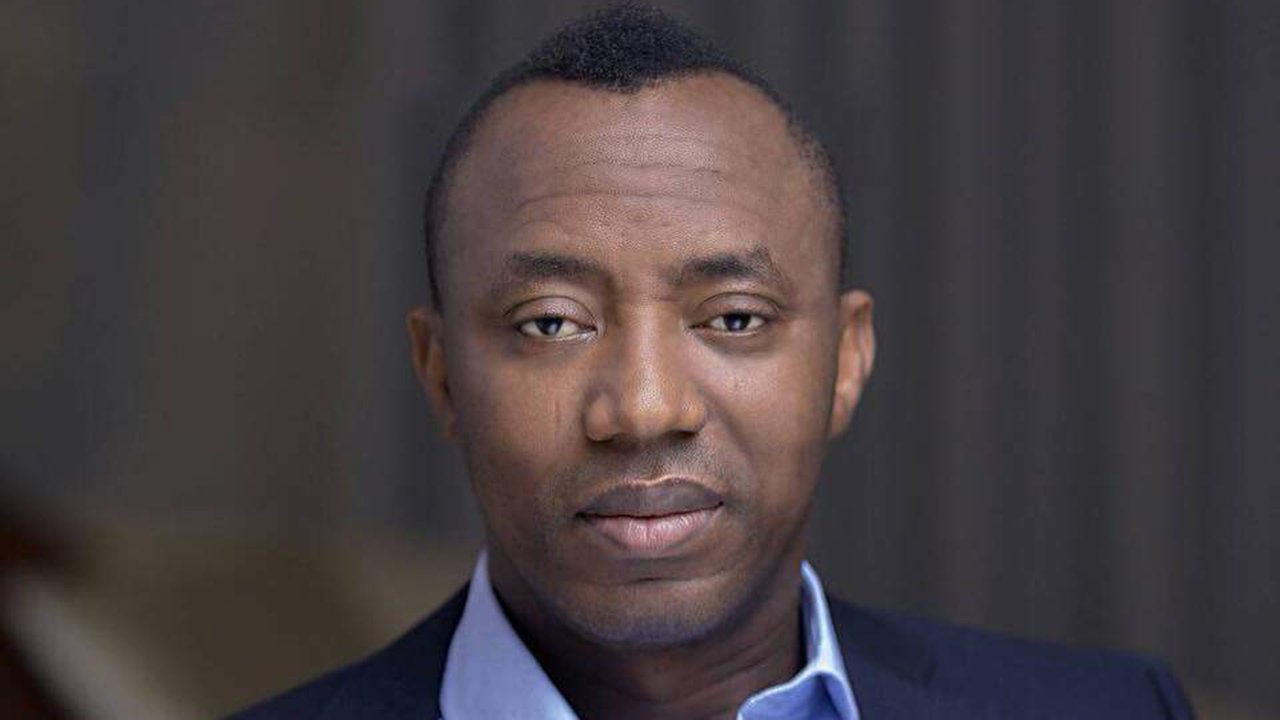
Amnesty International Nigeria has called for the immediate and unconditional release of activist and publisher Omoyele Sowore, describing his detention as arbitrary and linked solely to the peaceful exercise of his right to freedom of expression.
Gatekeepers News reports that Sowore, publisher of Sahara Reporters and former presidential candidate of the African Action Congress (AAC), is facing cyberbullying charges filed by the Department of State Services (DSS).
His bail was revoked on June 16 following his failure to appear in court, prompting the Federal High Court in Abuja to order his remand at the Kuje Correctional Centre pending the hearing of a motion seeking a stay of execution of the revocation order.
Justice Mohammed Umar, in a ruling delivered on Monday, directed that Sowore remain in custody pending the hearing and determination of his application challenging the revocation of his bail and the issuance of a bench warrant against him.
The court also dismissed an earlier application by Sowore seeking the judge’s recusal from the case over allegations of bias.
Reacting to the development in a statement posted on its official X account, Amnesty International said Sowore’s detention amounted to punishment for expressing his views and criticising President Bola Tinubu on social media.
“Nigerian authorities must immediately and unconditionally release Sahara Reporters publisher and activist Omoyele Sowore from arbitrary detention as he is detained solely for the peaceful exercise of his human rights,” Amnesty International said.
The organisation expressed concern over what it described as a growing trend of using criminal laws and judicial processes against critics, journalists and human rights defenders.
“Amnesty International is deeply concerned about the arbitrary detention of Sowore and the broader pattern of crackdown on civic space, and intimidation and harassment of activists, human rights defenders, and journalists solely for exercising their rights to freedom of expression, association and peaceful assembly,” the statement added.
According to Amnesty, Sowore’s detention is connected to his criticism of public officials and the expression of political opinions, activities it said are protected under Nigeria’s Constitution and international human rights treaties.
“Sowore’s detention is linked to the peaceful expression of his views, and criticism of public officials, which are clearly protected under the Nigerian Constitution 1999 [as amended] and the country’s international human rights obligations including under the International Covenant on Civil and Political Rights and the African Charter on Human and Peoples’ Rights to which Nigeria is a state party,” the organisation stated.
The rights group warned that the continued detention of the activist could have a chilling effect on civil society organisations, journalists and human rights advocates working to promote transparency, accountability and democratic participation.
Amnesty argued that freedom of expression remains a fundamental pillar of a democratic society and that journalists, activists, political commentators and public figures should be free to criticise government policies without fear of arrest or detention.
The organisation further maintained that the misuse of the criminal justice system to suppress legitimate expression weakens civic space and undermines public confidence in the rule of law.
“Nigerian authorities must immediately release Sowore and drop all the baseless charges against him. They must fully comply with international fair trial standards and respect due process guarantees,” Amnesty said.
The organisation urged the Federal Government to uphold constitutional protections for freedom of expression and refrain from using criminal laws or judicial processes to intimidate critics and dissenting voices.
“Authorities must demonstrate their commitment to the rule of law and human rights by ensuring that no one is deprived of their liberty or subjected to abuse of the judicial system simply for peacefully exercising their right to freedom of expression,” Amnesty added.