

United States has sanctioned a Lagos-based man accused of financing the Islamic State of Iraq and Syria (ISIS), intensifying global efforts to disrupt terrorist funding networks as Nigeria continues its campaign against terrorism and violent extremism.
Gatekeepers News reports that the sanctions, announced by the U.S. Department of the Treasury’s Office of Foreign Assets Control (OFAC), target 35-year-old Mukhtar Adamu Muhammad and three bureaux de change allegedly linked to him. The action was taken under Executive Order 13224 and forms part of a broader crackdown on ISIS financial networks operating across Europe, the Middle East and West Africa.
Muhammad, also known as Adamu Mukhtar and Muhammad Mukhtar, was identified as an alleged key facilitator for ISIS-West Africa and listed with an address in Agege, Lagos State.
According to OFAC, he allegedly used bureaux de change in Lagos and Kano states to facilitate financial transactions for the terrorist organisation. The sanctioned firms include Generation Currency Bureau De Change Limited and Nine to Nine Exchange Bureau De Change Limited in Lagos, as well as Manhattan Bureau De Change Limited in Kano.
U.S. authorities said the sanctions are aimed at dismantling a transnational network spanning France, Türkiye, Syria and Nigeria, accused of financing ISIS operations, supporting attacks and assisting affiliates of the group.
The network reportedly includes a France-based facilitator accused of providing information on explosives to ISIS supporters and a Syria-based operative alleged to have used cryptocurrency to transfer funds to ISIS-linked individuals in several countries, including the United States.
Announcing the sanctions, U.S. State Department spokesperson Thomas “Tommy” Pigott said the measures were intended to disrupt ISIS’s global financing operations.
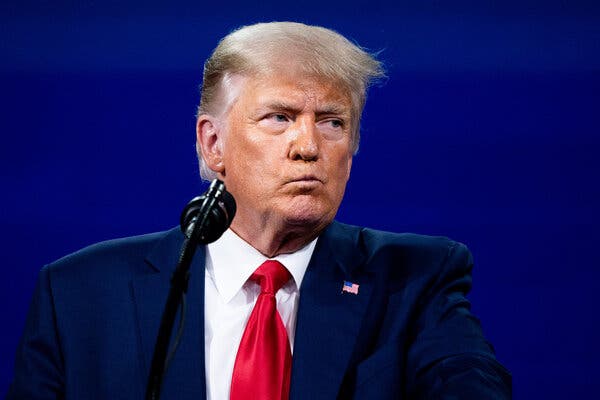
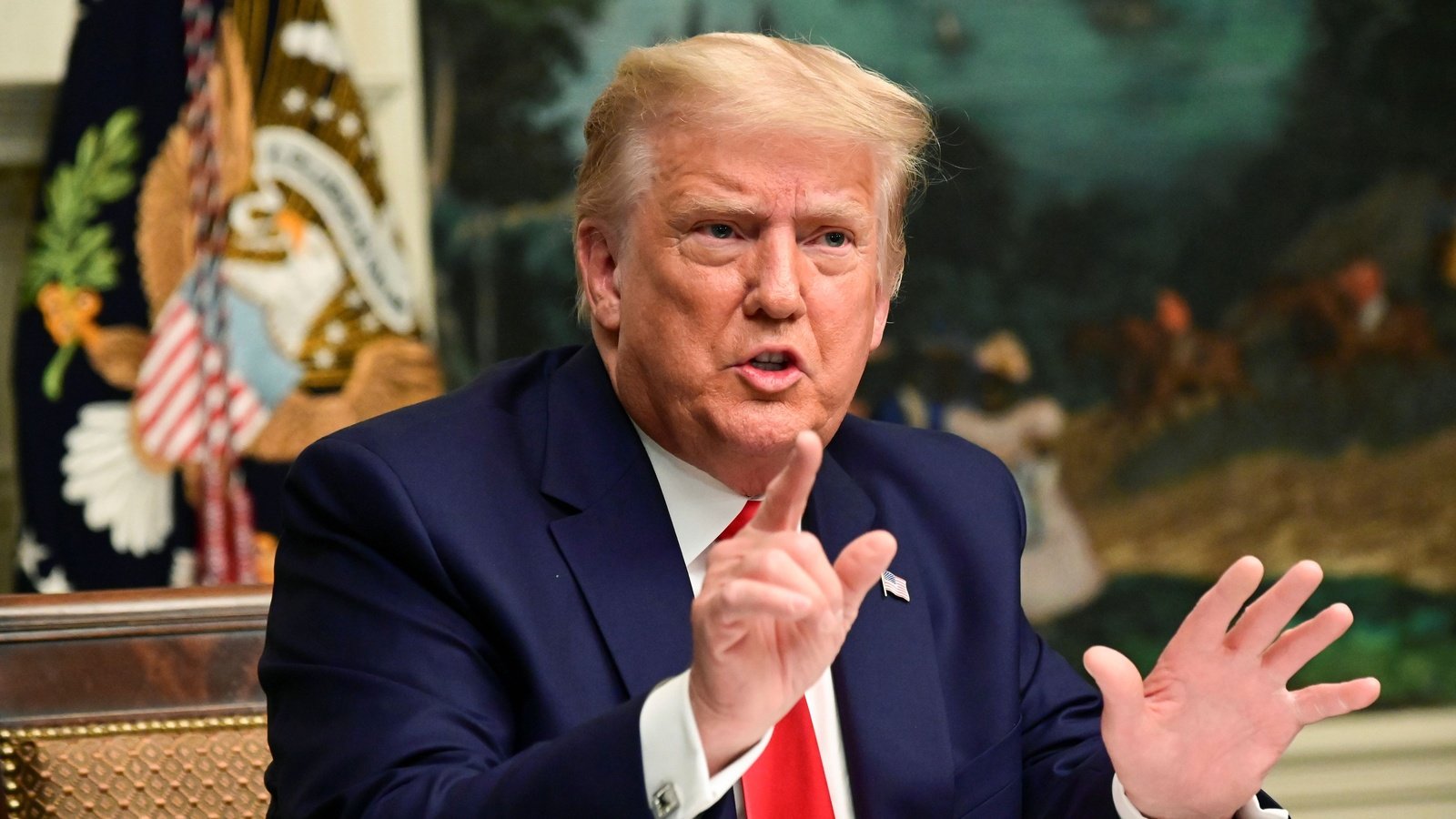
“Under the leadership of President Trump, the United States is dismantling ISIS’s ability to finance terrorism around the world.
“We are cutting off the financial lifelines that enable ISIS to fund attacks, support its regional affiliates, and threaten civilians, including religious minorities,” Pigott said.
He added that the sanctions reflect ongoing efforts to weaken ISIS, which has increasingly decentralised its operations and relied on intermediaries to sustain its activities across different regions.
The U.S. also reaffirmed its security partnership with Nigeria, citing Abuja’s role in the May 16, 2026 operation that resulted in the killing of Abu-Bilal al-Minuki, described as the second-highest-ranking ISIS official.
“We will continue to use every diplomatic and legal tool available to hold ISIS and its supporters accountable wherever they operate and however they move money.
“We remain fully committed to protecting American lives, defending religious minorities, and working with international partners to eliminate the threat that ISIS poses to global peace and security,” the State Department added.
The sanctioned individuals and entities have been added to OFAC’s Specially Designated Nationals list, effectively freezing any assets under U.S. jurisdiction and prohibiting American citizens and organisations from engaging in transactions with them.
Meanwhile, National Security Adviser, Mallam Nuhu Ribadu, has stressed that no country can tackle today’s complex security threats in isolation, calling for deeper collaboration among trusted international partners.
Speaking at the fourth UK-Nigeria Security and Defence Partnership (SDP4) Dialogue, Ribadu said terrorism, violent extremism, cybercrime, organised criminal networks, illicit financial flows and foreign interference require coordinated responses involving defence, intelligence, law enforcement, diplomacy and financial institutions.
“Nigeria remains firmly committed to confronting these challenges through a whole-of-government and whole-of-society approach,” he said.
Ribadu noted that while terrorist and criminal networks operating within Nigeria have been significantly weakened, the threats remain dynamic, adaptive and increasingly driven by technology.
“We therefore welcome continued international coordination and partnership in addressing these challenges.
“Counterterrorism remains a central pillar of our partnership. Nigeria appreciates the support provided by the United Kingdom in strengthening our crisis-response capabilities, disrupting terrorist financing networks, enhancing investigations and supporting strategic communications,” he said.
The UK National Security Adviser, Jonathan Powell, reiterated Britain’s commitment to supporting Nigeria’s security efforts.
“We have immense respect for Nigeria’s leadership role within the region and across Africa,” Powell said.
“We recognise the significant security challenges Nigeria faces, particularly in combating terrorism, disrupting illicit financial networks, protecting civilians and strengthening national resilience. These are challenges we all face, but they are especially acute in this region.”
Powell disclosed that British military personnel and counterterrorism specialists are currently supporting Nigerian security agencies and the National Counter Terrorism Centre.
Also speaking at a Chatham House Africa Programme Roundtable in London, Deputy Speaker of the House of Representatives, Benjamin Kalu, revealed that Nigeria allocated approximately N5.4 trillion to security and defence in the 2026 budget.
“Security and defence remain the biggest priority in our national budget because no meaningful development can take place without peace and stability,” Kalu said.
He noted that security allocations had increased from N2.98 trillion in 2023 to N5.41 trillion in 2026, representing an increase of more than 81 per cent within three years.
“We are working to ensure that security funding is not delayed or subjected to bureaucratic bottlenecks. It must be treated as a first-line charge if we are to respond effectively to threats,” he added.
On the battlefield, troops of Operation Hadin Kai reportedly killed two suspected ISWAP operatives attempting to infiltrate Nigeria from Cameroon through a border route in Banki, Borno State.
Security sources said the suspects were intercepted by troops of the 152 Battalion in collaboration with members of the Civilian Joint Task Force (CJTF) after intelligence indicated they were linked to ISWAP activities.
The operation is part of ongoing efforts to strengthen border security, disrupt terrorist support networks and prevent insurgent infiltration into Nigerian territory.
In a separate incident, suspected Lakurawa terrorists attacked a Nigeria Immigration Service checkpoint along the Mokwa–New Bussa Road at Zugurma in Mashegu Local Government Area of Niger State.
The attackers reportedly overpowered security personnel and made away with an AK-47 rifle belonging to an immigration officer. They also attacked a nearby police outpost, although no casualties were recorded.
Security agencies said the situation has been brought under control and efforts are ongoing to track down the perpetrators while strengthening patrols in the affected area.