

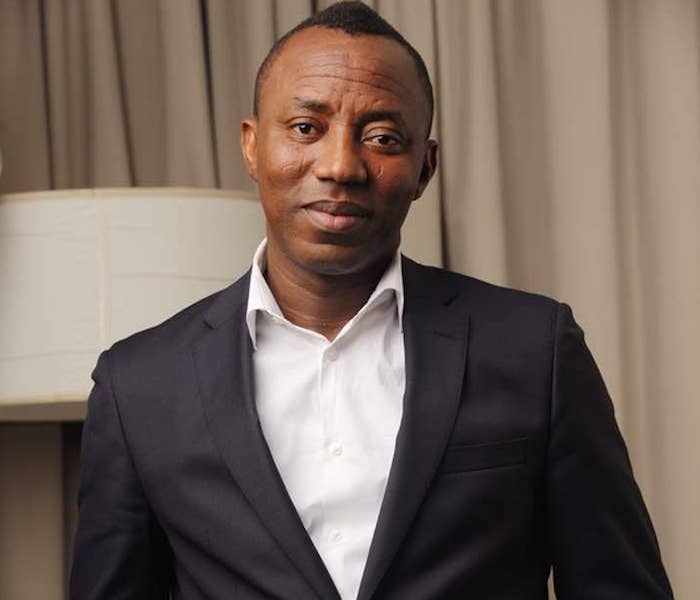
The presidential candidate of the African Action Congress (AAC) and publisher of Sahara Reporters, Omoyele Sowore, has yet to perfect the bail conditions granted to him by Justice Mohammed Umar of the Federal High Court in Abuja in his ongoing alleged defamation trial.
Gatekeepers News reports that at the resumed hearing on Monday, counsel to the Department of State Services (DSS), Akinlolu Kehinde (SAN), informed the court that Sowore had not fulfilled the conditions attached to his bail.
The DSS is prosecuting Sowore over allegations that he defamed President Bola Tinubu by referring to him as a criminal on his social media platforms.
Kehinde urged the court to order Sowore’s remand at the Kuje Correctional Centre, arguing that the defendant had neither complied with the bail conditions nor applied for a variation of the terms.
Although Justice Umar had earlier released Sowore to the custody of his lawyer pending the perfection of his bail, the prosecution maintained that, as of Monday, July 6, there had been no communication explaining any difficulty in meeting the conditions.
Responding, Sowore’s counsel, Olumide Fusika, argued that bail should not serve as punishment but merely ensure the defendant’s attendance at trial. He told the court that it was inaccurate to suggest the bail conditions had not been substantially met.
According to Fusika, verification of the required documents had been largely completed, adding that Sowore’s passport would be deposited with the court before the close of business on Monday.
He explained that there was a slight delay in retrieving the passport from the U.S. Embassy in Lagos because the mission observed a public holiday on Friday, July 4, to mark the country’s 250th anniversary.
Fusika appealed to the court to allow Sowore to remain in his custody until the next hearing on July 13, assuring the court that all outstanding bail conditions would be fulfilled before then.
Meanwhile, Sowore formally opened his defence by calling his first witness, Abuja-based lawyer Deji Adeyanju.
Led in evidence by Fusika, Adeyanju told the court that President Tinubu, during an official engagement in Benue State, had stated that Nigerians have the right to insult, criticise and call him names, stressing that law enforcement agencies should allow citizens to exercise those rights as part of a democratic society.
Adeyanju further testified that the President had also said the judiciary should serve as the guardian of the people and should not be used as an instrument of oppression against critics.
Video clips containing the President’s remarks were tendered as evidence through a flash drive and admitted as an exhibit.
Justice Mohammed Umar subsequently adjourned the case until July 13 for the continuation of the defence.