

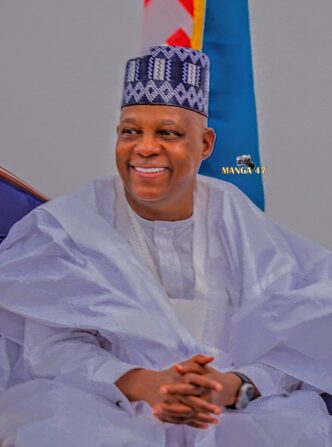
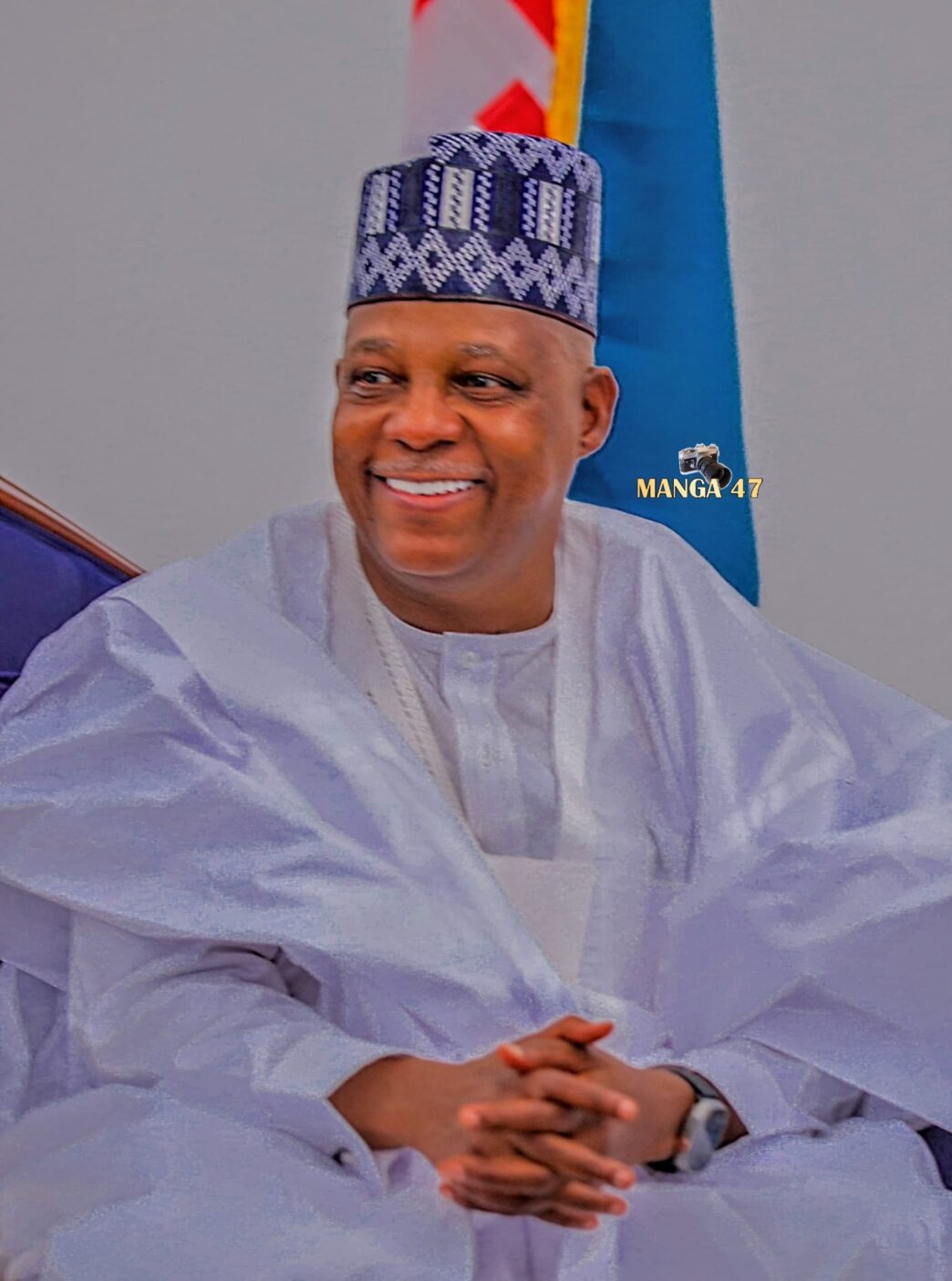
Vice-President Kashim Shettima has defended the economic reforms introduced by President Bola Tinubu’s administration, saying the government inherited difficult realities that required bold decisions rather than politically convenient ones.
Gatekeepers News reports that Shettima made the remarks on Thursday in Abuja at the public presentation of Shadows: Protest Essays on Africa’s Most Consequential Country (1999–2023), a two-volume book written by Eniola Bello, Managing Director of THISDAY Newspaper.
Represented by the Special Adviser to the President on General Duties in the Office of the Vice-President, Aliyu Modibbo, Shettima described Nigeria’s democratic journey as “a long conversation between hope and disappointment, between protest and patience, between the promises of power and the expectations of citizens.”
He said the Tinubu administration assumed office at a period when Nigeria could no longer postpone difficult economic decisions, adding that the country is beginning to see positive outcomes from the reforms initiated shortly after the President took office in May 2023.
“The removal of the petrol subsidy and the unification of the foreign exchange system were not easy decisions, and we have never pretended that they carried no pain,” he said.
“But leadership, at its most serious level, is the courage to choose repair over applause, and to do today what prevents a deeper crisis tomorrow.”
Highlighting the impact of the administration’s economic policies, Shettima said Nigeria’s Gross Domestic Product (GDP) expanded by 3.89 per cent in the first quarter of 2026, following 3.4 per cent growth in 2024 and a 4.6 per cent expansion in the fourth quarter of that year.
He added that crude oil production had recovered to about 1.5 million barrels per day, while debt servicing had fallen from 96 per cent to below 65 per cent of government revenue.
“These figures do not mean that all hardship has disappeared, but they show that the economy is finding firmer ground,” he said.
The Vice-President also highlighted other government interventions, saying more than 100,000 Nigerians have already benefited from the national consumer credit scheme, with many more expected to access the programme.
According to him, the student loan initiative is helping expand access to tertiary education for young Nigerians who might otherwise be unable to afford it.
He also pointed to ongoing infrastructure projects, including the Lagos-Calabar Coastal Highway, the Sokoto-Badagry Superhighway, and the Abuja-Kaduna-Kano Road, alongside hundreds of other road and rural connectivity projects aimed at improving transportation, trade, agriculture, and industrial development.
Shettima described the ₦26.08 trillion capital expenditure contained in the 2026 budget as evidence of the administration’s commitment to investing in the country’s long-term growth.
“Yet figures alone do not tell the full story of a nation. That is why books like Shadows matter,” he said.
“They remind us that policy must be understood through people, that reform must be explained with honesty, and that democracy must never become a conversation among politicians alone.”
He said writers and journalists play a vital role in bridging the gap between government policies and citizens’ lived experiences by connecting “statistics to suffering, policy to memory, and governance to the human condition.”
Democracy thrives on criticism
Commending Bello for producing the book, Shettima said democracies grow stronger when they confront, rather than suppress, uncomfortable realities.
“A nation is held together by the stories it is brave enough to tell about itself, and no democracy grows by hiding its shadows from the light,” he said.
“It has often been said that leadership is a practice and not a title, and I believe the same is true of journalism and literature. They are not ornaments of society. They are practices of memory, of conscience, of correction, and of renewal.”
The Vice-President also reaffirmed the Tinubu administration’s commitment to democratic values, stressing that constructive criticism and media scrutiny are essential components of good governance.
“Every administration has faced the judgement of history, and every generation has had to decide whether to treat criticism as hostility or as an instrument of democratic improvement,” he said.
“The media has been central to that process. When it is responsible, courageous, and fair, it does not weaken the state. It strengthens the state by compelling public officials to remember that power is held in trust.”
Shettima added that President Tinubu understands, from personal experience, the importance of a free press, civil society, activists, writers and citizens who hold leaders accountable.
According to him, governments that fail to listen to the people ultimately lose public confidence because trust is built not merely through authority, but by ensuring citizens feel seen, heard, valued and protected.