

The local governance structure in America is defined at the state level rather than by the federal government, as mandated by the Tenth Amendment to the U.S. Constitution.
Constitutionally, the local governance structures of Nigeria and the United States represent two entirely different philosophies of federalism.
While the Nigerian system formally creates local governments as an explicit, equal third tier of the federation, the American system views local governments as “creatures of the state” with no independent federal constitutional standing.
A direct comparison of their current constitutional structures reveals several stark operational differences.
NIGERIA: THE UNIFIED THIRD TIER:
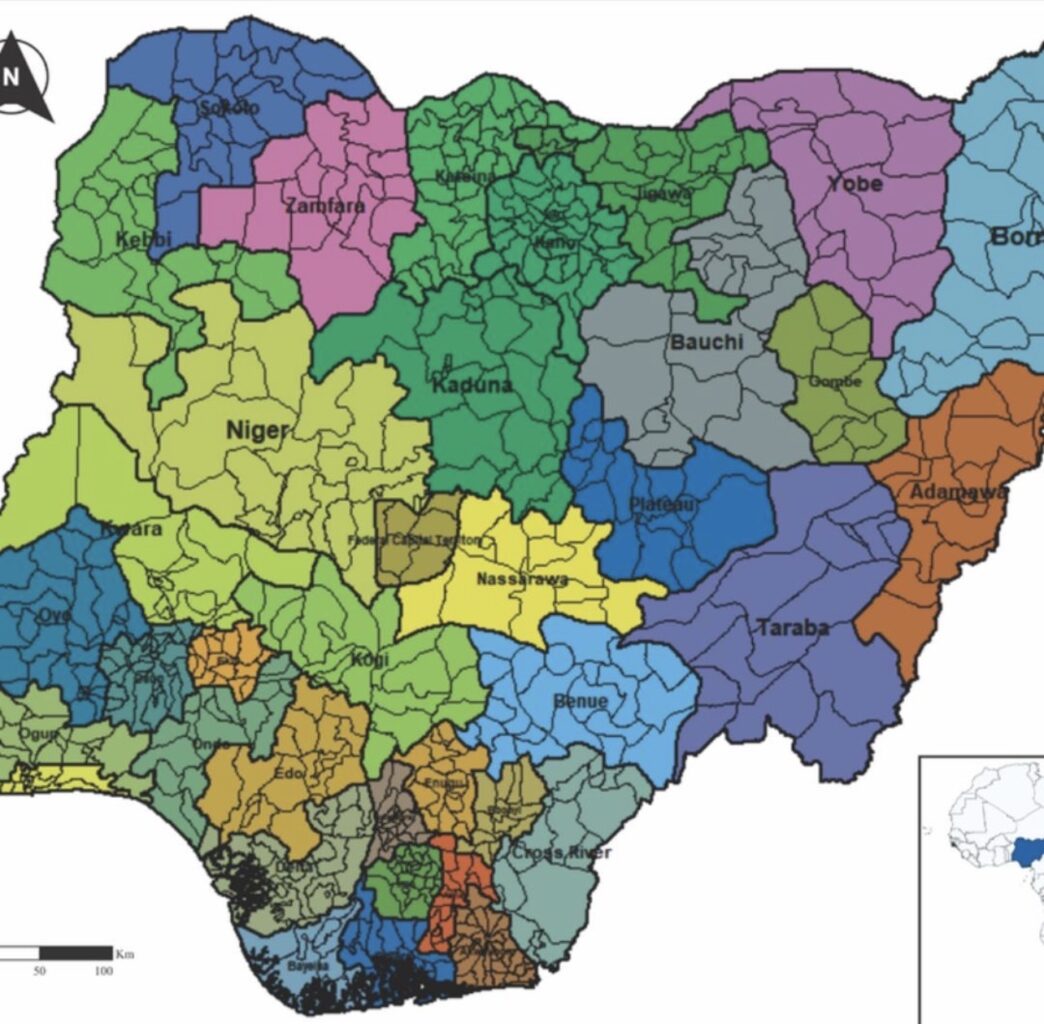
Under the 1999 Constitution of the Federal Republic of Nigeria, local governance is rigidly institutionalized.
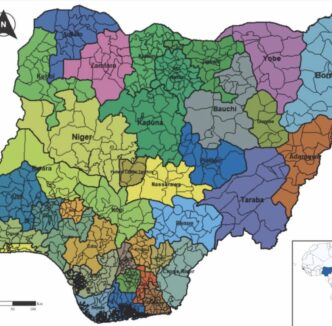
THE 774 LGA STRUCTURE:
The constitution locks in a specific number of 774 Local Government Areas. While state assemblies occasionally try to create new local units (such as Lagos State’s Local Council Development Areas, or LCDAs), these cannot fully function as official LGAs without a cumbersome federal constitutional amendment.
THE AUTONOMY BATTLE & THE SUPREME COURT RULING:
Historically, Section 162 of the Nigerian Constitution mandated that federal funds pass through a “State-Joint Local Government Account,” allowing state governors to hijack and starve local councils of funds.
However, a landmark July 2024 Supreme Court ruling structurally transformed this dynamic by declaring joint accounts unconstitutional and ordering that federal allocations be paid directly to democratically elected local councils.
The court also banned governors from replacing elected officials with hand-picked “caretaker committees”.
CURRENT OPERATIONAL REALITY:
Despite the Supreme Court’s mandate, the practical enforcement of local autonomy remains an ongoing battle. State governors continue to use administrative loopholes to retain influence over local funds.
To permanently secure this independence, the National Assembly is actively debating constitutional amendments to unify local tenures to four years and strip governors of all dissolution powers.
UNITED STATES OF AMERICA – THE STATE DERIVED SYSTEM:
In stark contrast to Nigeria, the U.S. Constitution operates strictly on a two-tier federal framework:
The Federal Government and the States.
Local governments are completely absent from the national text.
Dillon’s Rule vs. Home Rule:
Because of the Tenth Amendment, local governments derive 100% of their authority from their respective state constitutions.
Under Dillon’s Rule (applied in many states), a local government can only exercise powers expressly granted to it by the state.
Conversely, states that grant Home Rule allow municipalities to draft their own local charters and pass local laws, provided they do not conflict with state or federal law.
Structural Diversity: Unlike Nigeria’s uniform LGA model, American local government is highly fragmented.
It is split into General Purpose governments (Counties and Municipalities/Cities) and Single Purpose units (School Districts and Special Districts for utilities, fire, or transit).
Because each of the 50 states establishes its own laws for municipalities, local government is highly fragmented, consisting of nearly 90,000 individual units divided into two main categories: general-purpose governments and special-purpose districts.
The Five Official Categories of Local Government:
The U.S. Census Bureau officially categorizes local governments into five distinct types:
General-Purpose Governments
County Governments: The primary administrative arm of the state. They exist in almost every state (called parishes in Louisiana and boroughs in Alaska). Notable exceptions include Connecticut and Rhode Island, which have geographic county boundaries but no functioning county governments.
Municipal Governments: City, town, or village governments established to provide public services to concentrated population centers.
Town or Township Governments: Geographically designated subdivisions of a county found primarily in 20 northeastern and midwestern states, often serving rural areas.
Special-Purpose Governments
Special Districts: Independent units created to handle a singular, specific function that general governments cannot manage efficiently, such as water sanitation, public transit networks, or fire protection.
School Districts: Highly autonomous local structures responsible for financing and operating public elementary and secondary education, led by an elected or appointed school board.
A single American citizen simultaneously lives under multiple, overlapping local government boundaries.
Financial Autonomy: While Nigerian LGAs rely heavily on federal oil-revenue allocations, American local governments generate the vast majority of their revenue locally via property and sales taxes.
This grants them a level of operational and administrative independence from the state and federal governments that Nigerian local governments are still fighting to achieve.
In Nigeria, the federal government revenue sharing formula dictates how funds from the Federation Account are split among the three tiers of government. Under the current vertical allocation formula, the distribution is structured as follows:
Federal Government: 52.68%State Governments: 26.72%Local Government Councils: 20.60%
Additionally, oil-producing and mineral-rich states receive an extra 13% derivation fund based on the resources generated from their territories.
Out of the Federal Government’s 52.68%, a portion is pooled and managed internally to support the Federal Capital Territory (FCT), the Ecological Fund, Stabilisation Funds, and the development of natural resources.
The federal government of Nigeria had 541 federal parastatals, commissions, and agencies (both statutory and non-statutory) before the Oronsaye panel recommended a reduction.
Out of these 541 bodies, 263 were statutory agencies.
KEY RECOMMENDATIONS OF THE 2012 ORONSAYE REPORT:
To streamline the over-bloated bureaucracy and cut the cost of governance, the committee led by Stephen Oronsaye suggested the following restructuring measures:
Reduce statutory agencies from 263 down to 161.
Abolish (scrap) 38 agencies entirely.
Merge 52 agencies with overlapping functions.
Revert 14 agencies back into departments within their respective federal ministries.
In total, the panel targeted the elimination, relocation, or merger of 220 government bodies.
14 years after that report, the federal government of Nigeria currently has 719 federal agencies, but according to institutional data tracked by the National Institute for Legislative and Democratic Studies (NILDS).
When looking more broadly at the total number of Ministries, Departments, and Agencies (MDAs) across the federal bureaucracy, economic research bodies like the Alliance for Economic Research and Ethics (AERE) report that the total number of federal government agencies exceeds 900 MDAs.
This massive expansion directly contradicts the Stephen Oronsaye report blueprint, as the identified 541 statutory and non-statutory agencies and recommended pruning them down significantly.
Instead, continuous legislative bills and executive expansions over the years have led to the creation of hundreds of parallel and overlapping institutions, including fake agencies.
AS OPPOSITION LEADER, WHAT WAS TINUBU’S POSITION ON THE NIGERIA FEDERAL STRUCTURE?
As an opposition leader and the Bola Tinubu who was then Governor of Lagos State (1999–2007) was one of Nigeria’s most vocal advocates for restructuring and “true federalism”.
He consistently argued that Nigeria’s over-centralized system of government, inherited from military rule, was inefficient, unjust, and stifled subnational development.
His position as an opposition figure focused heavily on dismantling the dominance of the federal center through several core principles:
1. Fiscal Federalism and Resource Control
Tinubu strongly opposed the federal government’s practice of hoarding or over-controlling national revenues.
He argued for a review of the national revenue allocation formula to grant more funding to states and local governments, enabling them to develop according to their comparative advantages.
A prominent example of this stance was his fierce legal battle with President Olusegun Obasanjo’s administration after the federal government withheld Lagos State’s local government allocation funds.
1. Devolution of Powers.
He frequently asserted that the federal government was overburdened with responsibilities that were best handled at the grassroots level.
Tinubu advocated for shifting numerous items from the Exclusive Legislative List (under sole federal purview) to the Residual Legislative List (under state purview).
He explicitly championed state autonomy over sectors like:
Electricity and Power Generation: Arguing states should be allowed to independently generate, transmit, and distribute power.
Aviation and Rail Infrastructure: Decentralizing critical transport networks.
Business Registration and Tourism:
Moving regulatory oversight closer to local economies.
1. Decentralized Policing (State Police)
To combat rising national insecurity, Tinubu long maintained that a centralized federal police command was structurally ill-equipped to police a diverse nation.
He advocated for a dual policing framework that allowed states to establish and operate their own independent police forces to address localized security challenges.
1. Constitutional Autonomy and Local Governance
Tinubu criticized the 1999 Constitution as a pseudo-federal document that created a unitary system in disguise.
In 2003, testing the boundaries of the constitution, his administration created 37 additional Local Council Development Areas (LCDAs) in Lagos State to bring governance closer to the people, firmly defending the move all the way to the Supreme Court.
He often pointed back to the 1963 Republican Constitution as the ideal model for progressive, healthy competition among Nigeria’s federating units.
NOW LETS EXPOSE HOW HIS CURRENT ADMINISTRATIVE ACTIONS COMPARE TO HIS LANDMARK LEGAL BATTLE OVER FEDERAL FUNDING DURING HIS TENURE AS GOVERNOR OF LAGOS STATE?
President Bola Tinubu’s current administrative actions represent a complete, ironic reversal of the positions he took during his landmark legal battles as Governor of Lagos State.
Between 1999 and 2007, Governor Tinubu was Nigeria’s fiercest champion of state sovereignty against federal overreach.
Today, as President, he routinely utilizes the power of the central government to bypass and dictate terms to state governors.
The historical friction between his past and present actions unfolds across two major eras:
The Past: Governor Tinubu vs. President Obasanjo (2004)In 2004, Tinubu’s Lagos State government created 37 new Local Council Development Areas (LCDAs) to bring governance closer to the grassroots.
In retaliation, President Olusegun Obasanjo’s federal administration unilaterally withheld federal statutory allocations meant for Lagos State’s local governments.
Tinubu dragged the federal government to the Supreme Court of Nigeria. He famously argued that:
The federal government is a co-ordinate tier of government, not a superior supervisor over the states.
State supremacy over local government: Under the 1999 Constitution, the creation, funding, and administration of local governments fall strictly under the domestic jurisdiction of state house of assemblies, free from federal interference.
The Supreme Court ultimately ruled that the federal government lacked the constitutional power to seize or withhold state funds.
This cemented Tinubu’s legacy as a defender of sub-national autonomy.
THE PRESENT IRONY OF PRESIDENT TINUBU’S LOCAL GOVERNMENT POLICY:
Fast-forward to his presidency, and Tinubu has actively used the federal apparatus to strip state governors of their control over local government funds.
In a move that mirrors the federal interventionism he once fought, Tinubu’s administration instituted a lawsuit that led to the landmark July 2024 Supreme Court ruling granting complete financial autonomy to Nigeria’s 774 local governments.
THE EXECUTION GAP AND CURRENT REALITIES;
Despite the 2024 Supreme Court victory, President Tinubu has faced immense political friction in enforcing this new reality.
Critics and opposition figures point out that compliance remains highly inconsistent.
Many state governors still find backdoors to exploit the State Joint Accounts, leaving local governments financially dependent.
This friction has forced President Tinubu to step in directly, using forums like the All Progressives Congress (APC) National Caucus to issue stern directives, warning governors that he will use the central bank and federal agencies to bypass them entirely.
WHY THE SHIFT?
While critics view this shift as political opportunism, Tinubu’s allies argue that his core philosophy hasn’t changed, but rather his vantage point has.
They argue that as a Governor, his goal was to protect the grassroots of Lagos from a hostile center.
As President, he views state governors as “middlemen” who stifle grassroots development, seeing direct federal-to-local funding as the only way to ensure economic prosperity reaches ordinary Nigerians.
Assuming without conceding that President Tinubu wants to ensure economic prosperity for ordinary Nigerians, can you give the states more responsibilities when the revenue sharing formula hasn’t changed as Federal Government: 52.68%, State Governments: 26.72%, Local Government Councils: 20.60%?
WHY WERE LOCAL GOVERNMENT FUNDS IN OSUN STATE WITHHELD BY THE FEDERAL GOVERNMENT UNDER PRESIDENT TINUBU?
Remember, the local government funds for Osun State were withheld by the Bola Tinubu administration due to a bitter political and legal power struggle over the control and legitimate leadership of the state’s 30 local government councils.
The dispute stems from a clash between the federal ruling party, the All Progressives Congress (APC), and the state ruling party, the Peoples Democratic Party (PDP).
The core reasons for the withholding of these statutory allocations include:
Dispute Over The October 2022 Local Government Elections:
Before leaving office, former Governor Gboyega Oyetola of the APC conducted local government elections in October 2022, where APC candidates swept all 30 council chairperson seats.
When Governor Ademola Adeleke of the PDP assumed office, his administration used a court order, which opponents argued was procured, to dissolve these structures following the court orders invalidating that election.
The February 2025 Election:
In February 2025, Governor Adeleke’s administration conducted a fresh round of local government elections, where PDP candidates swept the polls and won all the seats.
The APC strongly disputed the validity of this election, claiming it was improperly conducted.
Parallel Leadership and Legality Tussles:
The Federal Government, through the Office of the Accountant General and Ministry of Finance, halted disbursements to these local governments starting in March 2025.
The federal government initially recognized the APC-backed chairmen who were dissolved, while the state government insisted the newly elected PDP chairmen were the lawful officeholders.
The Ministry of Finance even faced backlash for attempting to route the withheld funds directly to the sacked APC chairmen.
Conflicting Court Orders and Litigation:
The battleground quickly shifted to the judiciary. Various conflicting judgments emerged from State High Courts, Federal High Courts, and the Court of Appeal.
For instance, a High Court in Oyo State granted an interim injunction restraining commercial banks from releasing the allocations due to ongoing litigation. Over a matter in Osun State?
Supreme Court Stance:
By December 2025, the Supreme Court of Nigeria weighed in on the crisis.
While the Apex Court struck out Osun State’s specific lawsuit on a technicality—ruling that the state government didn’t have the standing to sue on behalf of autonomous local governments.
The court however iunequivocally declared that the Federal Government acted unlawfully and committed a “grave breach of the Constitution” by seizing the council funds.
Despite the Supreme Court’s declaration and widespread criticism, the funds remained locked up.
By mid-2026, the accumulated withheld allocations exceeded ₦202 billion, severely paralyzing grassroots governance and making it difficult for the state to seamlessly pay primary school teachers, healthcare workers, and local retirees.
CONCLUSION:
Regardless of who is elected President in 2027
To make a meaningful headway, develop, sustain an impactful growth at the grassroots, where jobs are created that would enable willful tax payment, rather than the idea of dragging people without a sustainable means of livelihood into the tax net, Nigeria must restructure it bogus federal arrangement.
As long as we maintain this skewed and bloated federal structure with 93 items on the exclusive and concurrent legislative lists, where the federal government can override the state on everything and an almost nonexistent local government.
Grassroot infrastructural development in the country will remain deadlocked and a mirage.
That is why I don’t have any Presidential candidates for the 2027 Elections.
@Liborous Oshoma Esq.
Gatekeepers News is not liable for opinions expressed in this article; they’re strictly the writer’s.