



Nigeria’s 1999 Constitution was carefully crafted to prevent the return of concentrated power that had marked decades of military rule. It divides authority among the legislature, the executive and the judiciary, and it places particular responsibility on the National Assembly to serve as the people’s watchdog. Sections 4, 88 and 89 give the National Assembly the power to make laws for the peace, order and good government of the Federation, to investigate the conduct of any person or authority charged with executing those laws or spending public money, and to compel evidence, summon witnesses and hold the executive to account. Oversight, in other words, is not a discretionary courtesy. It is the constitutional mechanism that turns representation into real accountability. When that mechanism falls silent, the result is not smooth governance but executive dominance wearing the mask of democratic cooperation.
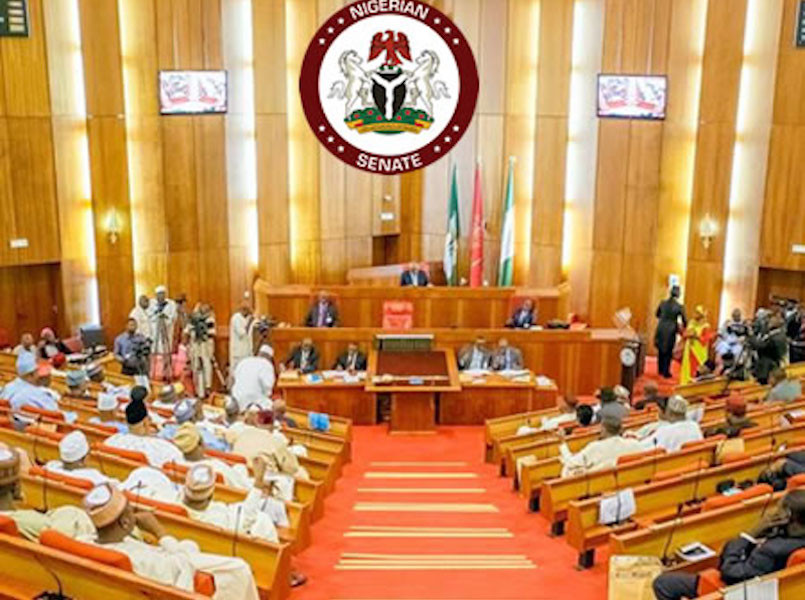
The 10th National Assembly, inaugurated in June 2023 under the leadership of Senate President Godswill Akpabio and Speaker Tajudeen Abbas, has been widely accused of allowing precisely that silence to settle. Independent observers, civil-society organisations and even some former legislators have described it as the most compliant parliament since the return to civilian rule. Labels such as “rubber stamp,” “copy-and-paste legislature” and “Carry Go Senate” have become common. Executive requests move through both chambers with remarkable speed and near-unanimous approval. Major policy shifts receive limited interrogation. Investigative hearings are convened, generate headlines, and then quietly fade without sanctions, recoveries or meaningful policy change. What was designed as a system of checks and balances has, in practice, tilted heavily toward deference.
This is not an entirely new story in Nigeria’s Fourth Republic. Legislative-executive relations have always been tense. The early Assemblies of this democratic era were marked by open confrontations, leadership crises and occasional displays of independence. The 8th Assembly (2015–2019), under Senate President Bukola Saraki, remains the high-water mark of assertiveness. It delayed or rejected key nominations, probed fuel-subsidy fraud and pension scandals, and forced the executive to negotiate rather than simply dictate. That friction created institutional strain, yet it also made the process of accountability more visible to the public.
The 9th Assembly under President Muhammadu Buhari moved in the opposite direction. It approved the controversial Ways and Means advances far beyond legal limits, confirmed most nominees with little resistance, and earned a reputation as a rubber-stamp parliament. Even so, it still managed occasional probes into agencies such as the Niger Delta Development Commission.
The 10th Assembly has carried the pattern of compliance further still. A comfortable party majority in both chambers, leadership selection heavily influenced by the presidency, and a political culture that treats cooperation as loyalty has combined to produce an unusually docile posture. The concrete evidence of this shift is not hard to find. The abrupt removal of the fuel subsidy in May 2023, a decision with profound economic and social consequences, was greeted with legislative cheerleading rather than systematic examination of sequencing, cushioning measures or alternative designs. Subsequent interventions in the foreign exchange market followed a similar path of limited public dissection. The national budgets for 2024, 2025 and 2026 have been characterised by substantial insertions, inflated constituency projects and persistent opacity. Allegations of padding running into trillions of naira, including claims by Senator Abdul Ningi of unauthorised insertions, produced internal controversy and one high-profile suspension, yet little lasting institutional reform. Civil-society trackers have struggled to locate many of the thousands of projects quietly written into the estimates.
Confirmation of ministerial nominees proceeded with near-total acceptance and almost no rejections. Requests for external borrowing were approved with striking speed. The declaration of a state of emergency in Rivers State, which involved the suspension of an elected governor and state assembly, was endorsed by voice vote in both chambers despite serious constitutional questions. Opposition voices were marginal; the process reinforced the impression that the Assembly prioritises executive convenience over rigorous scrutiny. Investigative hearings have not been entirely absent. Committees have examined alleged discrepancies in the accounts of the Nigerian National Petroleum Company Limited, crude-oil theft, regulatory disputes involving major refineries, and the performance of various agencies. Yet the familiar pattern has reasserted itself: hearings generate publicity, consume public resources, and then lose momentum. Reports gather dust, recommendations ignored, while few officials face lasting consequences. Ministries and agencies frequently delay appearances or send under-prepared representatives, knowing that the political cost of non-compliance remains low.
Defenders of the current Assembly, including Senate Leader Opeyemi Bamidele and Senator Adams Oshiomhole, reject the rubber-stamp characterisation. They argue that collaboration is not the same as abdication, that prolonged engagement on the Tax Reform Bills and the 2025 Appropriation Act demonstrated genuine deliberation, and that constant confrontation produces only gridlock. These arguments are not without force. A legislature locked in permanent warfare with the executive can stall governance and frustrate necessary reform. Yet the cumulative record, rapid approvals, scarce rejections, weak follow-through on probes, and the near-absence of institutional pushback on core policy choices, suggests that the balance has tilted too far toward deference. Public-trust surveys and media sentiment analyses reflect the resulting cynicism: confidence in the National Assembly remains low, and many citizens regard the institution as an extension of the executive rather than an independent guardian of the public interest.
The deeper causes are structural as much as personal. Same-party dominance reduces the incentive for robust opposition. Leadership selection processes that reward loyalty over institutional independence set the tone from the outset. Oversight committees often depend on the very agencies they are meant to scrutinise for logistics and information, creating inherent conflicts of interest. The Constitution empowers investigation but does not equip the legislature with independent prosecutorial or enforcement powers; without sustained political will to pursue recommendations through other institutions, probes remain incomplete. Budget opacity and the culture of constituency projects further blur the line between oversight and patronage.
When oversight collapses, the consequences are serious. Policy errors go uncorrected. Fiscal discipline erodes. The separation of powers becomes formal rather than functional, leaving the executive free to expand its reach through emergency powers, borrowing or administrative improvisation without the friction that protects liberty and accountability. Public cynicism deepens as citizens watch lawmakers prioritise self-interest, luxury vehicles and welfare packages amid widespread hardship, while rubber-stamping executive preferences. Nigeria’s democratic experiment remains fragile. Institutions that fail to perform their assigned roles invite either executive overreach or populist backlash. The trajectory of the 10th Assembly risks both.
Restoring meaningful oversight will require more than exhortation. It demands deliberate institutional and political reform. The National Assembly should invest in independent technical capacity so that standing committees have permanent professional staff, research budgets and access to data sources not controlled by the executive. Transparency must become non-negotiable: every budget insertion, committee report and investigative finding should be published promptly in accessible formats, and public hearings should be the default rather than the exception. Enforcement mechanisms need strengthening. Clearer sanctions for non-compliance with summons should be legislated, and findings of wrongdoing should be systematically referred to anti-corruption agencies and the Attorney-General, with outcomes tracked publicly. Internal rules should be amended to protect minority rights and to require recorded votes on significant decisions such as states of emergency, major borrowings and large supplementary appropriations.
Leadership selection processes themselves merit reform so that presiding officers are less dependent on presidential preference. Cross-party coalitions built around institutional integrity rather than pure partisan loyalty would be helpful. Civil society, the media and professional bodies should necessarily sustain pressure through scorecards, strategic litigation where constitutional breaches occur, and consistent public education on the value of the separation of powers. Ultimately, citizens must demand more from their representatives at the ballot box; lawmakers who treat oversight as optional will continue to do so only for as long as the political cost remains low.
The 10th National Assembly still has time before its term ends in 2027 to reverse course. Collaboration between the arms of government is desirable; subordination is not.
A legislature that rediscovers its constitutional spine will not invent conflict for its own sake. It will simply insist that power, however well-intentioned, remains answerable to the people in whose name it is exercised. Nigeria’s democracy will be stronger for it.
Dr Frederick Imuebe Braimah is a senior lecturer in the Department of Political Science, Elizade University, Ilara-Mokin, Ondo State, Nigeria.
Gatekeepers News is not liable for opinions expressed in this article; they’re strictly the writer’s.