

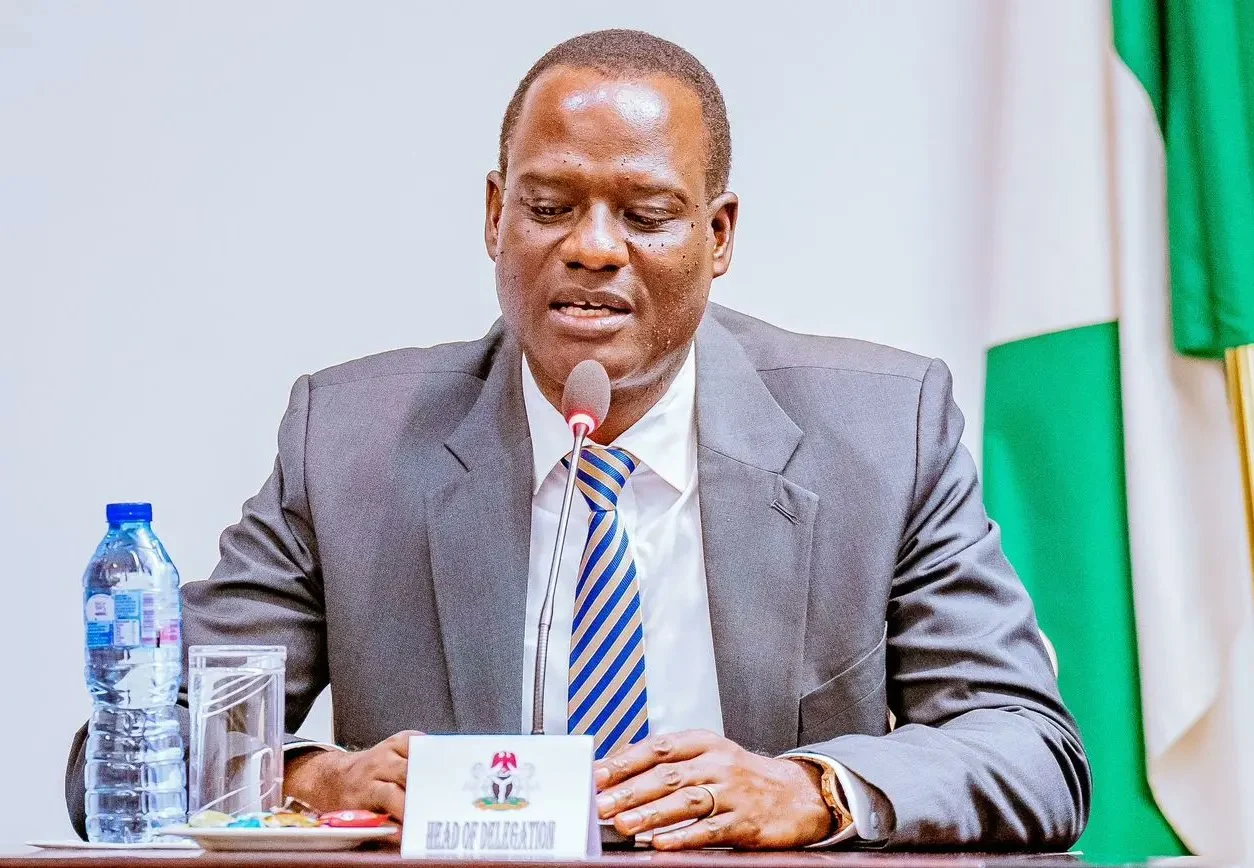
Taiwo Oyedele, Nigeria’s Minister of Finance, has warned that petrol could sell for at least ₦2,000 per litre if the Federal Government reinstates fuel subsidy, adding that the naira could depreciate to nearly ₦3,000 per dollar within months.
Gatekeepers News reports that Oyedele gave the warning on Thursday at a news conference on petrol subsidy in Abuja, amid renewed calls by labour unions and some presidential aspirants to restore the policy.
“Our estimate is that the exchange rate could approach N3,000 to the dollar within months, and so-called subsidised petrol would cost at least N2,000 a litre. That is well above what Nigerians pay today,” he said.
The minister argued that reinstating the subsidy would not eliminate the actual cost of petrol but would shift the burden to government finances and, ultimately, the public.
“A subsidy does not lower the cost of fuel. It only changes how it is paid and when. Nigerians have paid that bill before, in scarcity, in inflation and in a collapsing currency,” Oyedele said.
He warned that the government would have to finance any subsidy through available revenue, increased taxation or additional money creation, which he said could worsen the country’s economic challenges.
“However it is described, a subsidy must be financed: through salaries and pensions not paid on time, through higher taxes, or through the printing of money. Each of these has done great harm before,” he added.
Oyedele said providing immediate relief at the expense of long-term economic stability would be an expensive approach, urging those advocating for a return to subsidy to explain how the policy would be funded.
“We remain open to ideas. But any credible proposal should answer three questions. What will it cost? How will it be funded sustainably? And what pump price will it deliver? We will engage in good faith with any proposal that shows its arithmetic,” he said.
The minister also disclosed that the removal of petrol subsidy had released ₦15.8 trillion into the Federation Account between June 2023 and December 2025.
“Of that, 10.4 trillion went to states and local governments,” he said.
He maintained that the government was working with state authorities to reduce illegal road levies and other costs that contribute to higher transportation fares and logistics expenses.
“Working with the states under the 2025 tax reform laws, we are reining in the road taxes and levies that inflate fares and logistics costs,” Oyedele said.
He added that the government was increasing support for vulnerable households and expanding access to subsidised credit for small businesses and consumers.
“We are increasing funding for cash transfers to the most vulnerable households, and for subsidised credit to small businesses and consumers,” he said.
Oyedele’s comments came as pressure mounted on the Federal Government to address the rising cost of petrol and its impact on households and businesses.
Meanwhile, the Presidency announced that the Nigerian National Petroleum Company Limited had agreed to suspend its retail profit margin and sell petrol at cost for 30 days. The measure was presented as a temporary intervention rather than a return to government-funded fuel subsidy.
Nigeria removed its longstanding petrol subsidy in May 2023, following President Bola Tinubu’s announcement during his inauguration. The policy was intended to reduce government spending, although the resulting increase in fuel prices has contributed to higher transportation and living costs.