

Every institution derives its strength and credibility not just from the Act establishing it, but from the quality and commitment of the people entrusted with ensuring that it delivers on its mandate.While a clear mandate and sound institutional structures are essential, it is the experience, integrity, good sense of judgment and competence of those responsible for translating that mandate into results that ultimately determine its capacity to effectively deliver. An institution with the best crafted laws can fall short of its purpose when those at the helm lack the capacity or the character to lead it.
For the Independent National Electoral Commission (INEC), the stakes are definitely higher. True the commission’s credibility depends significantly on the competence and integrity of its officers entrusted with conducting the elections. However, the responsibility for credible elections does not rest solely with INEC alone. Politicians must respect the electoral process, and voters must exercise their civic responsibilities responsibly. Indeed, the conduct of political actors and the choices that Nigerians are just as consequential to electoral credibility as the performance of the electoral body itself. It is within this context that the experience, character and the competence of those appointed to lead the commission becomes especially important as Nigeria prepares for another general election cycle.
Mike Igini, a former Resident Electoral Commissioner of INEC, recently disclosed how politicians determined to win elections at all costs manipulate the recruitment of election officials. Speaking on ARISE News’ Morning Show on October 20, 2026, Igini revealed that politicians infiltrate the lists of the National Youth Service Corps (NYSC) members, and replace them with their supporters to enable them to serve as election officials at polling units. His disclosure confirms that the politicians are those compromising the integrity of the election at the polling units, where votes are cast and recorded. So the damage is not really done by the commissioners.
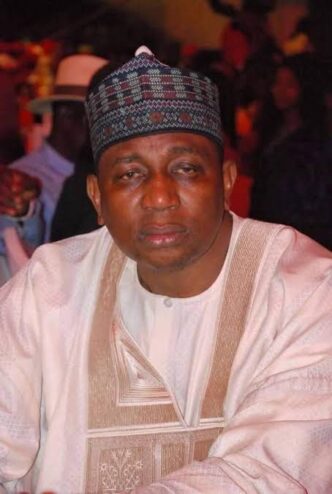
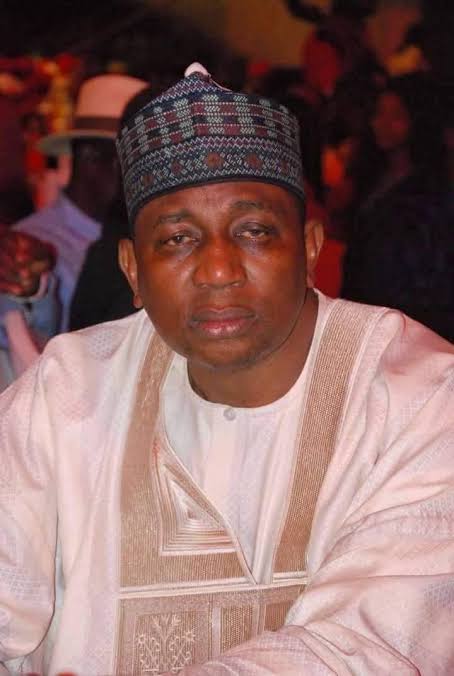
President Bola Tinubu in exercising his constitutional powers has rightly discharged that solemn responsibility by appointing Prof. Mustapha Aliyu as a National Electoral Commissioner representing the North-West Zone. The appointment has been well received given his experience, integrity and professional competence, qualities that are essential in strengthening INEC’s capacity to deliver on its constitutional mandate. A quintessential public servant, Aliyu brings to the office an understanding of the demands of public service and the enormous responsibility that comes with overseeing a process fundamental to the survival of democracy.
In appointing Aliyu as a National Electoral Commissioner, President Tinubu has greatly enriched the commission with an academic and a tested financial professional whose career spans accounting, finance, taxation, university administration, and the public service. This breadth of experience is a valuable combination of professional discipline, and an analytical mind that will definitely contribute meaningfully to advancing INEC’s responsibilities.
Beyond his academic and professional accomplishments, Aliyu, a keen sportsman is also a team player, a quality that his passion for volleyball has deepened. Volleyball demands more than individual talent; it requires coordination, discipline, effective communication and a clear understanding that success depends on the collective effort of every member of the team. Players must anticipate each other’s moves, respond quickly to changing situations and remain committed to the common objective, even under pressure. These are the additional qualities that he Aliyu bringing to INEC, where effective collaboration,good judgment and the ability to work with colleagues from diverse backgrounds are essential. His experience as a national volleyball player reinforces the value of teamwork, adaptability and collective responsibility in the discharge of the commission’s mandate.
Aliyu’s strongest credential is the breadth of his experience- education and public service experience. His education reflects a steady commitment to professional development. He obtained a National Diploma in Accounting in 1993 and a Higher National Diploma in the same discipline in 1996 from the Polytechnic, Birnin Kebbi. He subsequently earned a Master of Business Administration from Usmanu Danfodiyo University, Sokoto, in 2001, followed by a Bachelor of Science degree in Accounting in 2004. In 2005, he obtained a Postgraduate Diploma in Accounting from the College of Accountancy, Jos. He later returned to Usmanu Danfodiyo University, where he obtained an MSc in Accounting and Finance in 2010 and a PhD in the same field in 2017. He also has a Diploma in Computer Studies in 2015. He is a fellow of the Association of National Accountants of Nigeria and the Chartered Institute of Taxation of Nigeria.
These qualifications represent reflect sustained engagement with disciplines that place emphasis on analytical reasoning, evidence, accuracy, professional ethics and adherence to standards. In an institution responsible for managing a nationwide electoral process, these qualities are certainly useful in reaching decisions, and in evaluating reports.
His professional career began outside the university environment. After completing his National Youth Service Corps programme in Kwara State between 1996 and 1997, he worked as an internal auditor before joining the Office of the Accountant-General of the Federation. He subsequently became Chief Accountant in the Federal Ministry of Works and Housing.
Aliyu’s early trajectory exposed him to the workings of government and the responsibilities associated with managing public resources. Internal auditing, for instance requires attention to records, scrutiny of transactions and the controls designed to ensure compliance. Hie experience with the federal public service means he is familiar with administrative procedures, and accountability.
Prof. Aliyu’s experience also extended into regulatory and corporate governance roles. From 2018 to 2023, he served as a commissioner of the Tax Appeal Tribunal in Abuja. This was a particularly relevant stage of his career because adjudicatory institutions depend on the impartial consideration of evidence, procedural fairness and decisions grounded in established rules.
From 2023 to April 2025, Aliyu served as a non-executive director of the Nigerian National Petroleum Company Limited. His board experience exposed him to oversight, corporate governance and strategic decision-making in a complex national institution.
Since 2008, Aliyu has been associated with Usmanu Danfodiyo University, Sokoto, where his responsibilities included coordinating postgraduate and professional programmes in accounting, alongside other academic and administrative assignments. He has also served as a visiting lecturer at the Federal University, Birnin Kebbi.
The benefits Aliyu’s appointment lies in how these different strands of his career will help INEC, in coordinating personnel, financial planning, materials and logistics which are critical to its assignment.
We must address the relationship between Aliyu, and the Governor Ahmed Aliyu, the Governor of Sokoto State which has attracted criticism from the Sokoto State chapter of the African Democratic Congress (ADC). Aliyu’s relationship with an elected official does not in itself expressly disqualifies under Section 156. The more pertinent considerations are whether a nominee satisfies the applicable constitutional requirements and whether the individual can discharge the responsibilities of office impartially.
The 1999 Constitution of the Federal Republic of Nigeria, as amended, provides the legal framework for appointments to INEC. Section 156 sets out relevant qualifications and disqualifications for membership of the commission, while Section 158(1) protects the commission’s independence by providing that, in exercising its powers to make appointments or exercise disciplinary control over persons, INEC shall not be subject to the direction or control of any other authority or person, subject to the Constitution.
The example of the Kennedy family in the United States illustrates the longstanding debate surrounding family relationships and public appointments. When late President John F. Kennedy appointed his brother, Robert F. Kennedy, as Attorney General in 1961, the decision generated accusations of nepotism. Robert Kennedy was to push through a significant record of laws that advanced civil rights. The circumstances of that appointment differ from Prof. Aliyu’s nomination, but the broader lesson is that family relationship cannot be a barrier to public service.
It’s noteworthy that the ADC didn’t reject his appointment on the grounds that he lacks the necessary qualifications. They in fact they acknowledged Aliyu’s academic pedigree and professional record.
As Nigeria looks towards the 2027 general elections, INEC needs an Aliyu who understands the gravity of the responsibilities, and has what it takes to ensure that the body delivers.
Postscript: The Sokoto State chapter of the ADC ought to know that Prof. Aliyu’s appointment is not, by itself, a threat to electoral integrity.