

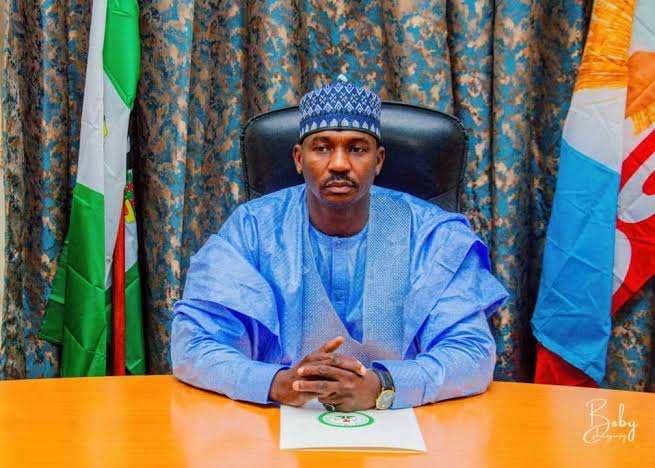
While many first-term governors begin positioning themselves for re-election almost from the day they are sworn into office, Governor Ahmed Aliyu has chosen a different path: one term at a time. Since assuming office on May 29, 2023, he has focused on the mandate entrusted to him by the people of Sokoto State, prioritising service delivery over the distractions of second-term politics. Faced with a difficult transition from his predecessor, Aminu Tambuwal, and the challenges of taking over the reins of government, Aliyu understood that he had to hit the ground running. He needed to demonstrate from the outset that his administration would be judged not by political calculations or promises of a second term, but by what it could accomplish within the four years entrusted to it.
The preoccupation with securing a second term has serious implications for governance. Indeed, concerns about the tendency of elected officials to prioritise political survival over public service have prompted calls for a single, six-year presidential and governorship tenure. Proponents argue that a longer, non-renewable term would give elected leaders greater freedom to concentrate on their mandates, undertake long-term projects and implement necessary but potentially unpopular reforms without the pressure of seeking re-election.
The argument has merit. The pursuit of a second term have influenced government priorities, delayed difficult decisions and encouraged the diversion of public resources towards political objectives. When re-election becomes the overriding consideration, governance risks taking a back seat to political calculations. Public office, however, is a responsibility entrusted to elected leaders for the benefit of the people, not a platform to be managed primarily for personal political survival. The real test of leadership is whether a governor can remain focused on delivering on his mandate even when the next election is approaching.
The experience of Nigerian universities offers an interesting perspective on how destructive the campaign for a second term can be. The history of Ahmadu Bello University, Zaria, illustrates the crisis of second-term ambition that threw the foremost institution into turmoil. Retired Major-General Mamman Tsofo Kontagora was eventually appointed as sole administrator, an extraordinary but necessary measure that was taken to save the institution from descending into total chaos. The episode remains a reminder of the damage that prolonged crises of second-term ambition inflicted on many Nigerian universities. The introduction of a single five-year tenure for vice-chancellors has helped reduce the disruptive second-term struggles.
Although universities and state governments operate under different laws and political conditions, the broader lesson remains relevant: institutions and states will perform better when leadership is focused and not consumed or distracted by succession battles.
This national debate highlights why Governor Aliyu’s approach deserves attention. Despite his impressive performance over the past three and a half years, Governor Aliyu has shown no signs of slowing down. Even with the Independent National Electoral Commission (INEC) giving the nod for political campaigns, Governor Aliyu remains focused on delivering critical projects rather than pushing the unfinished business of his first term into a second. His attitude to governance is rooted in character and philosophy. To the governor, neglecting his duties would leave him with no moral authority to question a public servant who is absent from work. His determination to finish as strongly as he had started is commendable. And as the popular saying goes, “You don’t change a winning strategy.” By delivering, his projects have continued to speak for him. So it is a win-win strategy that is working for him.
Governor Aliyu’s attitude reflects his fundamental principle of governance: that it is a sacred responsibility and a position of trust. A governor seeking re-election must first demonstrate that he has taken the people’s mandate seriously before campaigning for another term. This principle resonates with the teachings of the revered Islamic reformer, Shehu Usman Dan Fodio, whose political philosophy placed justice, accountability and the moral obligations of leadership at the heart of governance. Governor Aliyu has made a strong point that the responsibility to govern should not diminish because of an election. On the contrary, it is at such moments that a leader’s commitment to duty is displayed. The big picture is that to neglect the work of government in pursuit of a second term would be to surrender the moral authority to demand accountability, discipline and commitment from other public servants.
Across Sokoto State, this philosophy is reflected in the unprecedented construction of rural and urban roads, investment in water supply, education, healthcare and other essential services. Governor Ahmed Aliyu’s 9-Point Smart Agenda provides the framework for these interventions, linking its development priorities to the practical needs of the people. From road construction connecting communities to solar-powered boreholes to improve access to clean water, the emphasis has been on projects that can make a difference in the lives of the people.
In education, Governor Aliyu’s administration has consistently demonstrated a commitment by surpassing the UNESCO benchmark for education funding. The allocation of approximately 25 per cent of the state’s 2025 budget to the sector reflects the priority his administration attaches to human capital development. Beyond budgetary allocation, the administration has invested in the construction and renovation of classrooms, the rehabilitation of school facilities, the provision of instructional materials, the improvement of the learning environment and recruitment of teachers. The AGILE Project has further supported the rehabilitation of secondary schools, particularly facilities serving adolescent girls, while investments in higher institutions have helped to strengthen infrastructure and improve the quality of tertiary education. These interventions reflect an understanding that education is the foundation for economic opportunity, social mobility and the long-term development of the state.
Healthcare has equally received substantial attention, with the administration combining investment in infrastructure and medical equipment with policies that have addressed the shortage and uneven distribution of healthcare professionals. The government has procured hospital beds, nine ultrasound machines and three X-ray machines to improve diagnostic capacity and patient care in public health facilities. It has also completed the rehabilitation of more than 160 primary healthcare centres and the construction of hospitals, while plans are in place to replace the century-old Specialist Hospital with a modern facility.
Perhaps one of the most significant interventions is the administration’s policy of addressing the shortage of medical personnel in rural communities. Recognising that building hospitals and equipping them with modern facilities would achieve little if there were no qualified professionals to attend to patients, the government introduced a mandatory two-year rural service policy for health professionals trained under its sponsorship. Under the policy, beneficiaries, including doctors, nurses, pharmacists and allied health workers, will serve in rural facilities, helping to address the longstanding imbalance that has concentrated medical personnel in urban centres while leaving many rural communities underserved.
By April 2026, more than 1,500 nurses and midwives had been recruited and deployed to underserved communities. The administration has also recruited 2,440 Community Health Extension Workers to strengthen primary healthcare at the grassroots. To encourage health professionals posted to rural areas, the government introduced a 10 per cent salary allowance as an incentive. These measures recognise that improving healthcare requires putting qualified personnel where they are most needed and creating conditions that will encourage them to stay.
These investments matter because the value of governance is ultimately measured not by the size of the budget, but by their impact on people’s lives. Governor Aliyu’s approach recognises that development must go beyond figures and policy pronouncements to deliver tangible improvements in the daily lives of ordinary citizens. By directing resources towards education, strengthening healthcare infrastructure and addressing the human-resource gaps that undermine service delivery, his administration is laying the foundations for sustainable development and lasting progress.
The administration’s commitment to governance is also reflected in the decisions of the State Executive Council. At its ninth regular meeting of 2026, the Council approved major projects across infrastructure, water supply, healthcare and education. These included ₦10.96 billion for 11 clusters of roads and drainage structures in Arkilla Federal and State Low-Cost areas, ₦8.54 billion for a dual carriageway linking Tsehen Masu through New City Kwasai to the old airport runway, and ₦1.79 billion for other road projects and rehabilitation works.
Water supply received ₦7.84 billion for 200 solar-powered semi-urban boreholes across the 23 local government areas, alongside ₦249.4 million for maintaining rural water schemes. The Council also approved ₦1.064 billion for projects at Tureta, Rabah and Dange general hospitals, while education approvals included ₦492.4 million for Umaru Ali Shinkafi Polytechnic, ₦99.9 million for equipment at Shehu Shagari University of Education, and ₦911.6 million for Government Girls Commercial Secondary School, Tambuwal.
Other approvals covered security equipment, the completion and renovation of the central mosque, and a ₦178.3 million office and commercial complex for state-owned Caliphate Air Limited. These decisions illustrate the breadth of the administration’s spending priorities. Ultimately, however, the real measure of their value will be the timely completion of the projects and the tangible improvements they deliver to the lives of Sokoto residents.
These decisions demonstrate that Governor Aliyu remains focused on governance and project delivery across multiple sectors, even as the 2027 election approaches. Although the governor must campaign to secure a renewed mandate, he has shown that it must not be at the expense of governance. The governor’s determination to sustain the pace of development rather than allow the approaching election to distract him from his responsibilities is certainly commendable.
As the February 6, 2027, governorship election approaches, Governor Aliyu faces the dual responsibility of seeking a renewed mandate and ensuring that the work of government continues without interruption. His administration’s performance will ultimately be judged by the difference these interventions make in the lives of the people of Sokoto State. The challenge, therefore, is to sustain the momentum of development and ensure that the projects being executed translate into tangible improvements in the living conditions of the people.
Governor Aliyu’s approach offers an important lesson in leadership. Re-election is a legitimate political ambition, but it must never become an excuse for neglecting the mandate already entrusted to a public officeholder. The responsibility to govern does not stop because of re-election campaigns, nor should the delivery of services be subordinated to the demands of political mobilisation. A governor who seeks another term must first demonstrate, through his performance in office, that he deserves to be re-elected.
Ultimately, the strongest argument for Governor Aliyu’s re-election is not the intensity of his campaign, or the strength of his political machinery it is the fantastic record of his administration, which is overwhelmingly positive. In the politics of re-election, the most convincing campaign is the work already done, and the most credible promise is the trust built on it.
Gatekeepers News is not liable for opinions expressed in this article; they’re strictly the writer’s.