


The Federal Government says 10 states scored below 40 per cent in implementing resolutions of the National Council on Health, raising concerns over gaps in the execution of health policies and programmes across the country.
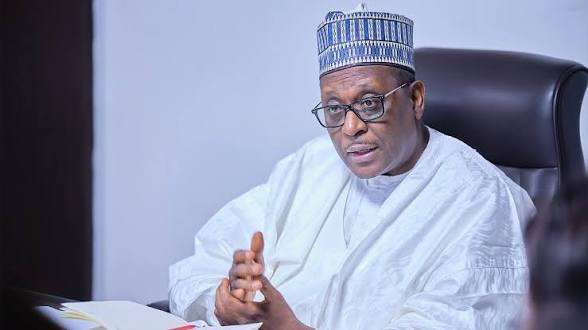
Gatekeepers News reports that Daju Kachollom, permanent secretary of the Federal Ministry of Health and Social Welfare, disclosed this on Thursday in Abuja at the 10th annual conference of the Association of Nigeria Health Journalists (ANHEJ).
Kachollom acknowledged persistent implementation challenges in the health sector, revealing that the federal government received only 412 of the 740 reports expected from states on the implementation of resolutions reached at the previous council meeting.
Describing the development as a major challenge to the country’s health-sector reform agenda, she warned that government commitments would have little impact without effective implementation.
She urged journalists to hold government accountable by investigating the performance of health institutions and examining how public investments translate into improved healthcare services for ordinary Nigerians.
The permanent secretary, however, disclosed that all 41 presidential health-sector commitments under the Nigeria Health Sector Renewal Investment Initiative (NHSRII), launched in December 2023, had been achieved.
She added that 12 of the 13 health indicators being monitored by the government had improved, while 3,526 primary healthcare centres had been revitalised, with another 900 undergoing the process.
Kachollom also said health insurance enrolment had increased from about 16 million to nearly 24 million Nigerians, while state governments raised their combined health budgets from N1.97 trillion in 2023 to more than N3.3 trillion in 2026.
Despite the reported progress, she acknowledged that Nigeria continued to face significant healthcare challenges, including childhood malnutrition, inadequate health insurance coverage, uneven quality of healthcare services and shortages of health workers.
According to her, stunting affects approximately four in 10 Nigerian children under the age of five, while only about one in 10 Nigerians is covered by health insurance.
She said the government was strengthening accountability and transparency through its primary healthcare functionality dashboard and Joint Annual Review scorecard.
She also disclosed that the District Health Information Software 2 (DHIS2) platform was being developed as the country’s single national health data platform.
Kachollom further announced that the 2023–2024 National Health Accounts would be published to provide information on Nigeria’s health expenditure and identify who bears the cost of healthcare delivery.
In his welcome address, Joseph Kadiri, president of ANHEJ, called for greater accountability in the implementation of health-sector policies, stressing that government investments must translate into improved access to affordable and quality healthcare.
Kadiri said the association was ready to collaborate with the Basic Health Care Provision Fund gateways and the Ministerial Oversight Committee to monitor healthcare interventions across states through independent visits and investigative reporting.
Also speaking, Victoria Igbinomwanhia, programme manager and oncology lead at the Institute of Human Virology Nigeria, called for stronger collaboration between health institutions and journalists.
She said such partnerships were necessary to promote evidence-based health reporting, tackle misinformation and improve public understanding of health issues.