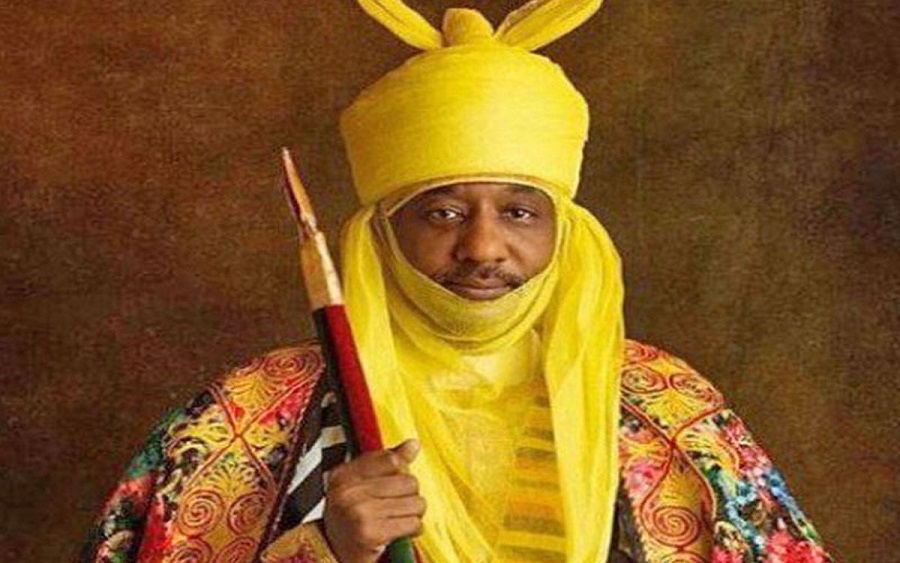


The Chairman of the Independent National Electoral Commission (INEC), Prof. Joash Amupitan, says poor telecommunications connectivity remains the commission’s biggest challenge in achieving real-time upload of election results on the INEC Result Viewing Portal (IReV).
Gatekeepers News reports that Amupitan spoke on Thursday at the Nigeria Civil Society Situation Room’s Stakeholders’ Forum on Elections in Abuja, where he noted that despite significant technological advancements, weak network coverage continues to undermine full transparency, especially in remote polling areas.
He said INEC’s commitment to electoral credibility has driven the adoption of technology—backed by the Electoral Act 2022—into various stages of the voting process.
“The deployment of the Bimodal Voter Accreditation System (BVAS) has fundamentally redefined the process. It ensured that only genuinely accredited voters could cast their ballot, closing the door on over-voting and manual manipulation.”
The INEC chair added that the IReV portal has brought a new level of openness.
“The INEC Result Viewing (IReV) Portal has opened the electoral process to the world, making results available for public scrutiny on election day. This transparency is the new baseline for trust in our process. However, technology is not a panacea.”
He stressed that network gaps remain a major operational hurdle.
“The nation’s telecommunications network remains a formidable obstacle. With over 176,000 polling units, some of which are in remote areas, achieving real-time upload of all results to the IReV remains one of our toughest operational battles. As I have stated before, a tool like the BVAS is only as good as the network it runs on.”
Amupitan said INEC is deepening its engagement with the Nigerian Communications Commission (NCC) and major network providers to improve connectivity, while also exploring alternative result-transmission technologies and redundancy systems to reduce election-day delays.
Speaking on the theme “Securing Nigeria’s Democracy: Building Consensus for Credible Elections and Accountable Governance,” he noted that while technology has improved accreditation and reduced manipulation, it cannot fully deliver without stronger multi-sector support.
The INEC chairman also expressed concern over persistent voter apathy, recalling that the 2023 general election recorded a turnout of just above 27 per cent. However, he pointed to recent improvements—such as the surge in Permanent Voter Card (PVC) collection in Anambra after targeted mobilisation—as evidence that greater participation is achievable.
On the ongoing Continuous Voter Registration (CVR), Amupitan said 2,685,725 registrations have so far been completed nationwide. Osun leads with 208,357 registrations, followed by Kano (159,669), Sokoto (152,650), Imo (145,561), Borno (123,835), and Lagos (123,484).
He also disclosed that preparations are underway for the February 21, 2026 Area Council election in the Federal Capital Territory, noting that all relevant details have been published on the commission’s website.
Amupitan further emphasised the need to tackle vote-buying and other forms of electoral inducement.
“To secure democracy, technological integrity must be matched by political accountability. We recognise that vote-buying and financial inducement derail the will of the people. To combat this, we have intensified our collaboration with law enforcement agencies through the Inter-Agency Consultative Committee on Election Security (ICCES).”
According to him, the strategic deployment of security personnel and covert intelligence operations is aimed at protecting voters from intimidation and resisting inducements.
He added that civil society organisations must continue to play a critical role.
“This is a multi-sectoral fight that requires collective resolve. Civil Society Organisations must play their part decisively to hold all stakeholders, including political parties, to account.”
Amupitan described the Situation Room as indispensable due to its monitoring, civic education and compliance-tracking roles.