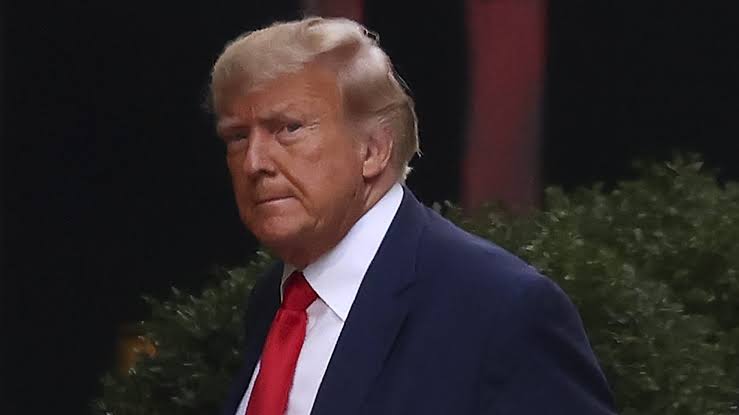
By all indications, President Donald Trump has taken the most consequential gamble of his political life.
In a stunning escalation, the United States launched a massive air assault on Iran, targeting strategic installations and senior leadership figures of the Islamic Republic. The operation, reportedly based on Israeli intelligence assessments and coordinated with the government of Benjamin Netanyahu, has now culminated in a seismic development: the confirmed death of Iran’s Supreme Leader, Ali Khamenei.
His death, acknowledged by U.S., Israeli, and Iranian sources, marks the most dramatic political rupture in Iran since the 1979 Islamic Revolution led by Ruhollah Khomeini. With Khamenei’s passing, the Islamic Republic enters an unprecedented and uncertain chapter, as the ideological and institutional anchor of the regime has been abruptly removed.
For nearly five decades, successive American presidents—from Jimmy Carter to George W. Bush and beyond—have grappled with the enduring challenge posed by Iran’s clerical regime. Sanctions, covert operations, diplomatic negotiations, and proxy confrontations have defined the uneasy standoff. Yet none has decisively altered the regime’s grip on power.
Trump’s action signals an unmistakable departure from that pattern.
The president justified the strikes as preemptive measures against Iran’s nuclear ambitions and long-range missile capabilities. However, critics point to U.S. intelligence assessments suggesting that any imminent threat may not have met the threshold for immediate military intervention. Even Trump acknowledged the long-term framing of the operation, stating that the action was not necessarily for “now,” but for the future.
The implications are profound.
If Khamenei is indeed dead, Iran faces a volatile succession crisis. The Islamic Republic’s political structure is heavily centralized around the Supreme Leader, whose authority eclipses that of elected institutions. A leadership vacuum could ignite internal rivalries between clerical hardliners and the Islamic Revolutionary Guard Corps, potentially destabilizing the regime’s command structure.
Yet the removal of a supreme authority does not automatically translate into democratic transformation. History has repeatedly demonstrated that power vacuums in the Middle East can produce unintended consequences. The collapse of central authority can unleash factional struggles, empower militant actors, and generate prolonged instability rather than reform.
Trump has openly encouraged the Iranian people to “take back their country,” suggesting that the strikes may create space for a popular uprising. Iran has experienced waves of domestic unrest in recent years, driven by economic hardship, sanctions, and crackdowns on dissent. Public frustration with the regime is well documented. But whether that discontent can translate into organized political change remains uncertain.
The international reverberations are already visible. Iranian counterstrikes against U.S. allies in the Gulf underscore the potential for rapid regional escalation. Strategic chokepoints, energy infrastructure, and allied territories remain vulnerable to retaliation. A broader conflagration could reshape regional security dynamics for years.
Domestically, Trump’s decision has sparked intense debate. Critics argue that he acted without congressional authorization, raising constitutional concerns about executive war powers. Supporters contend that decisive force was long overdue and that prior administrations allowed the Iranian regime to entrench itself.
The president’s political legacy now hinges on outcomes beyond immediate battlefield success. If the strikes precipitate meaningful political reform in Tehran, Trump could be remembered as the president who fundamentally altered a 47-year geopolitical impasse. If, however, the intervention yields chaos, hardened extremism, or prolonged regional instability, history may judge the move as an overreach reminiscent of earlier Middle East entanglements.
There is also the question of strategic endurance. Trump has often emphasized swift, decisive victories. Nation-shaping, however, demands patience, diplomatic coherence, and sustained engagement—traits that have tested previous administrations. As one analyst observed, military power can dismantle structures quickly, but building a stable successor order is a far more complex undertaking.
Iran, for its part, has historically demonstrated resilience. The regime has survived war, sanctions, covert operations, and internal unrest. Even a severe leadership disruption does not guarantee collapse. Hardline elements could consolidate power, replacing clerical dominance with a more overtly militarized system.
The broader irony is unmistakable. A president who rose politically on skepticism toward prolonged foreign wars now finds himself at the helm of a new Middle Eastern conflict. Whether this moment becomes a defining strategic breakthrough or the opening chapter of another protracted struggle remains unclear.
The stakes are generational. If this gamble reshapes Iran into a less repressive and less confrontational state, Trump may indeed be seen as the president who solved one of America’s most enduring foreign policy dilemmas. If not, the consequences—political, regional, and historical—may linger long after this presidency concludes.
Capt. Bishop C. Johnson, US Army (rtd), is a national defense and military strategist, and a political commentator.
Gatekeepers News is not liable for opinions expressed in this article; they’re strictly the writer’s