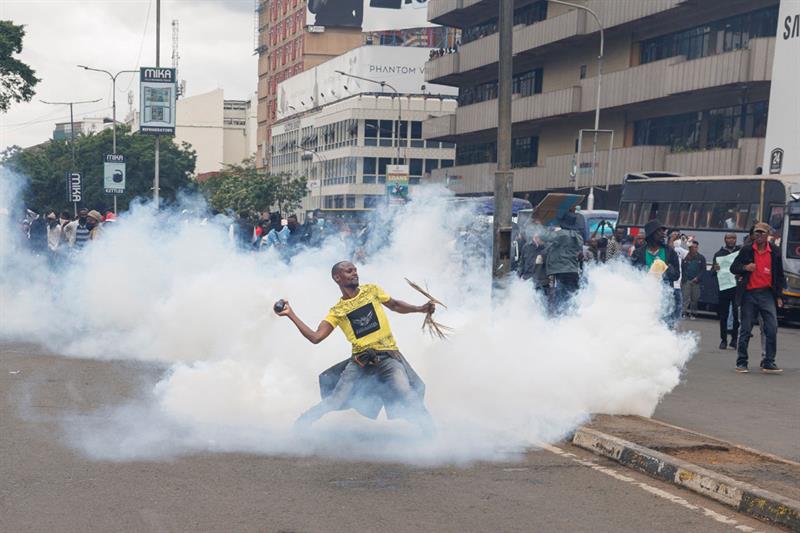
Kenyan authorities mounted a heavy security presence on Thursday as the country marked two years since the historic Gen Z-led protests that shook the government and forced the withdrawal of controversial tax measures.
Gatekeepers News reports that the June 2024 demonstrations, driven largely by young Kenyans protesting economic hardship and corruption, culminated in the storming of parliament and the eventual cancellation of proposed taxes. Since then, June 25 has become a symbolic day of protest for many citizens dissatisfied with the administration of President William Ruto.
However, the protests have come at a significant human cost. According to a police oversight body, at least 127 people have been killed during demonstrations over the past two years, amid allegations of excessive use of force by security agencies.
In anticipation of fresh protests, security forces established roadblocks across key routes in Nairobi, while many schools and businesses remained closed.
Journalists observed police trucks, mounted patrols, barbed-wire barricades around government facilities and a strong deployment of both uniformed and plainclothes security personnel.
“They know people are not afraid of police in uniform. But they are scared of these plainclothes cops because they can just kill you and go,” said Moses, a 31-year-old motorcycle taxi operator.
Fear of violence kept some residents away from the streets.
“I don’t want to die, I’m the oldest. I just want to work,” a young woman told AFP.
Although President William Ruto acknowledged citizens’ right to peaceful protest earlier this week, he warned against individuals seeking to incite disorder.
He said demonstrators have a right to protest but cautioned against anyone “mobilised to destroy property or cause chaos”.
Concerns have also been raised over the alleged use of armed groups, commonly referred to as “goons”, who have frequently been accused of attacking opponents and fuelling violence during political gatherings.
Former Deputy President Rigathi Gachagua, now a fierce critic of Ruto, urged young people to stay away from the demonstrations.
“I plead with you: stay at home. The state has organised terror against Kenyans,” Gachagua said.
Despite the warnings, some protesters remained determined to honour those killed during previous demonstrations.
“There are way more police than usual. They already tear gased us before 8am,” said 25-year-old protester Kasim Ramadan.
“But we’re not scared. We will protest. We are here for the ones who died in the parliament.”
Ruto’s administration continues to face criticism over the economy, corruption allegations and reported abductions of government critics, despite efforts to position itself as reform-oriented and development-focused.
Political analyst Gabrielle Lynch said the president remains deeply unpopular among many young voters.
Ruto is “clearly very unpopular with many Kenyans, especially the Gen Z,” she said, adding that he is “using security and intelligence services to make Kenyans worried about speaking out against the state”.
The president has recently attempted to address some grievances, announcing compensation for more than 1,100 victims of protest-related violence.
Political analyst Javas Bigambo described the move as unprecedented, noting that “No other administration in the past since post-independence Kenya has made payouts to victims of protests.”
With Kenya’s next general election scheduled for August 2027, analysts say the political landscape remains uncertain, amid concerns over increasing political tensions and the potential use of violence during future campaigns.